Powerstroke Tuner Guide: Towing Heavy in Extreme Passes
Over the years, Powerstroke engines have established their reputation as hard-working powerplants that dominate the heavy-duty truck space. These diesels range from the legendary 7.3L to the current 6.7L and are known for their immense torque and exceptional towing capability.
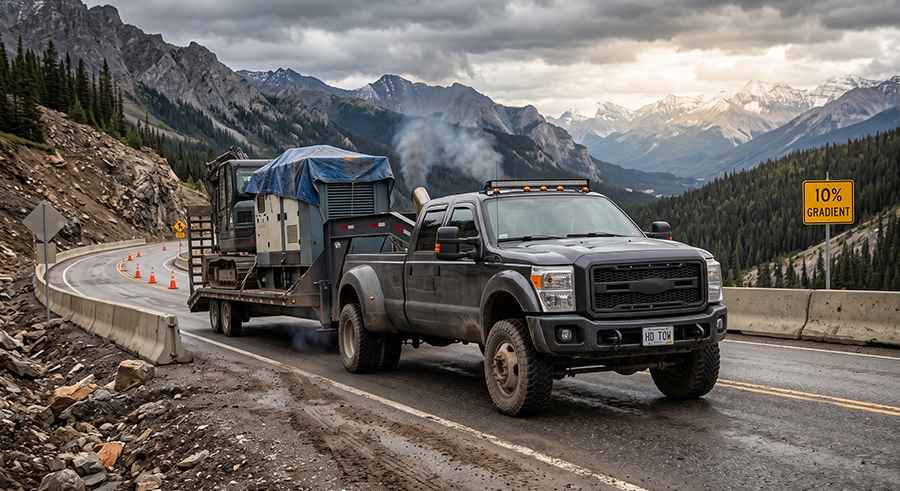
However, when you venture into extreme conditions, such as hauling heavy loads over steep mountain passes, factory tuning can fall short. Stock calibrations prioritize emissions compliance and fuel efficiency, often at the expense of performance. This is where Powerstroke tuning becomes invaluable.
A quality tuner can refine fuel delivery, turbo response, and transmission shifting, transforming your truck into a reliable towing machine. If you frequently tow in extreme conditions, adding supporting upgrades alongside tuning is not just beneficial. It is essential for maximizing both performance and long-term reliability.
The Challenges of Heavy Towing with a Stock Powerstroke
Increased Engine Load During Extreme Towing
When towing heavy loads, especially in mountainous terrain, you place significant stress on your Powerstroke and all its components. The engine must sustain higher RPMs on climbs to maintain speed, generating substantial heat as a byproduct of delivering maximum fuel and air.
Under these continuous high-load conditions, a stock tune's conservative parameters can become a hindrance. The engine may struggle to maintain boost pressure, fuel delivery may be insufficient for steep grades, and the transmission may hunt for gears, making the driving experience frustrating and even unsafe.
Factory Limitations That Affect Towing Performance
Factory tuning represents a compromise designed to accommodate a wide range of driving scenarios while meeting stringent emissions regulations. This often results in subdued throttle response, conservative fueling curves, and transmission shift points calibrated for smoothness rather than performance.
These limitations become especially pronounced during extreme towing. The stock turbo may spool slowly, the engine can feel gutless at low RPMs, and the transmission may struggle to hold gears during extended climbs, leading to frequent shifting and elevated transmission temperatures.
Beyond hurting performance, these issues accelerate wear and increase the risk of overheating.
How Powerstroke Tuning Improves Heavy-Duty Towing Performance
Optimised Torque Delivery
A custom or performance Powerstroke tuner adjusts injection timing, duty cycle, and fuel pressure to create a broader, more usable torque curve. This ensures peak torque is available at lower RPMs, critical for getting a heavy load moving from a stop or maintaining speed up a steep grade. Enhanced throttle response delivers power more immediately when you need it; you will feel the power come on sooner, and the truck becomes easier to control.
Better Turbo and Transmission Management
Modern Powerstroke engines feature sophisticated variable geometry turbochargers (VGT). Tuning fine-tunes VGT vane positions to accelerate spool-up, deliver quicker boost, and reduce lag at high altitudes. Additionally, Powerstroke tuning solutions recalibrate transmission shift points, line pressures, and torque converter lockup. This results in firmer, more decisive shifts with less heat generation and clutch slip. It will hold gears longer on climbs and downshift appropriately on descents, improving engine braking and vehicle control.
Essential Supporting Upgrades for a Towing-Ready Powerstroke
Tuning alone is limited without supporting hardware upgrades. To maximize its benefits and ensure reliability under extreme loads, you must pair tuning with physical modifications.
Cooling and Temperature Management Upgrades
Towing under high loads generates tremendous heat. To maintain optimal engine coolant temperatures, an upgraded large-capacity radiator and high-flow thermostat are important. Likewise, an auxiliary transmission cooler helps keep transmission temperatures in check during steep mountain climbs.
Some owners also install an upgraded intercooler to reduce intake air temperatures, which improves combustion efficiency and helps manage exhaust gas temperatures (EGTs).
Intake and Exhaust Improvements
Your Powerstroke needs to breathe freely. A high-flow cold air intake supplies cleaner, cooler air to the turbo, enhancing combustion. On the exhaust side, a free-flowing turbo-back or DPF-back exhaust reduces backpressure, allowing the turbo to spool faster, lowering EGTs, reducing engine strain, and improving fuel efficiency.
Performance Parts That Support Tuning Reliability
Beyond the essentials, certain performance components add an extra layer of reliability for heavy towing. Upgraded head studs are often recommended for higher-horsepower tunes to prevent head gasket failure. A high-performance lift pump ensures consistent, clean fuel delivery with improved filtration.
Performance upgrades such as high-flow fuel pumps and improved filtration systems can further enhance reliability, helping you build a powerful and dependable towing rig.
Whether it's the need for enhanced fuel efficiency, better performance, or greater reliability, the lineup of EGR Performance diesel upgrades offers solutions for building a powerful and dependable towing rig.
Managing EGT, Boost, and Transmission Temperatures While Towing
Monitoring Critical Engine Data
For a tuned truck operating in extreme conditions, monitoring critical parameters is not optional; it is mandatory. Aftermarket digital gauges for EGT, boost pressure, transmission temperature, and engine coolant temperature are essential. Monitoring these readouts allows you to drive proactively and avoid operating in the danger zone.
Best Practices for Extreme Mountain Towing
Effective management goes beyond hardware. For extreme mountain towing, follow these best practices:
- Climb at appropriate RPM: do not lug the engine. Maintain RPMs in the peak torque range (1800–2200 RPM) to minimize strain and keep EGTs under control.
- Avoid aggressive throttle inputs at low RPM: this can cause a sudden spike in fuel delivery, leading to rapid EGT rise and added stress on the drivetrain.
- Control speed on descents: Use engine braking and the exhaust brake, not just the service brakes. This prevents brake fade and helps maintain vehicle control.
- Perform pre-trip inspections before long towing journeys: check fluid levels, tire pressures, hitch condition, and trailer brakes.
- Maintain schedules: use high-quality diesel oil and change it regularly. Clean air and fuel filters are essential for optimal operation.
Conclusion
Extreme towing, especially over steep mountain passes, amplifies the limitations of a stock truck. Safely and effectively moving heavy loads demands a comprehensive solution. Proper Powerstroke tuning is the foundational step to unlocking the engine's full potential, refining torque delivery, turbo response, and transmission control.
The best approach is to combine proper Powerstroke tuning with essential towing modifications, including upgraded cooling, improved airflow, and heavy-duty performance components.
These upgrades, combined with diligent monitoring and maintenance, result in a more capable, reliable, and durable truck that you can trust in any extreme scenario.