Why More UTV Owners Are Upgrading Their Lights Before Night Riding Season
If you've spent any time on a trail after sunset, you already know the truth: stock utv lights just aren't built for it. Factory headlights meet the bare minimum for road-legal visibility, but they leave a lot to be desired once you're navigating washouts, loose rock, or a tight tree line in the dark.
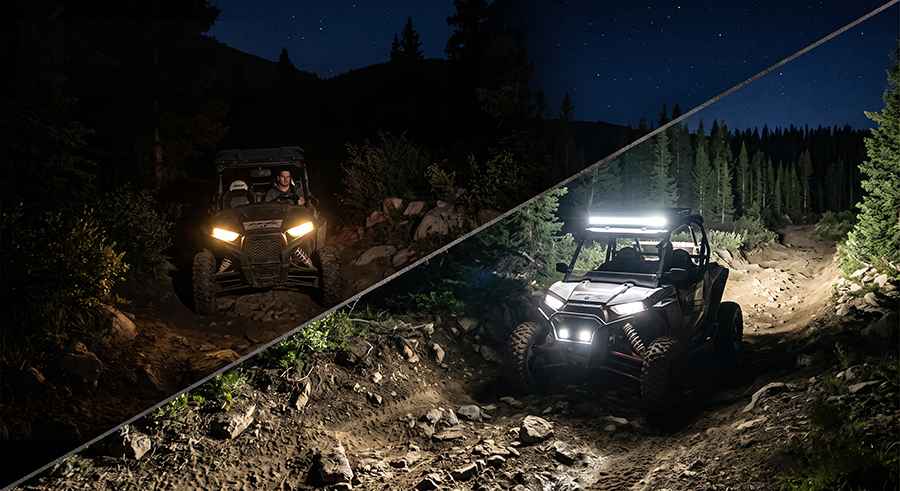
That gap is exactly why aftermarket lighting has become one of the most popular upgrades in the UTV and ATV world — and why brands like Kemimoto have been expanding their lighting lineups to keep pace with rider demand.
I've talked to enough trail riders, hunters, and ranch owners over the years to know this isn't a niche complaint. It's one of the first things people mention when they talk about what they'd change on their rig. So I wanted to dig into why lighting upgrades matter so much right now, what's actually available, and how riders are putting these products to use.
The Case for Upgrading Your UTV Lights
Off-road recreation has grown steadily over the past several years, and a lot of that growth has spilled into hours when the sun isn't up. Riders are heading out before dawn for hunting trips, wrapping up trail rides after dark to beat the heat, and pushing into multi-day overlanding routes where reliable lighting isn't optional — it's survival gear.
Better lighting isn't just about seeing farther down the trail. It's about reaction time. A brighter, wider beam gives you more warning before you hit a rut, spot a downed branch, or catch eyeshine from wildlife crossing your path. For anyone riding in a group, it also means other vehicles can see you coming, which matters a lot on shared trails or open desert terrain where sightlines can be deceiving.
Brands like Kemimoto have taken notice, and the company's own site — kemimoto.com — now hosts one of the more comprehensive lighting catalogs I've come across for UTV and ATV owners, covering everything from long-throw light bars to compact rock lights.
What's Actually in a Modern UTV Lights Setup
When people say "utv lights," they usually mean one of a handful of distinct product categories, each solving a different problem. Kemimoto's Lighting Collection is a good snapshot of what a well-rounded setup looks like these days:
LED Light Bars. This is the classic upgrade — a wide beam mounted across the roof or front bumper that turns a few feet of visibility into a usable trail-length view. If you only add one thing to your rig, a utv light bar is usually where people start.
UTV Whip Lights. These have become as much about visibility as they are about style. A lit whip antenna makes your vehicle easier to spot at a distance across dunes or open desert, and RGB versions let group riders color-code their vehicles for quick identification. I've seen entire riding clubs coordinate whip colors just so they can spot each other at a glance.
ATV LED Lights. Smaller and more compact than a full light bar, atv led lights are the go-to for riders who want dependable illumination without adding bulk — especially useful for hunters who need a low profile.
Rock Lights. Mounted low on the frame, these light up the ground directly around your tires, which is a genuine game-changer for rock crawling or picking a line through technical terrain in the dark.
Work Lights and Flood Lights. Less about long-range throw, more about lighting up a whole work area — think farm chores at dusk or setting up camp after a late arrival.
Spot Lights. Focused, high-intensity beams for scanning terrain or spotting movement at a distance — handy for scouting or keeping an eye out for wildlife.
Auxiliary and Pod Lights. Small supplemental lights riders add to fill in blind spots that a primary light bar doesn't cover — mirrors, cargo areas, that sort of thing.
What I appreciate about how this category has evolved is that it's no longer just about raw brightness. It's about matching the right light to the right job, which is a much more useful way to think about a lighting setup than just "buy the biggest bar that fits."
Why Riders Say Upgrading Their UTV Lights Is Worth It
Talk to enough owners who've made the switch to better utv lights and the same points come up again and again:
- Nighttime visibility that actually works. Not "technically legal" — actually usable for real trail speeds.
- Fewer surprises on the trail. More light means more time to react to obstacles, wildlife, or terrain changes.
- Better mornings and evenings for hunting and camping. A lot of the best hours in the field happen in low light.
- Longer workdays on the farm or ranch. Chores don't stop when the sun goes down, and neither should visibility.
- A vehicle that looks like yours. Whip lights and RGB accessories are one of the easiest ways to personalize a build.
- Weekend-garage installation. Most of these products don't require a shop appointment — a socket set and an afternoon usually gets it done.
- Better value than OEM add-ons. Aftermarket lighting frequently outperforms factory options at a lower price point.
- LEDs that actually last. Compared to older halogen setups, LED lighting holds up far longer under heavy use.
- Built for the actual conditions you ride in. Waterproof, dust-resistant construction matters more than people realize until they've had a light fail in the mud.
Does It Fit Your Rig?
One of the more practical questions I get asked is simply: will this fit my machine? The good news is that lighting compatibility has gotten a lot broader. Kemimoto's utv lights are built to fit popular platforms including the Polaris RZR, Polaris Ranger, Can-Am Maverick, Can-Am Defender, Honda Pioneer, Kawasaki Teryx, Yamaha Wolverine, and CFMOTO UForce — which covers a large chunk of what's actually out on the trail these days.
And the use cases stretch well beyond weekend trail rides:
- Trail riding, where consistent visibility helps you read the terrain ahead
- Mud riding, where weather-resistant construction earns its keep
- Desert riding, where long-throw lighting helps at higher speeds
- Rock crawling, where rock lights show exactly where your tires are headed
- Hunting, where predawn and dusk visibility can make or break a trip
- Camping, where auxiliary lighting helps with basecamp setup
- Utility work, where flood lights extend a productive workday
- Overlanding, where dependable lighting is non-negotiable on multi-day routes
Why the UTV Lights Category Keeps Growing
A few trends explain why utv lights have become such a hot upgrade category. Nighttime riding has grown in popularity partly because riders in hot climates are shifting activity to cooler evening hours. Safety has also become a bigger part of the broader off-road conversation, with more emphasis across the industry on proper lighting and trail preparedness.
The overlanding boom deserves some credit too — that community tends to prioritize self-sufficiency, and reliable lighting is a core part of that equation. On top of all that, LED technology has simply gotten better: brighter output, lower power draw, longer lifespans than the halogen setups a lot of riders grew up with. Put it all together, and it's no surprise that more owners are reaching for aftermarket lighting instead of settling for OEM.
A Word From the Brand
I asked Kemimoto's Marketing Manager, Samantha Carter, what's driving the company's push into this category. Her answer lined up with what I've heard from riders directly:
"Off-road riders don't just want brighter lights — they want lighting they can trust when it matters most, whether that's navigating a dark trail, finishing up work on the ranch, or heading out before sunrise on a hunting trip," Carter said. "Our team has focused this expansion on solutions that are genuinely useful in the field: durable, weather-resistant, and easy to install without a shop appointment. We're committed to giving the off-road community lighting they can depend on, ride after ride."
If You're Thinking About Upgrading
If your current setup is leaving you squinting at the trail after dark, it's worth taking a look at what's out there in aftermarket utv lights. Kemimoto's Lighting Collection covers most of what's discussed above, and the brand is currently running a Lighting Sale that's worth checking before you buy — good timing if you're gearing up for hunting season or planning to get more trail time in before the weather turns.
Whatever you land on, my honest advice after years of covering this space: don't wait until you're stuck on a dark trail wishing you'd upgraded sooner.
A Few Common Questions
What are the most popular types of UTV lights? LED light bars, whip lights, and rock lights top the list — each covers a different visibility need, from long-range forward lighting to ground-level illumination.
Are aftermarket ATV LED lights actually waterproof? Most quality aftermarket lighting, including Kemimoto's lineup, is built with waterproof and dust-resistant construction specifically for off-road abuse — mud, rain, and vibration included.
Will a UTV light bar fit my specific machine? Most light bars and auxiliary lighting come with universal or vehicle-specific mounting options, covering popular platforms like the Polaris RZR, Can-Am Maverick, and Honda Pioneer, among others.
Why are whip lights so popular right now? They solve a real visibility problem in open terrain — making your vehicle easier to spot from a distance — while also giving riders an easy way to customize their rig with RGB color options.
Jake Reynolds is a freelance writer covering the powersports and off-road accessories industry. He has spent over a decade riding and reviewing UTV and ATV equipment across the western United States.