The Chain Reaction Behind Jackknife Truck Accidents
Some truck crashes become far more dangerous than a typical collision because they unfold in seconds and leave little opportunity for nearby drivers to react. When a large commercial truck loses stability, the size and momentum of the vehicle can quickly transform a single incident into a multi-vehicle emergency with widespread consequences.
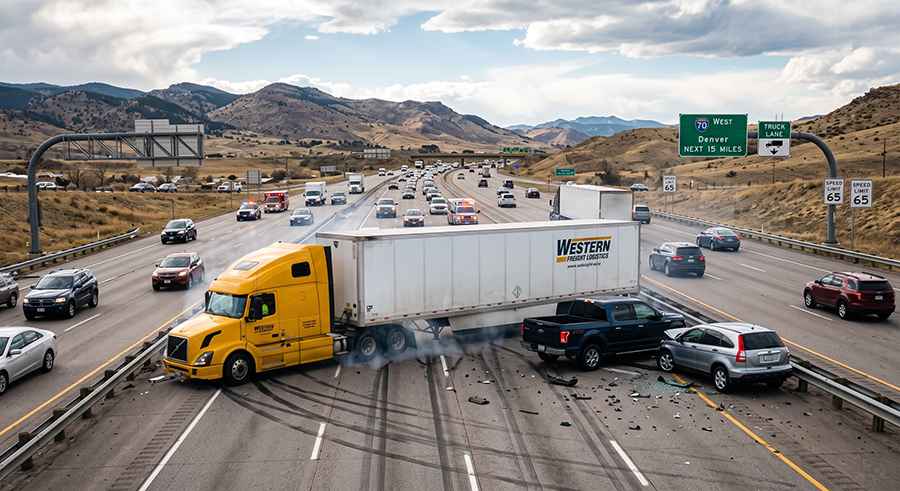
One of the most serious examples is a jackknife crash, where the trailer swings away from the cab and folds at an angle. As the truck blocks multiple lanes of traffic, surrounding drivers may have nowhere to go, increasing the risk of additional collisions that happen almost immediately afterward.
Understanding why jackknife accidents happen helps explain why these crashes are often so severe. It also highlights the importance of proper training, vehicle maintenance, and safe driving practices in preventing them.
How a Jackknife Crash Begins
A jackknife crash usually starts when the trailer loses traction while the truck is slowing down or braking. Instead of remaining aligned behind the cab, the trailer begins swinging outward, creating the folding motion that gives this type of accident its name.
Braking plays an important role because sudden or uneven braking can reduce traction, particularly on wet or slippery pavement. Once the trailer starts moving sideways, the driver may have very little ability to regain complete control before the vehicle blocks part or all of the roadway.
Because commercial trucks are much larger and heavier than passenger vehicles, even a brief loss of stability can have serious consequences. The combination of weight, speed, and limited maneuverability makes recovering from a jackknife especially difficult.
Several Factors Can Contribute
Jackknife crashes rarely result from a single cause. Weather conditions such as rain, ice, or snow can reduce tire traction, making it easier for the trailer to lose stability during braking or sudden steering adjustments.
Driver behavior may also contribute. Excessive speed, following too closely, or braking aggressively can increase the likelihood of losing control, especially when road conditions are already challenging. Equipment problems, including worn tires or brake issues, may further increase the risk.
In many situations, several contributing factors occur at the same time. A combination of weather, roadway conditions, vehicle maintenance, and driver decisions often creates the circumstances that allow a jackknife crash to develop.
Why These Crashes Escalate So Quickly
Once the trailer swings across traffic lanes, nearby drivers often have only seconds to react. Vehicles traveling behind or beside the truck may suddenly find their path completely blocked, leaving little room to stop or safely avoid the obstruction.
These situations frequently lead to chain reaction collisions. Drivers attempting to brake or change lanes quickly may strike other vehicles, while additional traffic approaching the scene may have limited visibility until it is too late to avoid the growing hazard.
The size of a commercial truck means one loss of control can affect multiple lanes at once. As a result, what begins as a single vehicle losing traction can rapidly become a crash involving numerous vehicles.
Reducing the Risk of Jackknife Crashes
Preventing jackknife crashes requires attention to both vehicle maintenance and safe driving practices. Properly maintained brakes, tires, and other mechanical systems help trucks respond more predictably during changing road conditions.
Driver training is equally important. Commercial drivers learn techniques for maintaining safe following distances, adjusting speed for weather conditions, and braking smoothly to reduce the likelihood of losing traction when operating large vehicles.
Other motorists also play a role in roadway safety. Giving trucks adequate space, avoiding sudden lane changes near large vehicles, and recognizing their longer stopping distances can help reduce situations that contribute to serious crashes.
Conclusion
Jackknife crashes are among the most dangerous types of commercial vehicle accidents because they can escalate from a single loss of control into collisions involving many vehicles. Their rapid development often leaves little time for anyone nearby to respond safely.
Weather, speed, vehicle condition, and driver decisions all influence whether a truck remains stable during challenging driving conditions. Understanding how these factors interact helps explain why preventing jackknife crashes requires constant attention behind the wheel.
Safe driving habits, regular vehicle maintenance, and proper training all contribute to reducing the risk of these serious collisions. Preventing a single loss of control can help protect everyone sharing the road with large commercial trucks.