How to Rent the Right Car for a Dangerous-Roads Trip and Not Overpay for It
Plenty of great drives are ruined at the rental counter rather than on the road. You pick the cheapest car on the screen, sign a contract you didn't read, and three days later you're stuck on a gravel shelf above a river in Georgia wondering why the front-wheel-drive hatchback won't climb.
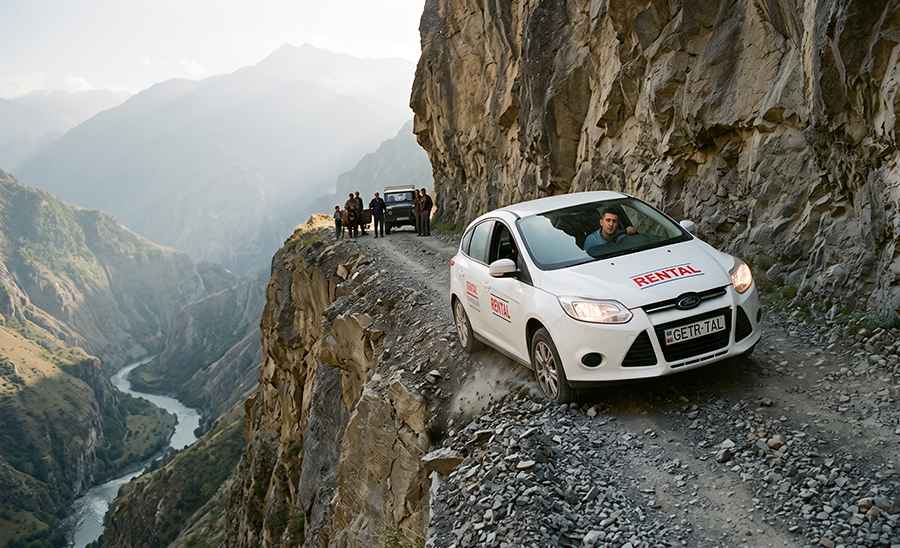
Roads like Bolivia's Yungas, the Transfăgărășan in Romania, Norway's Trollstigen, or the Skippers Canyon track outside Queenstown ask specific things of a vehicle and of the paperwork behind it. Getting both right before you leave the airport is the difference between a story you tell at dinner and one you tell to an insurance adjuster.
The short version
Pick the car for the worst part of the route, not the average part. Read the insurance clause about unpaved and named roads, and keep proof of what you were told. Check whether the price on the screen is the local one or the tourist one. Inspect the car yourself and film it. Then go drive something that scares you a little, knowing the boring stuff is handled.
The car has to suit the surface, not the sales photo
Ground clearance is the number most people ignore and later regret. A compact SUV in a brochure often rides only a couple of centimetres higher than the sedan next to it, which is useless on a rutted mountain track. If the route involves loose rock, water crossings, or steep unsealed sections, you want real clearance, proper all-terrain tyres, and, on anything genuinely steep and slippery, all-wheel drive with low range, not the soft “AWD” badge that lives on a crossover.
Tyres matter more than the engine on a bad road. Ask what's actually fitted, not just which model the car is. A worn set of highway tyres on a capable 4x4 will still slide on a wet clay descent, and the descent is always where trouble starts.
Read the clause about unpaved and “prohibited” roads before you sign
This is the part that quietly ends trips in a lawyer's office. A large share of rental agreements void your collision damage waiver the moment you leave sealed roads, and many name specific routes as off-limits. Drive the Yungas or a restricted canyon track, scrape a panel, and you can find that the coverage you paid for simply doesn't apply. The company keeps your deposit and bills you for the repair at full retail.
If your itinerary includes gravel, off-road, or any famously risky pass, get written confirmation that the car is allowed there and that the insurance holds. Photograph the signed clause. When a claim is disputed later, the driver who kept the paperwork wins, and the one who trusted a friendly verbal “sure, that's fine” at the desk does not.
A quiet way to check whether you're seeing the tourist price
Rental platforms and flight aggregators frequently show different prices depending on the country the site thinks you're browsing from. Book a car in Reykjavík while your connection looks American and you may see one rate; the same car viewed as a local can be noticeably cheaper, and regional promotions and currency swing the number further.
Some seasoned travellers check the same booking from the destination's point of view before committing. The cleanest way to do that is to route your browser through a residential proxy in the target country, which makes the site load the genuine local pricing instead of the version tuned for foreign visitors. It takes a few minutes and occasionally trims a meaningful amount off a multi-week rental.
Do the walk-around yourself
Never accept a car for a dangerous-roads trip without your own inspection, however rushed the counter is. Check tyre tread and sidewalls, look under the car for fresh fluid, confirm the spare exists and is inflated, make sure the jack and wrench are present, and test that the 4x4 system actually engages. Film a slow lap of the exterior with the timestamp running. Existing scratches that go undocumented become your problem on return.
Say the fuel type out loud and confirm it. Misfuelling a diesel is a common way to strand yourself somewhere remote, and it's an expensive mistake that's entirely avoidable.
Know the local rules before the switchbacks start
Some countries want an International Driving Permit alongside your licence, and a few dangerous routes run one-way at set hours or close seasonally. On single-track mountain roads, uphill traffic usually has right of way, so you may need to reverse to a passing place while heading down — worth practising before you're doing it for real above a drop. A little reading on local convention saves a tense standoff on a ledge where there's no room to argue.