Shipping Your Car Out of Chicago Without Losing Your Mind
Most people don't think about car transportation until they're two weeks out from a cross-country move. Then it hits all at once: driving a sedan 1,500 miles while coordinating a moving truck, flights, and a new lease just isn't realistic.
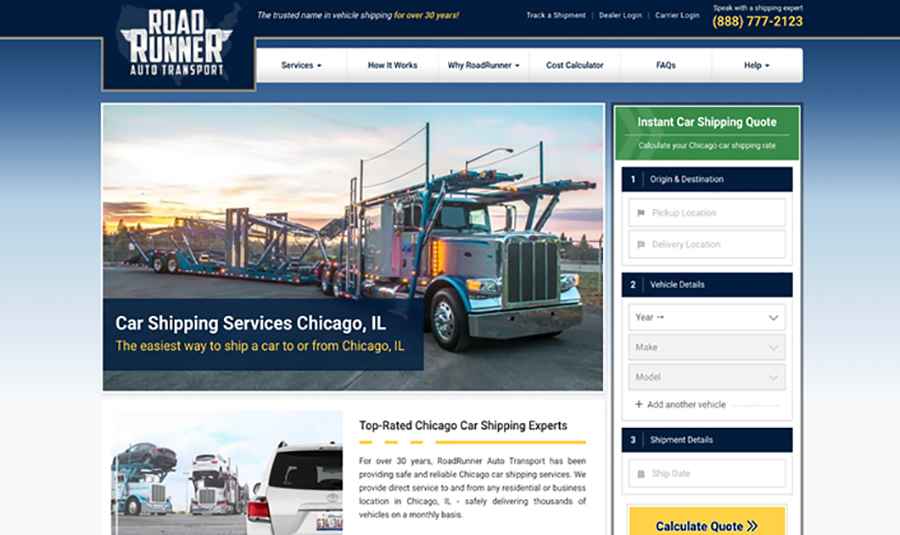
That's usually when the panic Googling starts, and that's exactly the wrong time to be making decisions about car transport from Chicago.
Chicago sits at the intersection of Interstate 90, Interstate 94, and Interstate 55, which makes it one of the busiest auto transport corridors in the Midwest.
Routes heading to cities like Phoenix, Miami, Los Angeles, and Houston tend to have solid carrier availability and competitive pricing compared to smaller origin cities.
A shipment from rural downstate Illinois is a completely different story, with fewer pickups, higher quotes, and longer wait times.
Open vs. Enclosed Carrier
The first real decision is carrier type.
Open transport uses those multi-level car haulers you see on the highway, the ones carrying eight to ten vehicles stacked on two tiers.
If you're shipping a 2021 Honda Accord or a Ford F-150, open transport is the practical choice.
It's cheaper and faster to book, and the risk of damage is genuinely low.
Enclosed transport is built for a different category entirely.
Think classic cars, luxury vehicles, and anything where cosmetic condition matters at a level most people wouldn't worry about.
A 1967 Chevrolet Corvette or a brand-new Porsche 911 Turbo S belongs inside an enclosed trailer.
You'll pay roughly 40 to 60 percent more, but you're getting a climate-shielded, fully covered hauler with far fewer vehicles on board.
For a daily driver, it's overkill.
What Actually Drives the Cost
Pricing in the car transportation industry isn't as random as it feels.
There's a logic to it, even if brokers don't always explain it clearly.
- Distance matters, but not linearly. A 300-mile shipment might cost $500, while a 2,000-mile run could come in at $900 because per-mile rates drop as total mileage increases.
- Vehicle size and weight shift the quote. A Chevrolet Suburban takes up more deck space than a Mazda MX-5 Miata, and carriers price accordingly.
- Seasonal demand swings harder than most people expect. January through March is snowbird season, when retirees ship vehicles from the Midwest down to Florida and Arizona, pushing southbound rates up fast.
- Pickup flexibility plays a role too. If you need exact-date pickup with door-to-door service in a dense Chicago neighborhood like Lincoln Park or Wicker Park, expect to pay more than terminal-to-terminal shipping.
Timing Your Shipment Right
The window between booking and pickup catches a lot of first-timers off guard.
This isn't Amazon Prime.
Most standard shipments take anywhere from one to two weeks for the carrier to arrive after you've confirmed.
Chicago to Dallas might get picked up within five days because it's a high-traffic lane.
Chicago to a small town in Montana could take ten days or more before a driver has room on the trailer.
If you're working with a firm deadline, book at least three weeks ahead.
Rushing it limits your options and almost always costs more.
Prepping Your Vehicle Before Pickup
Remove all personal belongings from the car.
Carriers aren't insured for loose items, and anything rattling around can cause interior damage.
Take out toll transponders, garage remotes, and dashcams.
Disable aftermarket alarm systems that might go off mid-transit.
Walk around the vehicle with your phone and photograph every panel, bumper, wheel, and windshield before handoff.
Both you and the driver will fill out a Bill of Lading noting pre-existing damage, but your own photos are the strongest backup if a dispute comes up.
Keep the gas tank at about a quarter full since the vehicle only needs enough fuel to drive on and off the trailer.
Choosing a Company That Won't Ghost You
The auto transport industry has a broker problem.
Hundreds of middlemen quote low to win the booking, then struggle to find a carrier willing to haul at that price.
The result is a missed pickup window, no communication, and you scrambling to find an alternative.
Look for companies that operate their own fleet or have long-standing relationships with vetted carriers.
Check their USDOT number and MC authority through the FMCSA website, where every legitimate carrier and broker is registered.
Reviews on the Better Business Bureau and Google Business Profile give you a real read on customer experiences.
Companies like RoadRunner Auto Transport, for example, have been in the space long enough that you can verify their track record across multiple review platforms.
A single coordinator who tracks your shipment from pickup to delivery makes a measurable difference when timelines shift.
Door-to-Door vs. Terminal Shipping
Door-to-door is the default most people expect.
The carrier picks up at your address and delivers to the destination.
In practice, "door" means as close as the truck can safely get.
An 80-foot car hauler isn't pulling into a narrow residential street in Lakeview or backing down a dead-end road in the suburbs.
The driver will coordinate a nearby meeting point, like a parking lot or wider cross street, and you'll need to be there.
Terminal shipping works well if you're flexible.
You drive the car to a depot, the carrier picks it up from there, and drops it at a terminal near your destination.
It costs less and often means a faster pickup window.
Chicago-Specific Things Worth Knowing
Parking restrictions can complicate pickup logistics.
Street cleaning schedules, residential permit zones, and rush-hour tow zones all limit where and when a carrier can stage.
If you're in a high-rise with underground parking, the hauler can't access that, so you'll need the car street-level and ready.
Winter shipments bring weather delays.
Lake-effect storms, icing on I-90 through Indiana and Ohio, and general Midwest winter conditions can push delivery timelines by a day or two.
Carriers won't roll in dangerous conditions, and they shouldn't.
Factor that buffer in if you're shipping between November and March.
Chicago's position as a major freight hub does give you an edge on pricing for popular routes.
The I-94 corridor to Minneapolis, the I-65 run to Nashville, and the I-55 shot to St. Louis are lanes carriers want to fill.
That demand density keeps rates more reasonable than shipping from a smaller metro.
The Short Version
Car transportation doesn't need to be stressful if you give yourself enough lead time and pick a company with actual carrier relationships.
Know what your vehicle needs, prep it properly, document its condition, and stay realistic about timelines.
Chicago is one of the better cities to ship from because of its position in the national freight network, but that only helps if you plan ahead instead of scrambling at the last minute.