Towing a Camper Up the World's Steepest Roads: A Diesel Truck Survival Guide
There's a special kind of pucker factor that hits when you're staring up at a 25% grade with 14,000 lbs of fifth-wheel hooked to your bumper. Whether you're crawling up New Zealand's Baldwin Street, grinding over an Alpine pass, or hauling a toy hauler into the Rockies, the world's steepest roads punish a tow rig like nothing else. The engine that idles happily in your driveway suddenly turns into a heat-soaked, smoke-belching liability.
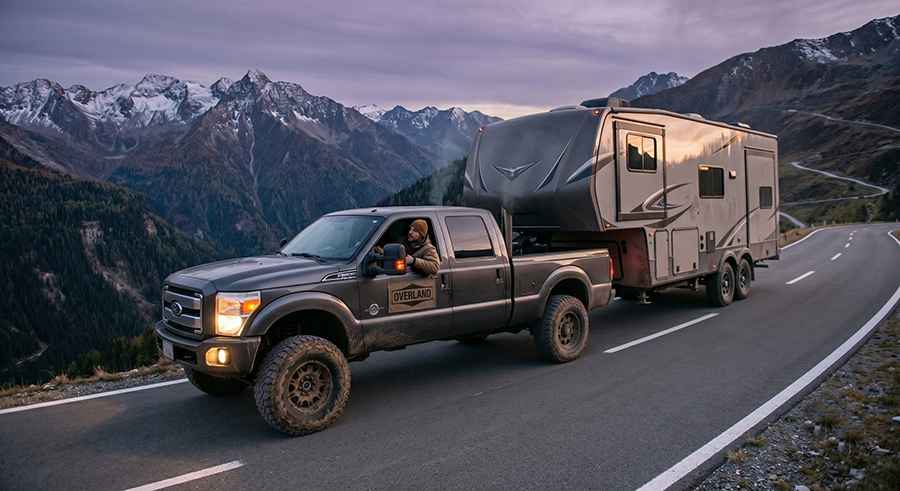
If you tow heavy in serious terrain, this guide breaks down what actually goes wrong on extreme grades and the diesel performance upgrades that keep your truck pulling instead of limping.
Why Steep Grades Are Brutal on a Diesel Tow Rig
Towing on flat interstate is one thing. Sustained steep climbs are a completely different physics problem. When you're pulling a heavy load uphill, three things spike fast:
- Exhaust gas temperatures (EGTs): Under heavy load on a long climb, EGTs can climb past 1,250°F, the danger zone where pistons and turbos start to suffer. A stock truck has limited headroom here.
- Coolant and transmission temps: Low gears, high RPM, and constant throttle generate enormous heat with very little airflow at low speed.
- Backpressure and airflow restriction: Factory emissions hardware chokes airflow exactly when your engine is gasping for every bit of oxygen and trying to dump heat.
On the descent it flips: now you're riding the brakes and asking your exhaust brake and engine braking to do work they were barely designed for. Steep two-way grades are where weak tow setups get exposed.
The Real Enemy: Heat and Restriction Under Load
Most towing horror stories on big grades come down to two words — heat and restriction. A factory diesel is engineered for emissions compliance first and towing performance second. The exhaust path is deliberately tight, the EGR system routes hot, sooty gas back into your intake, and the tune is conservative to protect the DPF.
That's fine for a Sunday grocery run. It's a problem when you're hauling a 15,000 lb trailer over a mountain pass in 95°F heat.
This is exactly where a properly built diesel airflow setup earns its keep. Opening up the intake and exhaust path lets the engine breathe, drops EGTs, and gives the turbo room to work. For owners who tow heavy in off-road, competition, or international/off-highway environments, a set of heavy-duty diesel delete kits is the most common foundation, as they remove the biggest airflow chokepoints and let the engine shed heat far more effectively under sustained load.
Tuning: The Single Biggest Towing Upgrade
If you only change one thing on a heavy tow rig, make it the tune. A quality diesel performance tuner does more for towing than almost any bolt-on. The right tow-calibrated tune will:
- Sharpen throttle response so you're not hunting for power mid-climb.
- Improve and lock in smarter transmission shift behavior under load.
- Add usable low-end torque exactly where steep grades demand it.
- Often improve fuel economy when you're not towing.
A good diesel tuner built for towing lets you switch between a daily-driver map and a tow map, so you get power when the trailer's hooked up and efficiency when it's not. Pair the tune with the airflow upgrades above and you've addressed both the demand side and the supply side (heat and breathing) of the equation.
Don't Overlook the EGR System
The EGR system is one of the most common failure points on a hard-working diesel, and grades make it worse. By design, it recirculates hot exhaust gas back into the intake, which raises intake temps and packs the intake tract with soot over time. Under the sustained heat of a long climb, a clogged or failing EGR cooler can crack, dump coolant, and leave you stranded on the side of a switchback.
For owners who tow heavy and want long-term reliability in extreme conditions, EGR upgrades for heavy towing are a popular reliability move. The goal is simple: lower intake temps, cleaner airflow, and one less heat-related failure point on a mountain pass where help is hours away.
A Practical Pre-Trip Checklist for Steep-Grade Towing
Before you point a loaded rig at a serious climb, run through this:
- Know your numbers: Confirm your truck's max towing capacity and payload, and stay under them. Steep grades shrink your real-world margin.
- Install an EGT and trans-temp gauge: You can't manage what you can't measure. Watch your pyrometer on the climbs.
- Service your cooling system: Fresh coolant, a clean radiator, and a healthy fan clutch are non-negotiable.
- Use the right gear, not the brakes: Let engine braking and your exhaust brake hold you back on descents.
- Build your airflow and tune together: Upgraded intake and exhaust without a matching tune leaves performance on the table; a tune without airflow improvements runs hotter.
Build the Right Tow Rig Before the Mountain Builds It for You
The world's steepest, most dangerous roads don't care how nice your trailer is — they care whether your engine can make power, move air, and dump heat under sustained load. Get those three right and a 20% grade goes from white-knuckle to routine.
If you're spec'ing out a serious tow build for Powerstroke, Cummins, Duramax, or EcoDiesel, start with the airflow and tuning foundation, then dial in reliability from there. You can browse platform-specific diesel performance parts and towing upgrades to match the right kit to your engine, so the next time you face down a mountain pass with a heavy trailer behind you, your truck is the least of your worries.