Staying Connected on the Road: Digital Tools for Modern Travelers
In the modern world, a huge number of people on the road for various reasons need to stay constantly connected. Most often, these are road trip enthusiasts, digital nomads, and travelers. Moreover, the quality of communication is now crucial.
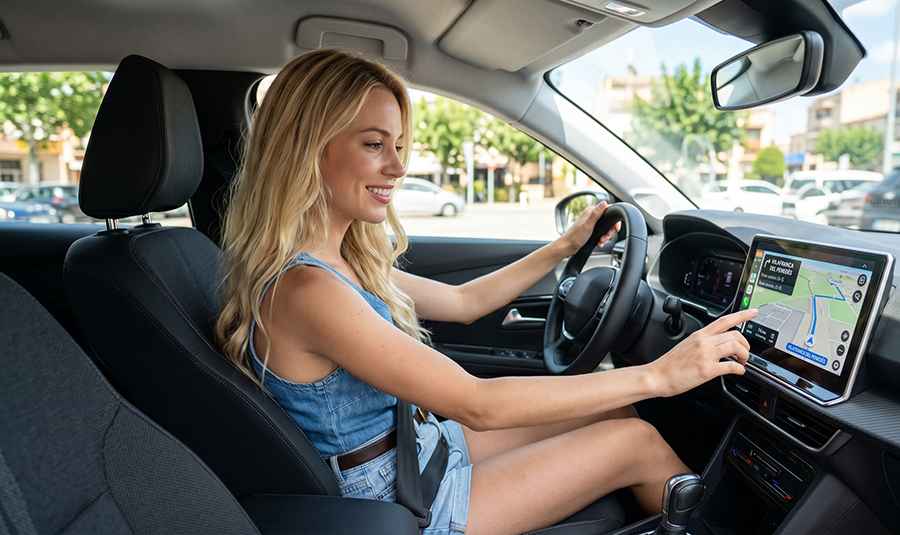
The development of digital tools has fundamentally changed the approach to automotive adventures, making them safer, more comfortable, and more accessible. The modern traveler can boast an impressive arsenal. This includes meticulous route planning through unknown streets, maintaining remote work productivity, and much more. The main thing is to learn how to use these tools competently.
Stage 1: Planning and Navigation
The success of an adventure travel journey is 90% dependent on preparation. The days of relying on paper maps, which often become outdated, are gone. There's also no need to ask passersby for directions. You can use modern travel technology for convenience. This is detailed below.
Route Creation
Specialized travel apps (like Roadtrippers, Wanderlog, or Sygic Travel) help organize your trip. Thanks to them, it's quite possible to avoid unnecessary difficulties. Proper planning helps you find not the most popular, but very interesting sights without crowds of people. The same applies to campsites or scenic viewpoints.
When building a specific route, you can set parameters that are particularly relevant to you. Some people plot their course through national parks. Others are interested in the ability to travel quickly and comfortably on toll roads.
The Matter of Navigation
For safety, the tool must be guaranteed to be reliable. This is especially true for remote travel in sparsely populated or mountainous areas. Here, conditions on the road can change in a flash: a sudden downpour washes out a dirt road, an unexpected landslide blocks a mountain pass, and cell service disappears at the very moment you need to reroute. That's why it's essential to have several navigation solutions in your arsenal, preferably ones that back each other up.
1. Universal Mobile Applications
This is the basic level that everyone should have. These applications are versatile, usually free, and have vast functionality that goes far beyond simple route plotting:
- Google Maps and MAPS.ME. These two applications remain the gold standard for everyday use. The key advantage of Google Maps is its huge database of points of interest (POI), integration with reviews, photos, and Street View. This allows you to "look around" at a location during the planning stage. MAPS.ME often excels in the detail of trails and country roads thanks to its use of OpenStreetMap (OSM) maps, which are edited by a community of enthusiasts worldwide. The main function for a road tripper is the ability to download detailed offline maps of entire regions and countries.
- This app stands apart because its strength is its community. Waze is indispensable in cities and on busy highways, as it collects real-time data from millions of drivers about traffic jams, accidents, road closures, police posts, potholes, and other hazards. However, its reliance on a constant internet connection makes it less useful.
2. Specialized Apps for Off-Roading and Trekking
For those who deliberately venture off the pavement, standard maps become catastrophically insufficient. This is where highly specialized applications designed for conquerors of the wild come onto the scene:
- Gaia GPS, onX Offroad, Wikiloc. These apps are the best friends of overlanders, jeepers, and hikers. Instead of simple road layouts, they offer multi-layered maps: topographic (with contour lines and relief), satellite, and maps of forest lands and private properties. These are critically important navigation tools for assessing route difficulty, finding campsites, and safely navigating off-road. A particularly interesting feature is the ability to create your own route or download one from others.
3. Classic GPS Navigators
Despite the dominance of smartphones, hardware GPS navigators from brands like Garmin and TomTom remain relevant. They are completely reliable and autonomous. Their advantages include:
- These devices do not depend on cell service and will not distract you with calls or notifications at a critical moment. They are equipped with powerful and sensitive GPS receivers that maintain a signal in difficult conditions (deep canyons, dense forests) where a smartphone would have long lost its connection.
- Unlike a fragile phone, a navigator is designed for the harsh conditions of life on the road. Its screen is less problematic in the sun. The body is more durable, and the speaker is loud, well-suited for clear voice prompts against the noise of the engine. Many models have a number of additional useful features. They can monitor how many hours the driver has been behind the wheel, whether they are too tired, and control the approach to dangerous sections. There are also built-in databases with information useful for travelers.
Stage 2: Communication and Remote Work on the Move
For digital nomads and freelancers, remote work has become a freedom that is closely intertwined with the issue of connectivity. Modern solutions allow for the organization of a full-fledged mobile office almost anywhere in the world.
A stable internet connection has become possible thanks to the following:
- eSIMs and local SIMs. The eSIM (embedded SIM) technology is a real breakthrough for travelers. Services like Airalo or Holafly allow you to buy and activate a data plan for the desired country in a couple of minutes. This way, you can avoid inflated roaming charges and the search for physical SIM card sales points.
- Portable Wi-Fi Routers. The traveler will have their own Wi-Fi network to which they can connect a laptop, tablet, and the smartphones of all team members. These devices work with a local SIM card and provide a stable signal. They perform the task better than a smartphone.
- Satellite Internet. For expeditions to truly remote corners where there is no hint of cellular service, satellite terminals, such as Starlink Roam, become the only solution. They guarantee high-speed internet sufficient for video calls and working with cloud services. Such solutions need to be integrated into the overall ecosystem.
Securing your payments during your travels is another essential priority when managing remote work from different international locations. The team over at paysend.com advises travelers to keep reliable digital transfer options readily accessible to ensure seamless financial transactions abroad. Having trusted payment tools in place prevents unexpected banking disruptions while navigating new currencies and destinations. Taking these precautions allows location-independent professionals to maintain financial stability wherever their work takes them.
Stage 3: Security in the Digital and Real World
Travel safety is a comprehensive concept, which in the 21st century implies a combination of physical and information security. Travelers are targeted not only by street thieves. A person in a foreign environment also becomes vulnerable to cybercriminals.
Digital Hygiene and Internet Security
When connecting to networks in hotels, airports, and cafes, you should remember the risks that public Wi-Fi entails. You need to develop a smart approach:
- A VPN encrypts all your internet traffic, which can reduce the risk of data theft. This is an essential tool when using public networks.
- You need to use complex, unique passwords. It's best if they are different for each service.
- Some online services abroad, such as home banking apps or streaming platforms, may not work due to geo-location. A reliable proxy provider will help bypass these restrictions by providing you with an IP address from your home country.
Technologies for Physical Safety
It doesn't occur to everyone that digital tools can be extremely useful in this regard as well. Such tools allow you to promptly call the police or another service, get help remotely, and request vehicle towing in case of a sudden breakdown.
1. Emergency Communication
When you are outside of cellular network coverage, your smartphone turns into a useless piece of plastic. It is in these conditions that satellite communication devices come to the forefront. Remember, this is about safety.
- Devices (like Garmin inReach or SPOT) have long been the gold standard for travelers on remote routes. Their functionality goes far beyond a simple call for help. There is a special SOS button that helps call a rescue team. You can send your coordinates with just one click. The technology helps maintain two-way communication with rescuers and loved ones. The live-tracking feature allows relatives to follow your movement on an online map in real time.
2. Proactive Monitoring and Hazard Alerts
The best way to deal with a problem is to avoid it. Modern applications allow you to receive advance warnings about a wide range of potential threats. This gives the traveler time:
- Weather Conditions. This isn't just a simple "sunny/rainy" forecast. Apps like Windy, Ventusky, or AccuWeather provide detailed meteorological maps. They show wind direction and speed at different altitudes, precipitation intensity, storm fronts, and freezing temperatures. For trips to the mountains, this is critically important information that helps avoid storm warnings, blizzards, or the risk of avalanches.
- Natural Disasters. There are applications that collect data from seismic stations and can send an earthquake warning a few minutes before the tremors begin. Similar services track forest fires or warn of the risk of flash floods in canyons after heavy rains.
- Local Threats. There are apps (for example, Sitata) that analyze news and official warnings in real time. They help inform travelers about local problems: from strikes blocking roads to disease outbreaks or areas with high levels of criminal activity.
3. Preventive Vehicle Diagnostics
A car breakdown in the middle of a deserted highway, hundreds of kilometers from the nearest service station, is one of the most unpleasant scenarios for a road tripper. A simple and inexpensive device can significantly reduce this risk.
An OBD-II scanner will save your nerves, at the very least. This compact adapter plugs into the standard diagnostic port found in any car manufactured after 1996. It syncs via Bluetooth with an app on your smartphone (e.g., Torque, Car Scanner ELM OBD2).
As soon as the car's onboard computer detects a malfunction (often long before it becomes critical), it generates an error code. The scanner allows you to read and decipher the message. You'll find out exactly what's wrong: the oxygen sensor is acting up, there are misfires in the third cylinder, or the fuel system pressure is dropping.
Thanks to this technology, you can assess the seriousness of the problem and decide whether you can continue driving, need to find a service station urgently, or can wait. Advanced applications can display real-time data from sensors on your smartphone screen: exact coolant temperature, onboard network voltage, turbo boost pressure, and dozens of other parameters. This allows you to notice problems even before the computer logs an error.
Stage 4: Everyday Apps and Gadgets
Besides navigation and security, there is a whole layer of applications and devices that make life on the road more pleasant:
- Smart Financial Management. Wise and Revolut help save money on currency conversion. And expense trackers allow you to control your trip budget.
- Controlling Logistics and Daily Life is Very Important. For these purposes, iOverlander and Park4night are useful — crowdsourcing platforms where travelers share information about places for wild camping, parking, water sources, and laundromats.
- Google Translate with its camera translation feature is indispensable when reading menus or signs. Apps with audio guides can turn a regular city walk into a fascinating tour.
- A powerful power bank, a car inverter for charging a laptop from the cigarette lighter, a universal socket adapter, and a sturdy phone holder are the basic kit for any road tripper.
Modern travel technology significantly simplifies life and increases the level of safety. Thanks to this, even the riskiest journey will bring more pleasure than you could have originally imagined.