How to Handle Road Hazards Safely
Every few years, a crash makes national headlines — not because of a drunk driver, but because the road gave out. A pothole nobody fixed. Debris sitting in the middle of a freeway since Tuesday. Black ice on a bridge with no warning sign in sight. These aren't freak accidents. They happen constantly, and most drivers have no real plan for what to do when the pavement stops cooperating. What follows is a practical breakdown — the hazards, the reactions, and the legal reality when the road itself is the problem.
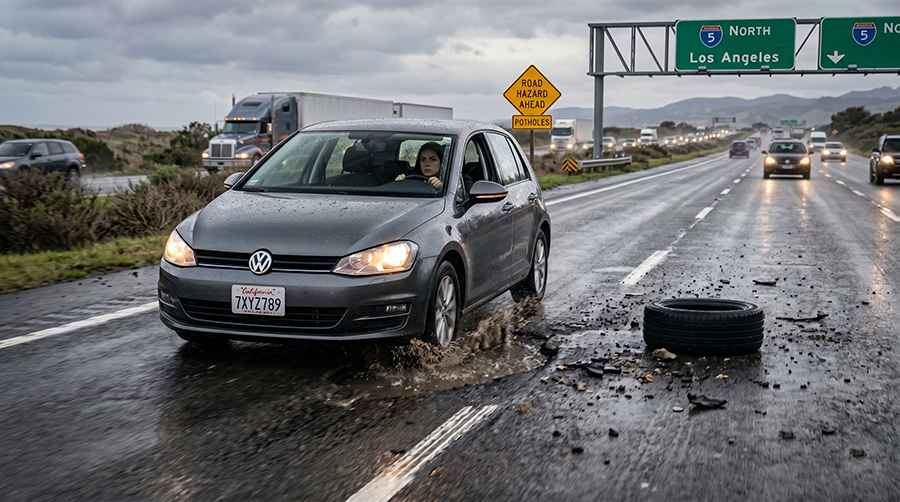
What Actually Counts as a Road Hazard
Some hazards are hard to miss. A shredded truck tire spread across two lanes of I-10. A chunk of missing concrete at a shoulder edge. An entire section of black ice that makes a straight highway feel like something else entirely.
Others? Quiet. A lane marking faded past the point where anyone can read it. A bridge expansion joint that kicks the front wheel sideways at 60 mph. A drainage grate placed directly in the path a cyclist would naturally take.
The distinction matters more than most people realize. Road condition accidents have triggered serious litigation against municipalities, state DOTs, and private contractors for decades. A lot of drivers assume their insurance covers the rest. It usually doesn't — not cleanly, not without documentation, and not without understanding who actually owns that stretch of road. For drivers already dealing with the aftermath of an accident on a compromised road, https://desertinjurylaw.com/practice-areas/bus-accident-attorney-palm-springs-ca/ is worth looking at — especially when the hazard had nothing to do with driver error. That said, understanding what happened on the road is always step one.
The Hazards Worth Knowing by Name
Potholes
Water gets under the pavement. It freezes, expands, cracks the surface. Repeat that a few dozen times through a single winter and what's left is a hole that can blow a tire, bend a rim, or — at highway speed — cause a driver to lose control entirely.
In 2021, a Los Angeles jury sided with a motorcyclist who hit a pothole the city had documented and then simply didn't repair for months. The reports existed. The city had them. Nothing was done. That gap between "known" and "fixed" is exactly where legal liability tends to live.
Debris
Trucks lose cargo. It's not rare — it's regular. Tire retreads, wooden planks, loose metal, unsecured furniture. A well-documented 2004 Southern California incident involved debris falling from a commercial load and setting off a multi-vehicle chain reaction. You won't always see it in time. What you can control is following distance — the only thing that actually buys a reaction window when something appears in the lane ahead.
Construction Zones
Here's where it gets messy. Active construction zones have inadequate signage, lane shifts that appear without enough warning, sudden pavement drops. The posted speed limit often stays the same regardless of conditions. Driver confusion in badly marked zones contributes to thousands of crashes a year — and when something goes wrong, responsibility tends to scatter across multiple parties without landing cleanly on any one of them.
Black Ice
No color. No texture. No warning. It forms when temperatures hover just below freezing and moisture on the surface turns nearly invisible. Bridges cool faster than surrounding road — so they ice first. Same with shaded overpasses, mountain passes in shoulder seasons. The first real sign is usually a steering wheel that goes vague. By then, there's not much time.
What to Actually Do — Because Instincts Often Lie
- Swerve if the lane beside is clear and there's genuine time to do it. If not: release the brake just before impact. Braking into a pothole locks the suspension and sends the full force straight into the wheel. Releasing just before contact cushions it — not perfectly, but noticeably. Grip the wheel, don't overcorrect, and if the car pulls to one side afterward, pull over somewhere safe. A damaged rim handled at speed rarely ends well.
- At 65 mph, there's about 1.5 seconds to respond to something 150 feet ahead. Hard braking kills directional stability — that's the wrong move. Steer around if there's space and time. If not, absorb it. Small objects can often be straddled — let them pass under the center of the vehicle rather than under a wheel. Works more often than expected.
- Brake — wrong. Accelerate — wrong. Steer sharply — also wrong. Ease off the gas, keep the wheels pointed straight, let engine drag slow the car. If the rear slides, steer gently into the slide. Not against it. Counter-steering works, but only when it's smooth and early — not a last-second jerk.
- Six inches of moving water will knock a person down. A foot floats a small car. Two feet will move an SUV. If the road surface isn't visible, don't drive into it. During Hurricane Harvey in 2017, people died in flooded Houston underpasses. Some of them could see the water rising before they drove in. The rule isn't complicated — it's just hard to follow when the road looks passable until it isn't.
Who Actually Pays When the Road Causes the Crash
American roads are maintained by a patchwork — federal, state, county, municipal, private contractors. When a defect causes an accident, liability doesn't land anywhere automatically.
The Government Immunity Problem
Public entities have sovereign immunity — a legal doctrine that historically made it difficult to sue government bodies at all. Most states have loosened it enough that municipalities can be held liable for road defects, but conditions apply. The defect needs to be documented, previously reported, or reasonably knowable. A pothole that formed overnight during a storm is one situation. A pothole that's been photographed and submitted through city complaint systems for eight months is another one entirely.
Notice Windows
Claims against public entities require formal notice filed within a specific window — sometimes 30 days from the accident, sometimes 90, depending on the state. Miss it and the right to pursue the claim closes. That's not a guideline. It's a hard cutoff with no flexibility.
Contractors and Third Parties
Construction contractors, trucking companies whose cargo ends up on the road, vendors responsible for pavement markings — all of them can carry partial liability depending on the specifics. How that gets divided is a legal question that varies by jurisdiction and fact pattern.
None of this is legal advice. Road condition cases are complicated, fact-specific, and different in every state. The practical takeaway is simple: documentation from the immediate aftermath of an accident matters more than most people think it does.
Document Everything — Before the Scene Changes
Road conditions don't stay the same. Potholes get patched the next morning. Debris gets swept before the tow truck arrives. Construction zones shift overnight. If there's any chance the road played a role in what happened:
- Photograph the hazard before anything moves
- Get the road surface, any signage nearby, and any missing signage on record
- Note the exact location — GPS coordinates are better than intersections
- Take contact information from anyone who saw it
- File a police report regardless of how minor the damage looks
The window to capture evidence is short. Once the scene clears, a lot of what mattered is gone.
The Bottom Line
Road hazards aren't rare exceptions. They're part of driving in a country with aging infrastructure, deferred maintenance budgets, and roads that were built for different traffic volumes than what they carry now. Knowing how to handle a pothole, a debris field, black ice, or a flooded stretch — calmly, without overcorrecting — is a genuinely useful skill.
And if the road caused the accident: document everything, find out what the notice deadlines are in the relevant state, and don't assume the situation is too unusual to matter legally. Roads are supposed to be maintained. When they aren't, that responsibility belongs to someone.