What Are The Most Dangerous Roads In Duluth, GA, For Car Accidents?
Suburban arteries are more lethal than interstates; Georgia road deaths jumped 20% in the first half of 2025, largely due to high-traffic surface streets. GDOT’s public crash data portal and dashboard document year‑over‑year changes in crashes and fatalities and show that the state publishes quarterly and mid‑year tallies highlighting increases in roadway fatalities and serious injuries concentrated on non‑interstate arterials; the GDOT Crash Data Dashboard provides the official counts and trend charts used to verify percentage changes in statewide fatalities and to isolate crashes on surface streets versus interstates.
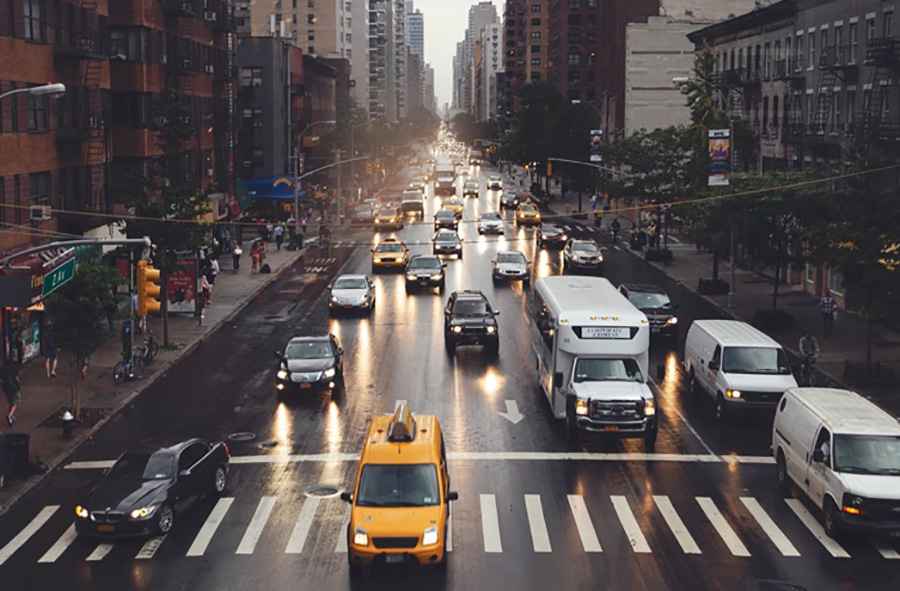
Commercial corridors see more crashes than highways. Frequent business entrances and shifting speed limits cause these high-density wreck zones. Commuters treating surface streets like raceways create a predictable environment for catastrophic kinetic energy transfer. Adjusters bank on collision victims' misunderstanding of liability when complex intersection dynamics are involved. The actual risk lies in mundane transit zones where driver complacency intersects with poor infrastructure design, turning routine errands into life-altering events before a collision report is drafted.
Evaluating Collision Metrics On Pleasant Hill Road
Pleasant Hill Road is the primary feeder for Interstate 85 traffic. The volume of commuters shifting across five lanes creates a continuous hazard zone. Rear-end collisions frequently occur near the intersection with Satellite Boulevard, where sudden braking cascades through tightly packed traffic platoons.
Drivers misjudge the stopping distance required when traffic signals transition, leading to high-impact collisions that deploy airbags. Rear-end collisions on Pleasant Hill Road frequently cause whiplash and spinal trauma. Understanding driver distraction metrics helps explain why these rear-end collisions occur so frequently at controlled intersections.
Attorneys must secure skid mark data and camera footage immediately to prove fault. Insurance adjusters move quickly to minimize payouts by manipulating early statements. Retaining a Duluth car accident lawyer, specifically Slam Dunk Attorney, a firm engaged in personal injury representation, establishes a boundary against aggressive insurance tactics. Evidence deteriorates rapidly once municipal sweepers clear the roadway debris.
Assessing The Hazards Of Peachtree Industrial Boulevard
Peachtree Industrial Boulevard presents a danger due to aggressive merging patterns near Sugarloaf Parkway. Motorists entering the roadway often fail to yield, forcing established traffic to execute evasive maneuvers. The resulting side-swipe collisions frequently push vehicles into concrete barriers. High-speed angular impacts require precise analysis to establish fault.
Misjudging Speed Differentials
Drivers routinely underestimate the velocity of oncoming traffic when turning onto the main thoroughfare. This miscalculation results in devastating T-bone impacts, tearing through vehicle crumple zones. Paramedics transport victims directly to Northside Hospital Duluth for emergency trauma care following these violent impacts. Reviewing crash history data reveals a concentrated cluster of severe collisions at specific uncontrolled median breaks.
The Role Of Inadequate Illumination
Nighttime visibility drops significantly along certain stretches, obscuring pedestrian crosswalks and turning lanes. Without sufficient overhead lighting, motorists fail to recognize stationary hazards until impact is unavoidable. Cities often ignore engineering reports identifying lighting hazards despite the high rate of nighttime pedestrian accidents.
The Hidden Perils Of Buford Highway
Buford Highway remains notorious for erratic traffic flow and unpredictable pedestrian movements. A documented scenario involved a driver attempting a left turn near Duluth Highway while their visibility was obstructed by an illegally parked delivery truck. The resulting collision forced complex litigation regarding shared liability, illustrating how obscure regulatory violations impact injury claims. Examining Georgia judicial records clarifies how courts distribute fault among multiple negligent parties.
Adjusters use early recorded statements to cap a claim's value before the victim's symptoms fully manifest. This predatory strategy relies on exploiting the confusion immediately following an impact. Establishing a protective barrier prevents investigators from weaponizing innocent remarks against the injured party.
Following a crash, victims can contact Slam Dunk Attorney at 2250 Satellite Blvd, Ste. in Duluth by calling (678) 329-9750 to directly talk with their attorneys.
Uncovering Liability In Multi-Vehicle Pileups
When collisions occur near the Gwinnett County Courts transit routes, determining the exact sequence of impacts becomes an engineering puzzle. Chain-reaction crashes require accident reconstruction specialists to calculate the precise force transferred between each vehicle. These kinetic equations prove which driver initiated the sequence versus who simply failed to stop in time. The physics of the crash dictate the financial responsibility. As Peter Jaraysi, a Duluth car accident lawyer, said, “The laws of physics don't lie, even when witnesses do. In a multi-car pileup, the data tells the story of who started the clock and who just ran out of time."
Securing the electronic control module from commercial vehicles provides undeniable telemetry data regarding speed and braking application. Attorneys subpoena this digital evidence to counter false narratives constructed by defense adjusters. Analyzingcommercial crash statistics shows that heavy truck telemetry routinely contradicts initial police report narratives. Securing these modules also aligns with strict highway safety research protocols.
Preserving Evidence Before It Disappears
Skid marks fade within days. Debris gets swept away. Traffic camera footage overwrites itself every seventy-two hours. Waiting to initiate an investigation destroys the foundation of a liability claim. Immediate action ensures independent investigators can measure gouge marks and photograph resting positions before the scene normalizes.
Securing the black box data requires a formal spoliation letter to prevent the at-fault party from destroying the vehicle. This legal maneuver binds the owner to maintain the evidence in its post-crash state. Statutes found withinstate legislative codes dictate specific timeframes for evidence preservation. Failing to execute this demand allows trucking companies to erase vital metrics.
Questions About Duluth Traffic Collisions
How long is the traffic camera footage stored in Gwinnett County?
Traffic camera retention for Gwinnett and Duluth varies; some systems purge data in less than a week, while GDOT Navigator cameras may not record at all. Subpoenaing this digital evidence immediately remains essential to proving liability before the system purges the data.
Will auto insurance cover emergency transport to Northside Hospital Duluth?
Georgia operates under a fault-based system. Medical payments coverage handles initial emergency transport bills regardless of liability while the primary claim processes against the at-fault driver.
Can I request the electronic control module data from a commercial truck?
Yes. Sending a strict spoliation letter legally prevents the trucking company from erasing the module data, preserving vital speed and braking metrics for subsequent forensic analysis.
Does the police report definitively establish fault for a collision?
No. A police report is just an officer's initial opinion, not a final determination of fault. Accident reconstruction data and module metrics frequently override these initial findings during complex litigation proceedings.
Image source: Pixabay
