The Left-Turn Trap: How to Anticipate and Avoid Frequent Bike Wrecks
Intersections are where things get sketchy for riders. You’re cruising along, watching the light and feeling in sync with traffic. Then a driver coming the other way decides to turn, thinking they have plenty of time. In that instant, your stomach drops. You realize you are on a collision course and it is happening fast.
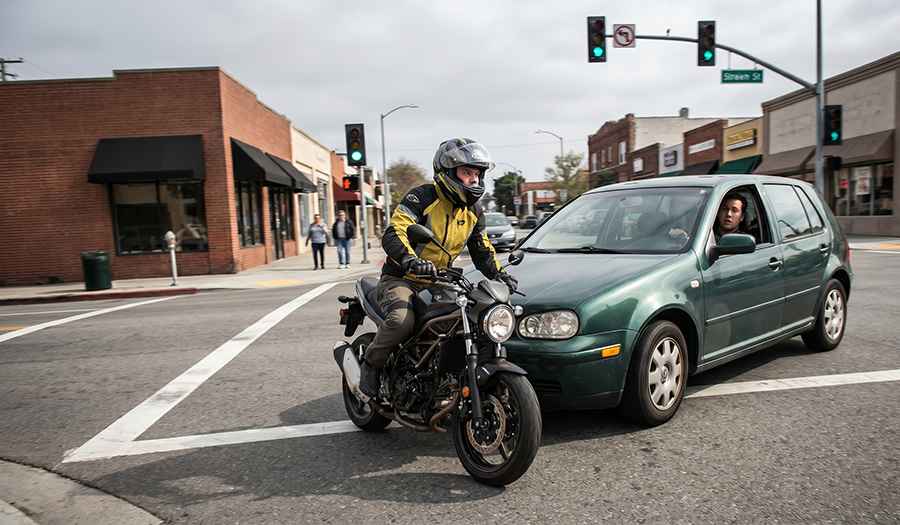
What makes this situation so scary is how little time you have to react. One second everything feels normal, and the next a car is cutting right across your path. Riders often describe it as a wall of metal appearing out of nowhere, and that is exactly what it feels like. It is not rare either. This kind of moment happens on everyday streets all the time.
And it is not just bad luck. There is a pattern to it. This is actually one of the most common types of motorcycle crashes involving other vehicles. The more you understand why drivers fail to see you, the better you can build the awareness and habits needed to get through these intersections safely.
The Looming Effect and Human Visual Limits
The "Looming Effect" is a physiological quirk that explains why even well-meaning drivers pull out in front of motorcycles. The human brain is naturally better at calculating the speed and distance of large, bulky objects like trucks. Smaller profiles, such as a bike and rider, don't trigger the same immediate alarm bells in the driver’s subconscious during a quick scan.
Because you represent a smaller point on the driver's retina, you don't "grow" in size fast enough for them to realize you’re approaching quickly. To their eyes, you might look like a distant light rather than a vehicle closing the gap at forty-five miles per hour. This visual lag creates a false sense of security that leads to the fatal decision to turn left.
It is a scientific limitation that every rider must respect before they enter a busy junction. Assuming that a driver "should" see you ignores the reality of how their biology actually processes data. Realizing that you are effectively invisible to the driver’s depth perception allows you to adjust your approach and stay one step ahead of the Looming Effect trap.
Lane Positioning for Maximum Driver Visibility
Your position within the lane is one of the few things you can control to break through a driver's mental fog. Many riders make the mistake of hugging the curb or staying tucked behind larger vehicles, which makes them completely invisible to oncoming traffic. This "hiding" behavior significantly increases the likelihood of a left-turn collision because you simply aren't in the driver’s line of sight.
Riding in the part of the lane that provides the best "angle of visibility" is a vital defensive strategy. Usually, this means staying closer to the center line where an oncoming driver can see your headlight clearly without it blending into the background. It’s about demanding your share of the road by being as physically obvious as possible as you approach the intersection.
You should also avoid staying in a single static position if the situation looks uncertain. A slight weave within your lane can create a "visual flicker" that grabs the driver’s attention more effectively than a steady light. This active positioning signals that you are a mobile vehicle, forcing the driver to pause and actually register your presence before they commit to their turn.
The Gap Illusion and Misjudged Timing
Drivers often fall victim to the "Gap Illusion," where they assume the hole in traffic is much larger than it actually is. When they look at a car, they see a broad object that defines the boundaries of the gap. When they look at a motorcycle, the visual data is less clear, leading their brain to "fill in the blanks" with a safe but incorrect estimation.
This illusion is especially dangerous during twilight or at night when only a single headlight is visible. The brain struggles to determine how far away that light is without a secondary reference point to provide perspective. Drivers will often convince themselves they have a three-second window when they actually only have one. This miscalculation is the primary driver of high-speed T-bone collisions.
You have to ride as if the driver is definitely going to misjudge your arrival time. Never assume that a driver’s eye contact means they have correctly processed your speed or distance. They might be looking right at you and still believe they have ample space to clear the intersection. Respecting the Gap Illusion keeps you from entering the driver’s path of error.
Defensive Braking and Speed Management
Entering an intersection requires a "tactical reset" of your body and your controls. You should never approach a high-risk junction with your hands resting casually on the grips. "Defensive Braking" involves covering your brake lever and pedal with your fingers and toes, ready to apply pressure the moment you see the driver’s front wheels begin to twitch or rotate toward the turn.
Reducing your speed by even five miles per hour as you enter the "danger zone" provides you with much more time to react. This small adjustment significantly shortens your total stopping distance and allows for more precise swerving maneuvers if an impact becomes unavoidable. Speed management is your most powerful tool for turning a catastrophic collision into a manageable near-miss on the asphalt.
You should also be scanning for an "escape route" that doesn't involve hitting the car or oncoming traffic. Looking for a gap on the right shoulder or a path into the adjacent lane can save your life when braking isn't enough. Having a plan for where you will go if the car moves ensures that you aren't frozen by indecision during a crisis.
Situational Awareness as a Survival Tool
Summarizing the risks reveals that surviving the left-turn trap is a matter of proactive situational awareness rather than just mechanical skill. You have to be the smartest person on the road, anticipating mistakes before they happen and planning for every driver’s lapse in judgment. It is about a disciplined mindset that values your physical safety above your right to the lane.
Taking the time to master these defensive strategies turns you into a more professional and resilient member of the riding community. It fosters a culture of responsibility where riders look out for themselves by understanding the limitations of the people in cars. High standards in your own preparation lead to more stable and successful outcomes for your health and your future on the road.
Ultimately, the goal is to enjoy the freedom of the ride while minimizing the predictable hazards of the urban environment. By respecting the science of visibility and maintaining a defensive posture, you are demanding a higher level of safety for yourself. Reclaiming your peace of mind starts with a commitment to being an active, engaged, and safety-conscious rider every single day.