The Most Dangerous Seat on the Road: Why Bus Passengers Face Higher Risks Than They Realize
For many people, buses seem like one of the safest ways to travel. They are large, highly visible, and closely associated with organized public transportation in major cities. In places like Chicago, buses follow regulated routes through controlled intersections and dense traffic, creating a sense of order and predictability.
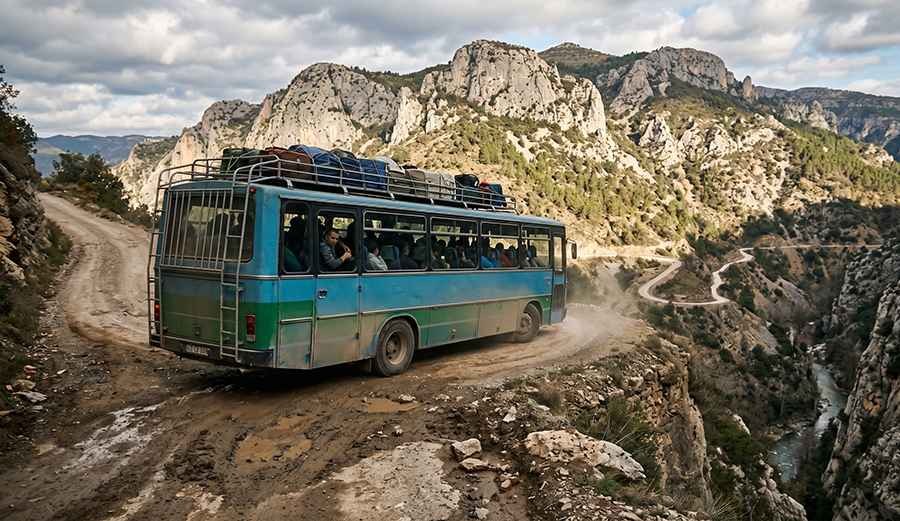
That feeling of safety often carries over into other settings. A bus can seem like a better option than a car on unfamiliar roads, especially in regions known for difficult terrain. Travelers boarding buses along steep mountain passes or winding rural highways may assume the vehicle itself offers enough protection.
In reality, safety depends heavily on the road, the environment, and the operating conditions. Urban systems benefit from signage, traffic controls, and infrastructure designed to reduce uncertainty. On more extreme roads, those safeguards may be limited or missing altogether. Sharp turns, narrow lanes, unstable surfaces, and sudden elevation changes create hazards that are far less common in city travel.
Passengers also have very little control over these risks. Unlike drivers, they cannot adjust speed, respond to danger, or make decisions in real time. The vehicle may feel secure because of its size, but that same structure can expose passengers to serious harm when conditions deteriorate.
The Geography of Risk: From Urban Streets to Extreme Roads
Road risk changes dramatically from one setting to another. In a city like Chicago, buses move through a dense but structured environment. Traffic lights, marked lanes, pedestrian crossings, and enforcement create a system where movement is relatively predictable, even during heavy congestion. Accidents still occur, but they often follow patterns tied to intersections, stop-and-go traffic, and shared right of way.
Outside that environment, the risks become less controlled. On mountain roads and isolated highways, many urban safeguards disappear. Drivers may face blind curves, narrow passages, steep drops, and poorly maintained surfaces. Under those conditions, a single mistake can have far more severe consequences than a typical city collision.
For passengers, this geographic contrast matters. A bus that feels routine on urban streets becomes much more vulnerable on unpredictable terrain. Weight distribution, braking distance, and limited maneuverability matter far more when the road itself introduces constant danger.
When serious crashes happen in large cities, the aftermath can be complicated by transit systems, private operators, and overlapping insurance issues. In those cases, injured passengers may seek help from a Chicago bus accident lawyer to understand liability and pursue compensation.
On more remote and hazardous routes, the difficulties can multiply. Limited oversight, unclear jurisdiction, and delayed emergency response can all make an already dangerous situation harder to resolve.
The Most Vulnerable Spots Inside a Bus
Where a passenger sits or stands can affect how severe an injury becomes during a crash. Most people choose a spot based on comfort or convenience, not safety, yet position inside the vehicle can make a significant difference.
Seats near the front are often more exposed in head-on collisions or abrupt stops, especially in urban traffic where intersection crashes are common. Rear seats can also be risky because passengers there may experience stronger jolts from the vehicle’s momentum during sudden braking or rear-end impacts.
Standing passengers face an even greater hazard. Many buses, particularly in city transit systems, allow standing during busy periods. Without restraints, those passengers are more likely to be thrown off balance, fall, or strike interior surfaces. Even at moderate speeds, a sudden stop can cause serious injury.
Window seats come with separate risks. In side impacts or rollovers, passengers near the windows are closer to the point of contact and may be exposed to broken glass, collapsing structure, or limited room to brace themselves.
Unlike private vehicles, most buses do not provide seat belts for every passenger. Without restraints, the force of a crash is absorbed directly by the body, which increases the likelihood of injury even in accidents that may appear minor from the outside.
What Actually Causes the Most Severe Bus Accidents
The most serious bus accidents rarely result from one isolated problem. More often, they happen when several risk factors come together at the same time.
Driver-related issues remain a major cause. Fatigue, distraction, and poor judgment can reduce reaction time, especially on long routes or unfamiliar roads. On steep or winding terrain, even a brief lapse in concentration can lead to loss of control.
Road conditions are another major factor. Uneven pavement, missing guardrails, poor lighting, and unclear signage all increase danger. On routes already known for difficult driving, weak infrastructure leaves very little room for correction.
Weather can make a bad situation worse. Rain, fog, snow, and ice reduce visibility and traction, while a bus’s size and weight make stopping more difficult. In poor conditions, that extra stopping distance can be critical.
Mechanical failures also play a role. Brake problems, tire blowouts, and steering issues are especially dangerous in large vehicles, where even a small failure can quickly turn into a major accident.
In many severe crashes, these elements overlap. A tired driver, a poorly maintained road, and bad weather can create the kind of chain reaction that puts every passenger at risk.
When Size Becomes a Liability, Not Protection
A bus’s size often creates a strong sense of protection. It feels solid, elevated, and more substantial than the vehicles around it. Yet those same qualities can become liabilities under difficult conditions.
One of the biggest concerns is balance. Buses have a high center of gravity, which makes them more vulnerable to tipping on sharp curves, uneven roads, or steep inclines. A turn taken too fast or a sudden shift in weight can cause a rollover, one of the most dangerous types of bus accidents.
Maneuverability is another challenge. Buses need more space to turn, change position, and avoid obstacles. On narrow roads or tight bends, that limited flexibility can prevent a driver from reacting effectively to sudden hazards.
Braking distance adds more risk. Because of their weight, buses cannot stop as quickly as smaller vehicles, particularly on wet roads or downhill stretches. Even a quick response from the driver may not be enough to avoid impact.
When a crash does occur, the force involved can be immense. The mass of the bus increases the energy released during a collision, and without restraint systems, passengers often absorb that force directly.
The Aftermath: Why Bus Accidents Are Legally Complex
The impact of a bus accident does not end at the crash site. For passengers, the aftermath can be far more complicated than that of a typical car accident.
One reason is the number of potentially responsible parties. Liability may involve the driver, the bus company, a maintenance contractor, or a government agency responsible for road conditions. Determining who is accountable is not always straightforward.
Insurance adds another layer of difficulty. Commercial transportation policies differ from personal auto coverage and often involve larger claims, stricter procedures, and more extensive investigations. For injured passengers, that can mean delays and added obstacles.
Injuries themselves can also complicate matters. Bus accidents often produce a mix of immediate trauma and delayed symptoms. Without prompt medical attention and proper documentation, some injuries may be overlooked or disputed later.
Evidence is equally important. Surveillance footage, driver logs, inspection records, and witness statements can all shape the outcome of a claim. Gathering and interpreting that material is often difficult for passengers who are already focused on recovery.
How Road Design Influences Crash Outcomes
Road design often determines how serious a bus accident becomes. Driver behavior and vehicle condition matter, but the structure of the road can either reduce danger or make a crash far worse.
Lane width, curve sharpness, elevation changes, and protective barriers all affect how safely a bus can travel. On well-designed urban roads, markings and controlled intersections help limit uncertainty. Even when accidents happen, those features can reduce the severity.
On more hazardous routes, those protections may be absent. Narrow lanes leave little room for correction. Sharp curves raise rollover risk. Long descents put continuous stress on braking systems. Without guardrails, even a small driving error can have catastrophic results.
Research in road safety data continues to show that infrastructure quality plays a major role in the severity of crashes. Roads designed with safety in mind can reduce fatalities and serious injuries, even under heavy traffic conditions.
For bus passengers, that connection is especially important. Their safety depends not only on the driver or the vehicle, but on whether the road can safely accommodate a large, heavy form of transport.
What Passengers Often Overlook After an Accident
In the immediate aftermath of a bus accident, passengers tend to focus on the obvious. Visible injuries, confusion, and the need to get to safety take priority. Less obvious consequences may not appear until hours or days later.
Delayed injuries are one of the most commonly overlooked issues. Adrenaline can hide pain, making it easy to miss symptoms of concussions, soft tissue injuries, or internal damage. Early medical evaluation is important for both treatment and documentation.
Passengers also often fail to gather information at the scene. Photos, witness details, road conditions, and information about the vehicle or operator can all become important later, especially when liability is disputed.
Another common mistake is assuming responsibility will be easy to determine. From a passenger’s perspective, the cause may seem clear. In reality, multiple parties may share blame, and the legal picture may be far more complex than it first appears.
Timing matters as well. Delays in seeking medical attention or reporting injuries can weaken the connection between the accident and the harm suffered.
Why Awareness Matters More Than Ever on Today’s Roads
Modern travel has made remote and hazardous roads more accessible than ever. Buses now connect cities with mountain regions, rural communities, and high-risk routes that were once far less traveled. That convenience has also increased exposure to environments where danger is less predictable.
Passengers often rely on familiarity when judging safety. A bus ride can feel routine, especially for those used to structured transit systems in large cities. But that sense of routine may not reflect the realities of roads where conditions, oversight, and infrastructure are very different.
Awareness helps close that gap. Understanding the influence of road design, driver condition, vehicle limitations, and terrain allows passengers to think more clearly about risk. Even without control over the journey, they can better recognize warning signs such as aggressive driving, poor maintenance, or visibly dangerous road conditions.
For readers interested in how geography shapes those risks, exploring routes like a remote and high-risk mountain highway in Nepal highlights just how dramatically conditions can vary from one place to another.
Rethinking Bus Safety on Dangerous Roads
The belief that larger vehicles automatically provide greater safety is easy to understand. Buses look strong and stable, and in many everyday situations they do offer important protection. But on dangerous roads, size alone is not enough.
Passenger safety is shaped by a wider set of factors, including infrastructure, weather, driver performance, mechanical condition, and terrain. When those elements work against the vehicle, the risks rise quickly.
The most dangerous seat on the road is not defined only by where someone sits inside the bus. It is shaped by the full set of conditions surrounding the journey. Recognizing that reality leads to a more informed view of bus travel and a clearer understanding of why passengers can be more vulnerable than they realize.