Why America's Most Dangerous Roads Keep Killing Cyclists
You check your mirror, clip in, and merge into traffic on the same road you ride every week. The route feels familiar. The risk does not feel real until a car cuts across your lane or a door swings open in your path. That moment of impact can change everything.
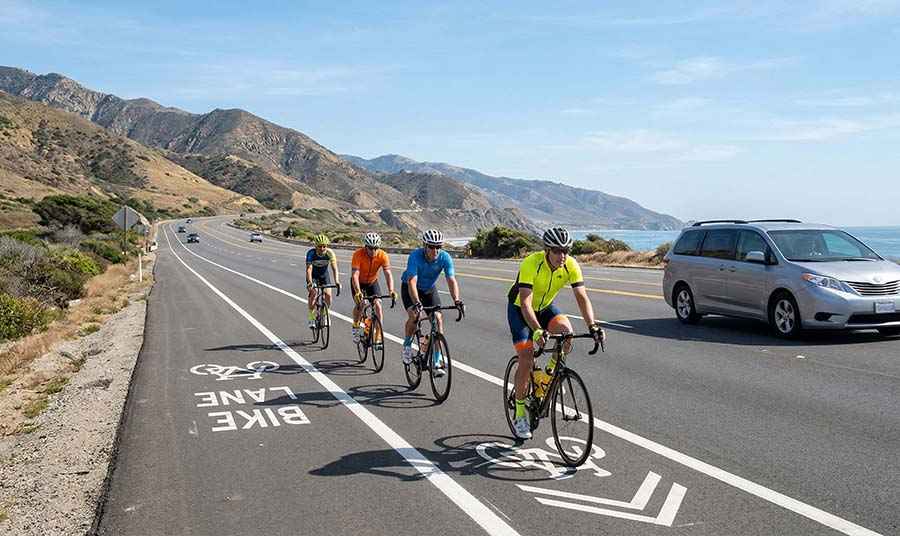
In 2023,1,166 cyclists were killed in traffic crashes across the United States. Nearly 50,000 more were seriously injured. The medical costs alone totaled $3.1 billion, with average work loss costs of $18,000 per crash. Four out of five of those deaths happened in urban areas, on roads that millions of riders use every day.
These are not random tragedies. They are predictable outcomes of road designs that treat cyclists as an afterthought.
Where the Crashes Concentrate
Cyclist fatalities cluster on a narrow set of road types, at predictable times, and among riders who do not fit the profile most people assume.
According to NHTSA's 2023 data, 62% of cyclist deaths occurred at non-intersection locations along road corridors, while 28% occurred at intersections. TheInsurance Institute for Highway Safety puts the intersection figure higher at 35%, depending on how intersection-adjacent crashes are classified. Either way, two distinct danger zones emerge: the long stretches of high-speed arterial road between intersections, and the intersections themselves.
Research from UC Berkeley's SafeTREC found that 38% of fatal bicycle crashes happened on principal arterials, with another 21% on minor arterials. Together, arterial roads account for nearly 6 in 10 cyclist deaths despite making up a fraction of the total road network. Anext analysis of cycling fatalities from 2015 through 2025 shows this concentration is not improving. The percentage of traffic deaths involving cyclists rose from 2.34% in 2015 to 2.85% in 2023, even as overall traffic fatalities declined.
Darkness and Alcohol Stack the Risk
More than half of cyclist fatalities in 2023, roughly 53%, occurred after dark. Only 42% happened in daylight. Street lighting on arterial roads is designed for drivers, not for detecting a cyclist approaching from the side or ahead in a bike lane.
Alcohol compounds the danger. NHTSA reports that 34% of fatal cyclist crashes in 2023 involved alcohol in the driver, the cyclist, or both. Twenty-two percent involved alcohol-impaired riders specifically. These risk factors overlap on the same roads, at the same hours. If you ride at night on an arterial corridor, you are absorbing compounding risks that most riders never calculate.
The Riders Who Are Dying
Keep in mind that cyclist fatalities are not a young-rider problem. The average age of cyclists killed in 2023 was 48. The most represented age groups were 55-to-59 and 60-to-64. Men accounted for 87% of fatalities, with a death rate more than seven times higher than for women. These are experienced riders on familiar routes, not reckless beginners.
The Deadliest States
The national averages mask sharp state-level variation. For instance, Florida recorded 234 cyclist deaths in 2023, the highest raw count in the country, representing 6.9% of all traffic fatalities in the state. California followed with 145 deaths despite ranking among the top five states for bike-friendliness. Hawaii had the highest percentage: 8.6% of all traffic deaths in the state were cyclists.
The pattern holds across the Sun Belt. Arizona, Texas, Louisiana, and Nevada all show cyclist fatality rates well above the national average. These states share a common feature: sprawling suburban road networks built around high-speed, multilane arterials with little to no cycling infrastructure.
What Makes a Road Deadly
The roads that accumulate fatal crashes share a specific set of design features. When these features combine, even a single driver error becomes lethal for a cyclist.
Speed and Vehicle Size
Impact speed determines whether you survive a crash. At 20 mph, a cyclist struck by a car has roughly a 90% chance of survival. At 40 mph, that figure drops below 20%. Most urban arterials are designed for operating speeds of 35 to 45 mph, and actual vehicle speeds often exceed posted limits.
The type of vehicle matters as well. NHTSA data shows that SUVs, pickups, and vans were responsible for 46% of cyclist fatalities. The higher front profile of these vehicles increases the likelihood of striking your torso or head rather than your legs, which escalates injury severity at every speed. As these vehicles have grown to dominate the American fleet, the survivability of cyclist crashes has shifted in the wrong direction.
E-bikes are changing the equation from the rider's side. Electric bicycles travel faster than traditional bikes, closing the speed gap with motor vehicles. Higher approach speeds at intersections shorten the reaction time available to turning drivers. NHTSA began including motorized bicycles in its pedalcyclist data starting in 2022, and as e-bike adoption accelerates, the crash profile on arterial roads is shifting in ways that existing infrastructure was not built to handle.
Width and Lane Count
Wide, multilane roads force you to share space with fast-moving vehicles across long, exposed stretches. Every additional lane increases the number of conflict points where a driver can cross your path. Multilane crossings at intersections extend the time you spend in the most dangerous zone of the road, with no median refuge island in between.
Turning Conflicts
Turning movements cause the majority of intersection crashes involving cyclists. A right hook crash occurs when a driver turns right across the path of a cyclist traveling straight in the curb lane or bike lane. A left cross crash occurs when an oncoming driver turns left into your path. Both crash types share the same root cause: the driver either does not see you or misjudges your speed.
NHTSA data consistently identifies failure to yield right-of-way as the most common factor in fatal cyclist crashes. This is not random driver behavior. It is a predictable consequence of intersection designs that do not separate turning vehicles from through-moving cyclists.Bicycle accident attorneys regularly cite intersection geometry and failure-to-yield patterns when establishing driver negligence in cycling crash claims.
Driveways, Dooring, and Sight Lines
Commercial strips with frequent driveways create a repeating pattern of conflict where drivers turn across your path to enter or exit parking lots. Access management, the practice of reducing driveway frequency and consolidating turning movements, is one of the most effective but least implemented safety improvements on arterial corridors.
Parked cars create a separate hazard. Curbside parking places you in the door zone, where an opening car door can strike or deflect you into traffic. Dooring crashes account for a persistent share of urban cycling injuries. On top of that, sight distance problems at intersections, where parked vehicles and overgrown vegetation block a driver's view of approaching cyclists, compound the turning conflict risk described above.
The Suburban Arterial Problem
The deadliest roads for cyclists are not downtown streets. They are suburban arterials: four-to-six-lane corridors with posted speeds of 40 to 50 mph, lined with strip malls, fast-food restaurants, and big-box stores, each with its own driveway cutting across your path.
These roads were designed in an era when no one expected a cyclist to use them. Lane widths are generous, curb radii are wide to accommodate turning trucks, and the entire geometry of the road signals to drivers that speed is appropriate. There is no bike lane, no shoulder, and no sidewalk.
The state-level fatality data reflects this. Florida, Texas, and Arizona, three of the deadliest states for cyclists, are dominated by exactly this road type. Their suburban arterials carry enormous traffic volumes through environments where you have no separated space and no infrastructure protecting you from turning vehicles, distracted drivers, or the simple physics of a 4,500-pound SUV traveling at 45 mph.
However, these corridors can be redesigned. Road diets, protected lanes, and lower speed limits are proven interventions that reduce cyclist fatalities on arterial roads. They also strengthen your position if you need to pursue a fair settlement after a crash on one of these corridors, because the road design itself becomes part of the liability argument.
Intersections: Where Design Fails You
The design features that make intersections dangerous for cyclists are well documented. Most American intersections still include them.
Wide Corners and Slip Lanes
Large curb radii allow drivers to take right turns at higher speeds, reducing the time they spend looking for you and increasing the severity of any collision. Slip lanes let vehicles bypass the intersection entirely at near-highway speeds. Both features prioritize vehicle throughput at the direct expense of your safety.
Signal Timing
Most traffic signals are timed for motor vehicle speeds and stopping distances. You move slower, need more time to clear the intersection, and are harder to see during permissive turning phases when drivers are scanning for gaps in oncoming car traffic rather than looking for bikes. Protected turning phases, which stop all conflicting traffic during your crossing, eliminate this problem. However, they remain rare outside a handful of cities that have committed to cyclist safety in their signal design.
The Infrastructure Gap at the Junction
A painted bike lane that ends at the intersection entrance leaves you unprotected through the most dangerous part of your ride. Protected bike lanes reduce crash risk along the corridor. But if that protection disappears at the intersection, you are funneled back into the same turning conflicts the lane was supposed to prevent.
This gap is the most common failure point in American bicycle networks. You may ride a mile on a well-protected lane only to be dropped into an unprotected, multilane intersection with no separated crossing. The network looks connected on a map. In practice, it breaks at every junction.
Protected intersection designs, which maintain physical separation through the junction using corner refuge islands and setback crossings, dramatically reduce turning conflicts. Cities that have installed them report measurable reductions in cyclist crashes at treated locations.
What Actually Reduces Crashes
The following infrastructure types have measurable, documented effects on cyclist safety:
- Protected bike lanes physically separate you from motor vehicle traffic using curbs, concrete barriers, or parked cars. Studies consistently show crash reductions of 50% or more on corridors where protected lanes replace painted lanes.
- Painted bike lanes mark a space for cyclists but provide no physical barrier. They establish a predictable riding position but do not prevent encroachment, dooring, or turning conflicts.
- Road diets convert four-lane undivided roads into two lanes with a center turn lane and bike lanes. FHWA research shows crash reductions of 19% to 47% on road diet corridors with no significant impact on traffic capacity.
- Protected intersections maintain separation through the junction itself. These designs slow turning vehicles, increase your visibility, and reduce the number of conflict points.
Physical separation works. Paint does not.
These Roads Can Change
The solutions are proven. Some cities are already demonstrating what happens when the political will exists.
Philadelphia reduced crashes on Roosevelt Boulevard through targeted infrastructure improvements including signal upgrades and pedestrian crossing redesigns. New York City recorded 41 traffic deaths in the first quarter of 2025, a historic low driven in part by protected lane expansion and speed camera enforcement across its high-injury network.
These results are measured and replicable. Every year that implementation stalls, more than a thousand cyclists pay the price.
That is why knowing your rights matters as much as knowing your route. If a crash does happen, the steps you take in the first hours determine whether you can recover fair compensation for your medical bills, lost wages, and long-term damage. Document the scene. Photograph everything. Collect witness contacts. Request your medical records immediately. This documentation serves as palpable evidence for your bicycle accident claim and directly affects the maximum compensation you can recover. It starts disappearing the moment the crash happens.
Even if the road was poorly designed or the intersection lacked protected infrastructure, the at-fault driver still bears responsibility. You deserve the compensation that reflects what actually happened to you, not what a flawed road made inevitable.