Biometric Technology Is Making Driving Safer
Almost 60% of crashes are caused by drivers who were distracted in the six seconds just before impact. Whether you’re tired, stressed, on your phone, or dealing with a medical emergency, it’s easy to lose focus behind the wheel. On any road, a brief distraction can have serious consequences, and that’s even more true for dangerous roads.
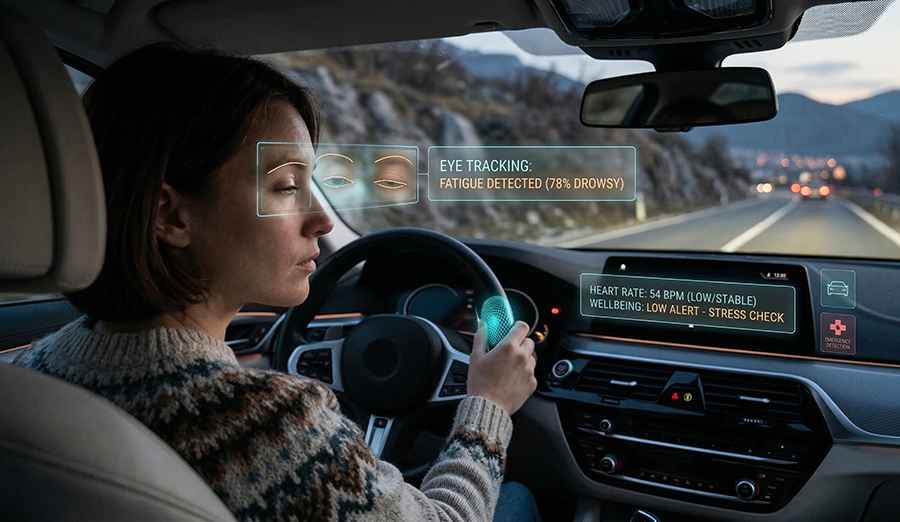
This is where biometric technology comes in. It’s embedded in the car to monitor your physical and mental state and help you before anything has the chance to go wrong. From eye tracking to wellbeing monitoring and medical emergency detection, these systems are some of the most exciting recent advances for driver safety and are already making their way into vehicles on the road today.
Eye tracking tech: an extra pair of eyes on the road
Eye tracking technology tracks the movement of your eyes to tell if you’re distracted behind the wheel, and then warn you or even take action depending on the situation. The most sophisticated systems can tell the difference between a quick glance at a map or mirror and something more serious, like if you’re on your phone or have fallen asleep. If it senses you’re no longer focused on driving, that’s when it will step in and help. An alert will sound if you’re just a bit distracted, but it might stop the car completely if things are more critical. Eye tracking tech usually uses infrared light, invisible to the driver, that reflects off the eye’s cornea and gets picked up by a camera. Then, intelligent software analyses that data in real time. The direction of your gaze, the position of your head and eyelids, and how often you blink are all processed to get an idea of whether you’re present and focused behind the wheel.
Seat biometrics: how your car monitors your body
Biometric tech can even be built into car seats to monitor your physical wellbeing as you drive. Sensors track your heart’s electrical signals and breathing rate through your clothes in real time. It doesn’t require direct contact with your skin to work. If these biological signals change pattern, the system will notice and take action. It can sound an alert to wake you up if you’re drowsy, or change the seat temperature and massage settings if you’re stressed.
Researchers have even developed a biosensor woven directly into seatbelt webbing using “digital embroidery”, which is basically conductive threads that guide and amplify wireless signals as they detect heart rate and breathing. This is an exciting sign of where this tech is headed. Biometric sensors could soon be embedded all over the car, as long as the surrounding material can handle it. Titanium is already widely used in car components, thanks to its impressive strength-to-weight ratio. It’s 45% lighter than steel but just as strong. It’s also fairly flexible, which makes it resistant to vibrations. This is useful in a moving car where vibrations can easily throw off biometric readings, and it’s why titanium, available from suppliers like TMS Titanium, is becoming increasingly relevant as this tech moves forward.
Biometric cameras can spot medical emergencies
New biometric technology can even monitor the driver’s vital signs in real time to detect medical emergencies. A contactless camera, paired with AI, can estimate biometric data like pulse rate and changes in blood pressure all without needing to physically touch the driver. Interestingly, around 50% of drivers who lose consciousness behind the wheel don’t actually slump over. They remain upright in their seat, with no obvious change in appearance. That means any system that only looks for overt signs like a drooping head or closed eyes would completely miss these other cases. Heart attacks and epileptic fits, for example, can both strike without visible warning signs. With this new technology, if the driver loses consciousness, the system can slow the car and bring it to a safe stop, and contact emergency services if needed.
Biometric technology is set to make you safer on dangerous roads. From eye tracking to wellbeing monitoring and medical emergency detection, these systems are advancing fast and some are already in cars on the road today.