Why Do Cars Catch Fire in Crashes? The Engineering Truth Revealed
The numbers are shocking - 174,000 highway vehicle fires occurred in the United States in 2021, claiming 650 civilian lives. Modern cars come packed with safety features, yet they still catch fire in crashes. This reality highlights a crucial safety concern we often ignore until disaster strikes.
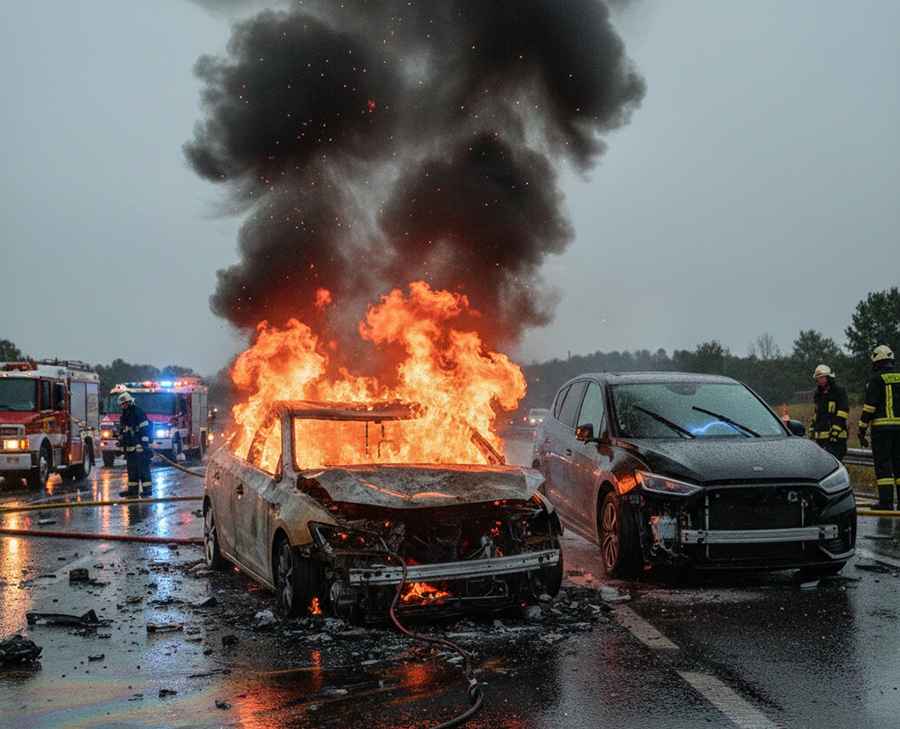
Cars catch fire for several critical reasons. The National Fire Protection Association reports that mechanical failures trigger about 47% of vehicle fires. The biggest problems stem from fuel system ruptures, damaged engines, and existing design flaws. These dangerous situations become even more critical during accidents. Leaking fluids can quickly ignite after contact with hot engine parts. The risk grows if the fuel tank breaks or the electrical systems get damaged in a collision.
Let's get into the engineering facts behind car fires in crashes and discover the technical reasons vehicles sometimes burst into flames after accidents. The sort of thing I love about this topic isn't just fascinating - it might help save lives.
Fuel and Electrical System Failures in Crash Scenarios
Fuel system failures are the primary cause of post-crash fires. Hot engine parts can ignite small fuel leaks faster, especially when temperatures rise above 45 degrees Fahrenheit. These situations can quickly become catastrophic because gasoline creates explosive vapor clouds when spilled.
A vehicle's fuel tank location plays a crucial role in crash safety. Today's vehicles protect fuel tanks within sturdy frames, but older designs left them exposed on the outside. This hazard became evident with Chrysler's rear-mounted fuel tanks in certain Jeep models, which led to many deadly fires after rear-end collisions.
The electrical system presents similar risks. Battery explosions in vehicles injured 2,280 people during a 12-month study. These incidents resulted in chemical burns for 62% of victims, while 21% experienced lacerations. Short circuits create dangerous conditions as they:
- Cause current overloads
- Generate sparks that ignite fuel
- Drain batteries faster
- Create major fire risks
Fuel lines in fuel-injected engines face serious risks because they operate under high pressure. Even small breaks can release large amounts of fuel. Safety features should include fuel lines that seal during crashes and automatic shutoffs for electric fuel pumps. Without these features, fuel pumps continue circulating fuel and feed the fire.
Thermal and Mechanical Triggers Behind Car Fires
Fire hazards in crashes go beyond fuel and electrical problems. They also involve thermal and mechanical factors. A comprehensive DEKRA study analyzed 30 reconstructed vehicle fires and found interesting patterns. Thermal sources caused 14 fires, mechanical ignition caused 9, and electrical issues caused 6.
Collision scenarios create heat sources faster. When engine parts rub against each other, they generate enough heat to ignite nearby combustible materials. Heat from powered equipment, engines, and drivetrain parts causes two-thirds of vehicle fires.
Catalytic converters pose a significant risk. They run hot enough to ignite nearby materials, and if that ignition causes skin injury, burn settlements vary by severity because a superficial burn and a full-thickness burn can mean completely different treatment paths and long-term outcomes.
They usually run at 800-1000°F (427-538°C). Their temperatures can climb to 1200-1400°F (649-760°C) when the ignition system partially fails, like with misfiring spark plugs. These converters take time to cool down because of their mass and can ignite dry vegetation or undercoating materials on exhaust systems.
Brake fluid becomes combustible when it reaches its flash point of 303°F (150°C). Crash tests show that multiple fluid tanks often rupture, releasing oil, brake fluid, and windshield cleaner.
Fires can start even in minor collisions if conditions align poorly. When a radiator is damaged, coolant temperatures rise. This starts a chain reaction that warps critical engine parts and creates perfect conditions for fires to start.
Design Flaws and Material Vulnerabilities in Modern Vehicles
Design flaws continue to threaten vehicle safety, particularly in component design and material choices. When a post-crash fire follows a defect-related failure, the consequences can be life-changing because severe burn injuries can destroy skin and underlying tissue, not just cause surface pain. The Takata airbag crisis stands as one of the automotive industry's worst design failures - about 67 million airbags have been recalled due to the risk of explosions during deployment. These defective airbags have claimed 28 lives in the United States alone.
A common misconception suggests airbags fill with air, but they deploy through a gas-generating chemical reaction. Malfunctions in this process can cause airbags to ignite after impact. Unstable propellants have even exploded without any crash occurring.
Federal Motor Vehicle Safety Standard 302 governs material flammability standards and requires interior materials to burn no faster than 102 mm per minute. This requirement covers seat cushions, floor coverings, headliners, and other crash-absorbing interior components.
Cost-cutting in manufacturing often trumps safety concerns. Engineers struggle with safety and budget trade-offs, which can lead to risky fuel tank placement. Insufficient heat shielding between heat sources and fuel components creates hazardous conditions. Materials that break down when exposed to fuel chemicals add more risk.
These design shortcomings play a significant role in the 45% of vehicle fires caused by mechanical failures or malfunctions. Such flaws turn survivable crashes into fatal accidents.
Conclusion
The reason vehicles catch fire in crashes goes beyond simple bad luck - it's a complex mix of engineering factors. This piece explores how mechanical failures cause almost half of all vehicle fires. Fuel system ruptures, electrical problems, and design flaws create the perfect storm for fires to start.
The evidence shows fuel system weaknesses are the biggest problem. Spilled gasoline creates explosive vapor clouds, and high-pressure fuel lines can release large amounts of fuel in impacts. Electrical system failures are just as dangerous, and battery explosions hurt thousands of people each year.
Heat plays a major role in these dangers. Engine parts heat up from friction, and catalytic converters run at temperatures of 800-1000°F - hot enough to set nearby materials on fire. It gets worse when multiple fluid tanks break during crashes and release flammable liquids that feed the flames.
Design flaws might be the most concerning safety issue. The Takata airbag crisis showed how unstable materials could turn safety devices into deadly weapons. Car makers sometimes cut corners on crucial safety features like fuel tank placement and heat shields due to cost pressures.
This deep dive explains why survivable crashes can turn deadly when fires break out. Car buyers can now make better choices about safety features, and engineers can keep improving designs to reduce these risks. Understanding the engineering behind car fires is essential to prevent them in the future.