Why Steep Grades Test Your Car's Cooling
If you’ve ever watched your temperature gauge creep upward on a long mountain climb, you’ve seen automotive physics in action. Steep grades are one of the most demanding conditions for a vehicle’s cooling system, often more stressful than stop-and-go traffic or hot summer cruising.
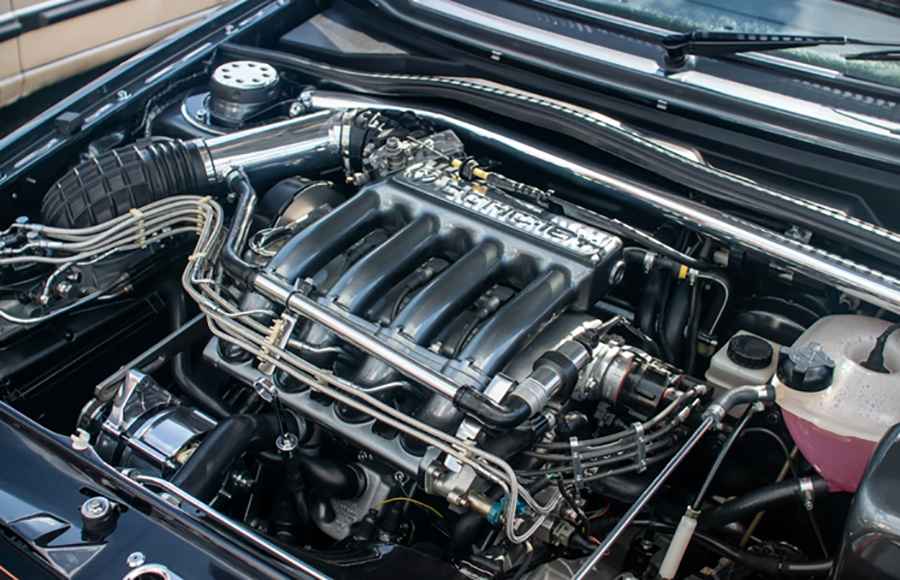
The reason isn’t just heat. It’s a perfect storm of sustained engine load, reduced airflow, and environmental factors working against your radiator.
Understanding why climbs are so tough on cooling systems can help drivers, builders, and fleet managers make smarter decisions about upgrades, especially for vehicles that tow, haul, or spend time in hilly terrain.
Sustained Load Changes the Heat Equation
On flat ground, engines cycle through varying loads. On a steep grade, that variability disappears. The engine works hard for minutes or even hours at a time.
What that means mechanically:
- Higher combustion pressures
- Increased friction across internal components
- More heat is generated per second
Your cooling system is designed to shed heat as fast as the engine creates it. On a long climb, heat production stays high without the usual recovery periods, pushing the system closer to its limits.
This is why a car that runs perfectly cool around town may suddenly struggle on a sustained ascent.
Altitude and Speed Work Against Heat Transfer
Two environmental factors often compound the problem: elevation and speed.
At higher altitudes, air density drops. Thinner air absorbs and carries away less heat from the radiator fins. At the same time, steep grades usually mean slower vehicle speeds—especially for loaded trucks or older vehicles.
Together, these conditions reduce ram-air effect, which is the natural airflow forced through the radiator as the vehicle moves forward.
To compensate, modern systems increasingly rely on integrated solutions that maximize airflow efficiency within tight engine bays. If you’re exploring compact upgrades that combine multiple cooling components into one optimized assembly, you can view these slim‑fit performance parts designed for high-demand, low-clearance applications.
Fan Type Matters More Than You Think
When airflow from vehicle speed drops, the cooling fan becomes the primary driver of heat rejection. Not all fans perform equally under climb conditions.
Clutch fans:
- Engage more aggressively as temperatures rise
- Move large volumes of air at low vehicle speeds
- Are mechanically simple and reliable
Electric puller fans:
- Provide consistent airflow regardless of engine RPM
- Allow more precise temperature control
- Require sufficient electrical capacity
For slow, heavy ascents, especially while towing, fan performance at low speed can make or break cooling stability.
The Importance of Shrouding
Even the best fan can’t help much if airflow isn’t directed properly. A well-designed shroud ensures that air pulled by the fan actually passes through the radiator core instead of escaping around it.
Effective shrouding:
- Increases airflow across the entire core surface
- Reduces hot spots
- Improves efficiency at idle and low speeds
On steep grades, where airflow is already limited, shrouding can be the difference between stable temperatures and overheating.
Core Density and Radiator Design Choices
Radiator cores vary in thickness, tube size, and fin density. More isn’t always better.
High-density cores offer more surface area, but they also:
- Increase airflow resistance
- Require stronger fans
- Can trap heat if airflow is insufficient
For vehicles that climb slowly under heavy load, a balanced design, such as moderate density with efficient airflow, often outperforms an overly thick core that looks impressive but struggles in real-world conditions.
Why Integrated Systems Are Gaining Popularity
As engine bays become more crowded and cooling demands increase, integrated radiator systems are becoming a practical solution. These combine:
- Radiator core
- Fan and shroud
- Overflow and mounting provisions
By engineering these components to work together, integrated systems reduce airflow losses and simplify installation, critical advantages when cooling margins are tight.
The Takeaway
Steep grades push cooling systems into their most challenging operating zone: high heat output, low airflow, and reduced environmental cooling capacity. Understanding the physics behind those climbs makes it clear why thoughtful component selection, like fans, shrouds, and radiator design, matters so much.
When cooling is optimized as a system rather than a collection of parts, vehicles are far better equipped to handle the long haul uphill.
Source: Unsplash