Who Is Liable for Car Accidents on Dangerous Roads?
Car accidents can result from many causes, such as driver error, weather, and vehicle defects. However, when an accident occurs because the road itself is dangerous, figuring out who is liable can be complicated, and it varies widely around the world.
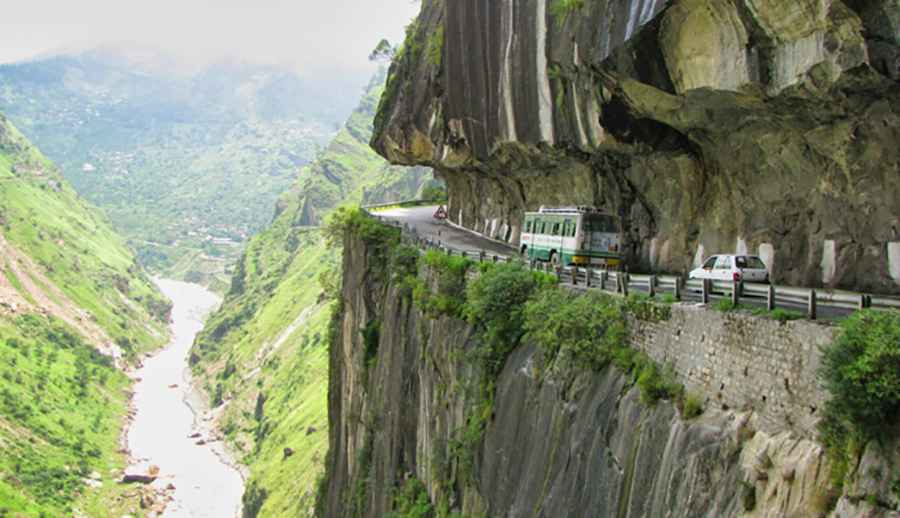
In some cases, car accident liability falls on individual drivers, but in others, it may be attributed to government road authorities, contractors, or manufacturers of road equipment and signage.
Potentially liable parties in dangerous road accidents
Generally, one or more of the following parties is responsible for an accident on a dangerous road:
The driver
In almost every jurisdiction worldwide, a driver can be held liable for an accident caused by their own negligence. Even on dangerous roads, courts and authorities routinely assign primary liability to drivers whose actions directly cause a collision. Courts routinely assign primary fault to drivers whose actions directly lead to a collision, such as speeding, distracted driving, impaired driving, or failing to maintain proper lane control.
For example, police investigations in the US typically focus first on driver behavior, using dashcam or CCTV evidence to determine fault. If a driver rear-ends another vehicle or fails to stay in their lane, they may be found at fault, regardless of road conditions.
However, proving or defending against driver liability is rarely straightforward. An experienced car accident lawyer plays a critical role in analyzing crash data, challenging fault assumptions, and determining whether dangerous road conditions, inadequate signage, or government negligence also contributed to the accident.
Road authorities and governments
In many countries, government entities responsible for road design, construction, and maintenance can be liable if road conditions materially contributed to an accident and the authority knew or should have known about the hazard.
This category includes:
- National road agencies (e.g., those responsible for highways and freeways)
- State or provincial road departments
- Local municipalities tasked with maintaining streets
For instance, in the Netherlands, road authority liability can be triggered if unclear signage, improperly placed obstacles, or poorly maintained surfaces directly cause a crash.
Similarly, in South Africa, if a road authority negligently failed to address potholes or warn of a defect, they could be held accountable for resulting damages.
In the United States, many states have specific tort claims acts that govern how and when you can sue a government body, often with short deadlines and notice requirements.
However, government liability is not always straightforward. Some countries have sovereign immunity laws that restrict or bar lawsuits against government agencies unless specific notice is given or certain conditions are met.
Contractors and private parties
Often, road authorities hire private companies to build or repair roads. If a contractor’s negligent work leads to a dangerous condition, the contractor may also be liable.
Private landowners can also be responsible if the crash occurred on a private road or parking area they control, especially if they failed to properly maintain those access roads. In the US, courts regularly hold private entities liable for negligence in maintaining road-adjacent areas that lead to collisions.
In some regions, manufacturers who supplied defective guardrails or traffic signals may face product liability for contributing to unsafe conditions that exacerbate accidents.
Famous dangerous roads and the liability challenges they pose
Looking at real roads around the world is a great way to see why liability isn’t always clear, and these are excellent examples:
North Yungas Road, Bolivia (“Death Road”)
Once considered the world’s most dangerous road, Bolivia’s North Yungas Road features narrow gravel paths, fog, steep cliffs, and little in the way of guardrails. Before a safer alternative was built in the late 1990s, this section saw between 200 and 300 fatal accidents annually. However, even though the road’s safety has improved, its reputation still remains, and it is tricky to navigate.
On roads like this, it can be difficult to assign liability. Was it the government’s failure to install safety barriers, the inherent risk drivers accepted, or both?
To this day, many Bolivian car accident liability claims depend on whether authorities failed to warn drivers or provide safer alternatives.
Killer A9, Scotland
In Scotland, the A9 has a high accident rate due to alternating single- and dual-carriageway sections that encourage risky overtaking.
If a study or court finds that inadequate road design contributed to collisions and that the government failed to implement promised improvements, then authorities face pressure to defend against claims or invest in safety upgrades.
Snoqualmie Pass (Interstate 90)
Snoqualmie Pass is one of the most dangerous roads in Washington DC, particularly in winter. Severe weather, ice, limited visibility, and steep grades contribute to multi-vehicle pileups and fatal crashes.
In car accident liability cases, Washington courts may evaluate whether the Washington State Department of Transportation (WSDOT) adequately maintained the roadway, timely cleared snow and ice, posted appropriate warnings, or closed the pass when conditions became unreasonably dangerous.
While drivers are expected to adjust to weather conditions, the state can be held liable if it fails to act reasonably despite known hazards.
Comparing legal approaches globally
Different continents and legal systems handle road liability differently:
- Europe generally uses tort law principles and has robust transportation safety standards. Liability often falls on negligent drivers first, but road authorities can be liable if maintenance or design fails to meet standards.
- America typically uses fault-based systems. Government entities may be protected by sovereign immunity unless specific legal conditions are met, while private contractors and drivers are regularly held accountable in civil courts.
- Asia and Africa have widely varying systems. Some countries have detailed statutory liability regimes, while others rely heavily on proving negligence under civil codes. In high-risk countries, infrastructural shortcomings are frequently paired with challenges in enforcement and claims processes.
How is car accident liability proved on dangerous roads?
Regardless of the jurisdiction, bringing a successful road-danger liability claim generally involves:
- Establishing duty of care: who owed safety obligations to whom
- Demonstrating breach: failure to maintain, warn, or adhere to standards
- Causation: showing the dangerous road contributed significantly to the crash
- Damages: economic losses and injury impacts
You’ll also need evidence such as official maintenance logs, accident reports, eyewitness accounts, and expert testimony on engineering or road design, as this provides crucial proof of who should be held responsible.
Making safety a priority on dangerous roads
Car accident liability on dangerous roads is a complex mix of driver behavior, road maintenance, design standards, and local legal frameworks.
Whether you’re navigating the winding heights of Bolivia’s Death Road, the icy curves of the US’ Snolquamie Pass, or a pothole-ridden highway in South Africa, understanding how liability is determined can be just as important as knowing how to drive safely.
Pic: https://unsplash.com/photos/white-van-on-road-near-cliff-during-daytime-RZD6Ko9ZWCo