Technical Hauling: 10 Critical Safety Protocols for Vehicle Transport on High-Risk Routes
Transporting a vehicle across treacherous mountain passes or unstable desert tracks is one of the most demanding tasks in heavy logistics. The addition of a multi-ton trailer fundamentally alters a vehicle's physics—shifting its center of gravity, increasing braking latency, and magnifying the effects of centrifugal force on hairpin turns. Navigating "High-Risk" routes requires more than standard towing knowledge; it demands a strategic understanding of mechanical endurance and ballistic towing dynamics.
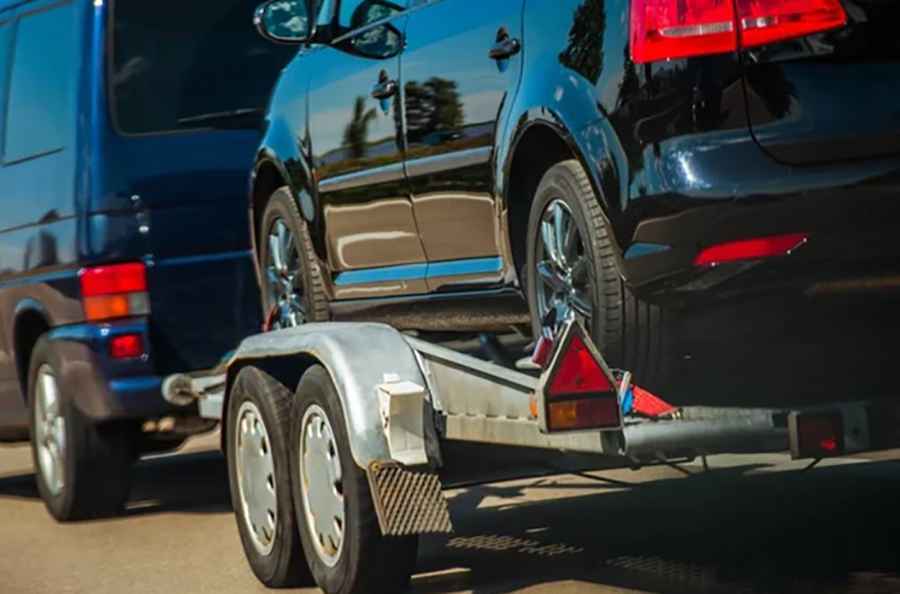
| High-Risk Hauling: Operational Metrics | |
|---|---|
| Primary Risk | Trailer Sway (Oscillation) & Jackknifing |
| Critical Component | Brake Controller & Weight Distribution Hitch |
| Physics Factor | 10-15% Tongue Weight Ratio |
| Environmental Limit | Crosswinds exceeding 30 mph |
1. Structural Load Integrity
Before initiating a haul, verify that your Gross Combined Weight Rating (GCWR) is not only met but optimized for high gradients. In mountain passes like Slumgullion or Wolf Creek, a trailer operating at 95% capacity is a liability. Aim for a 20% safety margin. Ensure the trailer frame and axles are rated for the high torsional stress encountered during unpaved or uneven mountain ascents.
2. The Physics of Weight Distribution
Improper cargo positioning is the leading cause of high-speed trailer oscillation (sway). Position the hauled vehicle so that 60% of the weight is ahead of the trailer axle. This ensures a proper "Tongue Weight" (ideally 10-15% of the total load), which stabilizes the tow vehicle’s steering axle and prevents the "tail-wagging-the-dog" effect on winding descents.
3. Managing Brake Fade on Perilous Descents
On steep declines, brake heat is your primary enemy. Continuous braking leads to Brake Fade, where the friction material loses its effectiveness due to thermal saturation.
- Engine Braking: Shift to a lower gear before the descent begins to utilize the engine's compression for speed control.
- Snub Braking: Apply brakes firmly for a few seconds to drop speed, then release completely to allow cooling air to circulate around the rotors/drums.
4. Tactical Route Planning & Clearance
GPS units often fail to account for the vertical clearance and turning radius of a long-distance rig. In remote regions, check local advisories for "dead-end" mountain roads or low-clearance tunnels. A rig trapped on a narrow shelf-road with no turnaround point is a catastrophic logistical failure. Always carry high-resolution physical topographic maps as a redundancy against GPS signal loss.
5. Aerodynamic and Wind Load Management
High-profile enclosed trailers act as massive sails in crosswinds. On exposed routes like the I-8 in Devil Canyon, gusts exceeding 40 mph can easily overturn a hauling rig. If lateral oscillation becomes uncontrollable, utilize the manual override on your electronic brake controller to apply the trailer brakes independently, which "stretches" the rig and pulls it back into alignment.
6. Securement Dynamics
On bumpy or unpaved routes, static tie-downs can loosen due to harmonic vibrations. Use professional-grade ratchet straps and over-the-tire wheel nets. Check tension after the first 10 miles of technical terrain and at every subsequent stop. Any movement of the hauled car significantly shifts the rig's center of gravity, affecting handling in sharp hairpins.
7. Environmental Contingency Gear
When hauling through "The High Country" or desert basins, your emergency kit must be scaled for the load. This includes heavy-duty traction boards, snow chains rated for the trailer’s weight, and a high-capacity toolkit for field repairs of lighting and braking systems. In remote sectors, mechanical autonomy is the only guarantee of progress.
Conclusion: Mastering the Saturated Load
Long-distance hauling on treacherous routes is a discipline that rewards meticulous preparation and punishes complacency. By respecting the laws of physics and maintaining your equipment to the highest standards, you mitigate the inherent risks of the American road. On the world's most dangerous highways, a steady hand and a well-balanced load are the hallmarks of a master overlander.
Image credit: Depositphotos