Electrical Resilience: Can E-Bikes Survive Extreme Wet Weather and Water Crossings?
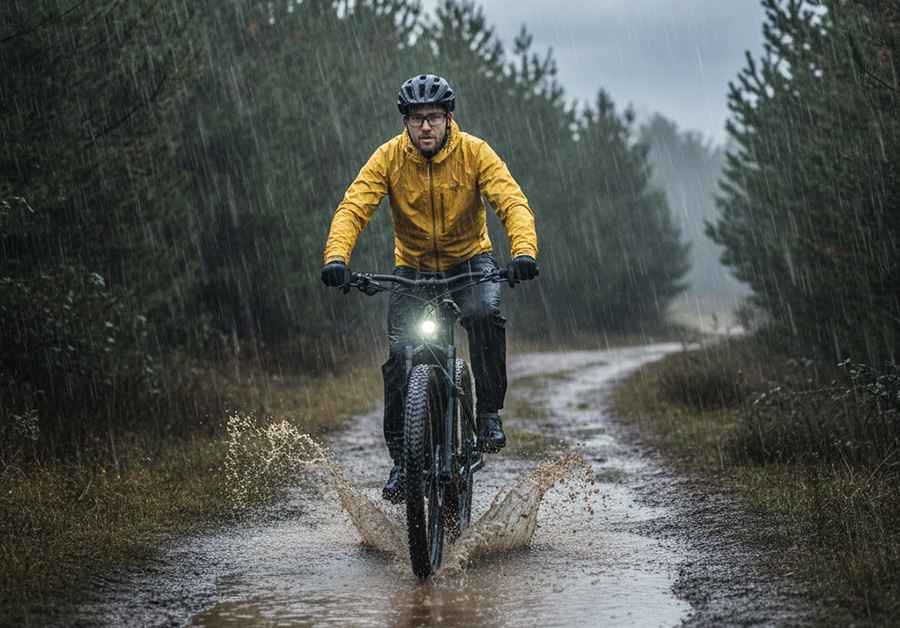
For the off-road explorer, an e-bike is a powerful tool for reaching remote summits, but it introduces a critical vulnerability: the intersection of high-voltage electronics and extreme moisture. While most manufacturers claim water resistance, there is a vast difference between a light drizzle and a flash flood on a mountain track. Understanding the IP (Ingress Protection) ratings and the physical limits of your drivetrain is essential to prevent a total system failure in the wilderness.
| E-Bike Ingress Protection (IP) Matrix | |
|---|---|
| IPX4/X5 Rating | Resistant to splashes and low-pressure jets. Standard for most e-bikes. |
| IPX6 Rating | High-pressure water resistance. Recommended for heavy expedition use. |
| Critical Limit | Never submerge the motor or battery hub. Permanent short-circuit risk. |
1. Decoding the IP Rating for Expeditions
In the world of expedition hardware, "waterproof" is a myth. Most e-bikes are rated **IP54 or IP65**. The first digit refers to dust protection, and the second to water. On dangerous routes involving river crossings or monsoon rains, an IP65 rating is the minimum requirement. This ensures that the motor, controller, and battery casing are sealed against high-pressure splashes. However, even the highest-rated consumer e-bike is not designed for submersion; if water enters the hub or the battery interface, the resulting corrosion can lead to "ghosting" or a complete system shutdown.
2. The Vulnerability of the Drive System
The motor and the battery are usually the most shielded components, but the real danger lies in the **peripherals**.
- The Controller & Display: Often the weakest link. Moisture trapped behind an LCD screen can cause electrical shorts that disable the entire power delivery system.
- Wiring Harnesses: Check for high-quality rubber seals at every connection point. In remote areas, apply dielectric grease to connectors to provide an extra layer of hydrophobic protection.
- Bearings and Corrosion: Prolonged exposure to mud and water can wash away the factory grease in the motor bearings, leading to mechanical friction and eventual seizure.
3. Tactical Riding in Wet Environments
Riding an e-bike in the rain requires a shift in braking and power management:
- Traction Management: Wet rocks and roots are lethal for high-torque e-bikes. Reduce your power assist level to prevent the rear wheel from spinning out during technical climbs.
- Brake Fade: Even with hydraulic disc brakes, water can cause a temporary loss of "bite." Always "dry" your brakes by applying light pressure before a steep descent.
- Hydroplaning: At Class 3 speeds (up to 45 km/h), a wide e-bike tire can hydroplane on deep puddles. Lower your tire pressure slightly to increase the contact patch and mechanical grip.
4. Emergency Post-Ride Protocol
If you have survived a torrential storm or a deep crossing, the work isn't over. **Never pressure wash an e-bike**; the force can bypass the rubber seals and inject water directly into the motor windings. Instead:
- Remove the battery and dry the terminal pins with a clean cloth.
- Leave the bike in a dry, ventilated area.
- Never charge a battery that has been exposed to extreme moisture until you are 100% sure the ports are dry—this is the primary cause of e-bike battery fires.
Conclusion: Power vs. Element
E-bikes are resilient machines, but they are not submarines. By understanding your vehicle’s IP limits and practicing tactical maintenance, you can extend the life of your electric companion through the most demanding weather conditions. On the world's most dangerous roads, your e-bike is a survival tool; treat its electrical integrity with the respect it deserves, and it will power you through the storm.