Beyond Comfort: Why Suspension Integrity is Critical on Dangerous Roads
When navigating the world’s most demanding tracks—from the corrugated roads of the Australian Outback to the rock-strewn passes of the Caucasus—your suspension is more than a comfort feature; it is a critical safety component. On high-consequence routes, a suspension failure doesn't just mean a bumpy ride—it can mean losing steering control on a cliff edge or being stranded in a dead zone.
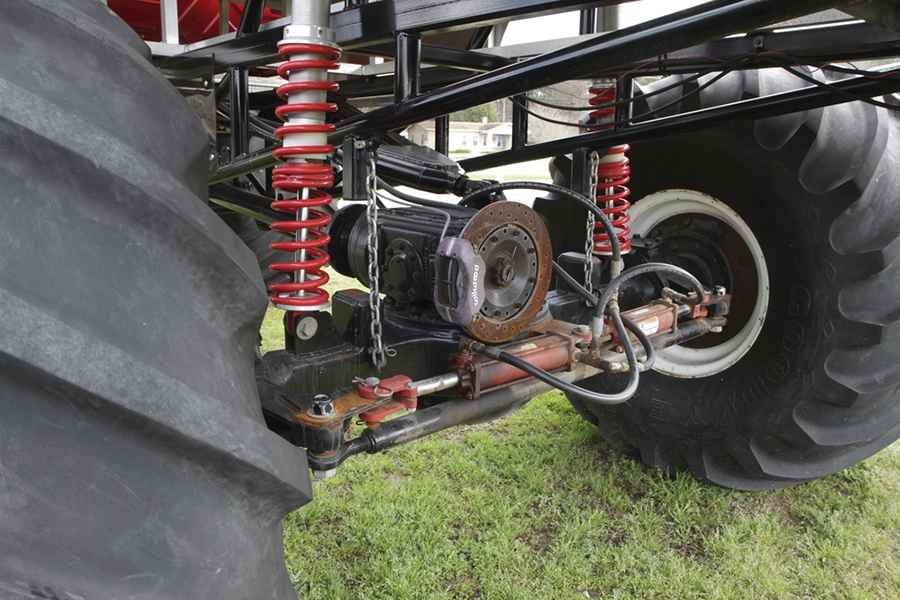
| Expedition Suspension: Key Technical Factors | |
|---|---|
| Articulated Handling | Maintaining tire contact on uneven, rocky inclines |
| Heat Dissipation | Preventing shock fade during long, corrugated washboard sections |
| Load Management | Supporting heavy expedition gear without compromising the center of gravity |
| Durability | Resistance to extreme dust, mud, and temperature shifts |
1. Maintaining Grip in High-Altitude Hairpins
The primary job of a heavy-duty suspension kit on dangerous roads is ensuring consistent tire contact. In sharp, unpaved hairpins at high altitudes, the weight of the truck shifts dramatically. A low-quality system can allow for excessive body roll, which on a narrow mountain track, risks a rollover or loss of traction on the inside wheels. Quality components provide the stability needed to keep the vehicle planted when the terrain is fighting to tip it over.
2. Managing "Shock Fade" on Corrugated Tracks
One of the most overlooked hazards of remote driving is corrugated road surfaces. Constant high-frequency vibrations cause the oil inside standard shock absorbers to foam and overheat—a phenomenon known as "shock fade." Once this happens, you lose dampening control. High-quality expedition kits use larger reservoirs and superior valving to dissipate heat, ensuring your suspension continues to work even after hours of driving on brutal desert tracks.
3. Center of Gravity and Heavy Payloads
Adventure trucks often carry significant weight, including extra fuel, water, and roof-mounted tents. This raises the vehicle's center of gravity, making it unstable in off-camber sections of a road. A reinforced suspension system prevents "sagging" and maintains the correct geometry of the vehicle. This is crucial for safety, as it ensures that your steering and braking systems operate exactly as designed, even when the truck is fully loaded for a multi-week crossing.
4. Redundancy and Field Repairability
On the world's most isolated roads, maintenance costs are measured in survival. Quality suspension kits are built from forged materials that can withstand impacts that would snap a standard OEM part. Furthermore, many professional-grade kits are designed to be serviceable in the field. Using stronger, well-engineered components reduces the likelihood of a catastrophic failure in a location where a tow truck is not an option.
5. Tire Preservation in Remote Zones
When you are hundreds of miles from the nearest tire shop, protecting your rubber is essential. Proper suspension alignment and dampening reduce uneven tire wear caused by "cupping" or erratic bouncing on rough surfaces. By keeping the tread in even contact with the road, you extend tire life and maintain the braking performance necessary for emergency stops on steep, gravel-covered declines.
Conclusion: Investing in Expedition Reliability
For those who venture where the pavement ends, suspension isn’t just about a smooth ride—it’s about technical performance and long-term vehicle survival. Choosing quality components upfront is a fundamental part of expedition planning, preventing costly mechanical failures and keeping your truck performing at its best on the world's most demanding roads.
Image credit: Depositphotos