How to drive on ice roads?
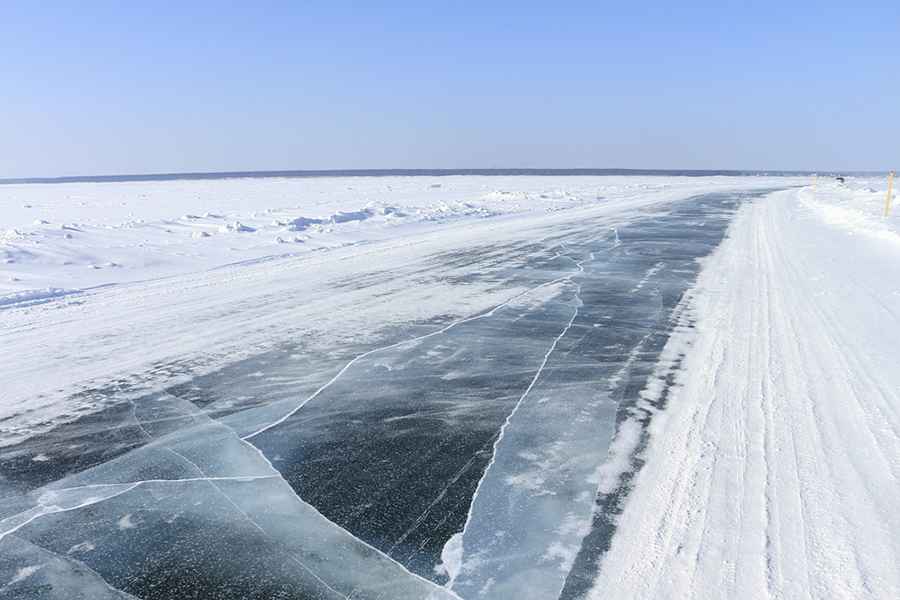
Driving on seasonal ice roads built over frozen seas, lakes, and rivers requires managing the hydraulic pressure wave formed beneath the ice sheet. On routes like the 25 km Rohuküla-Heltermaa ice road in Estonia or northern Canadian ice tracks, vehicle weight and speed create underwater displacement forces that can shatter the frozen surface.
| Ice Road Driving Parameters | |
|---|---|
| Forbidden Speed Range | 25 to 40 km/h (15–25 mph) due to pressure wave resonance |
| Minimum Vehicle Spacing | 250 to 500 meters between vehicles to prevent combined load collapse |
| Minimum Ice Thickness | 20 cm for passenger cars; 40+ cm for heavy trucks |
| Safety Protocols | Unbuckled seatbelts, unlocked doors, no stopping on active ice |
Why is driving between 25 and 40 km/h prohibited on ice roads?
On routes such as the Rohuküla-Heltermaa ice road in Estonia, driving at speeds between 25 km/h and 40 km/h is strictly prohibited. A moving vehicle depresses the ice sheet, pushing a localized wave of water ahead beneath the frozen crust. At speeds between 25 and 40 km/h, vehicle speed matches the natural velocity of the underwater wave, creating a resonance effect that amplifies stress on the ice sheet until it cracks. Drivers must stay under 25 km/h or maintain speeds above 40 km/h to avoid synchronization with the pressure wave.
Why are seatbelts forbidden on official ice roads?
Official ice road regulations require drivers and passengers to keep seatbelts unbuckled and vehicle doors unlocked or windows cracked open. If localized ice failure occurs, the engine weight causes the front end to submerge rapidly. Hydrostatic pressure makes opening vehicle doors under water extremely difficult. Operating without seatbelts allows immediate cabin exit before the chassis drops below the surface.
How does vehicle spacing prevent ice sheet failure?
Ice roads require a minimum distance of 250 to 500 meters between moving vehicles. Driving closer causes the individual pressure waves of two vehicles to overlap, doubling the downward hydraulic stress on the ice layer. Even on ice exceeding 70 centimeters in thickness, overlapping weight zones can trigger structural fractures across the roadway.
Why is stopping a vehicle prohibited on an ice road?
Stopping a vehicle on an ice road converts a dynamic rolling load into a permanent static load. Continuous weight on a single point causes localized ice deflection, forcing water upward through natural hairline fissures (overflow) and weakening the surrounding plate. If traffic comes to a halt due to reduced visibility or weather, vehicles must maintain a continuous slow crawl toward shore ground rather than coming to a full stop.
Image credit: Depositphotos