Roof racks and crosswinds: Driving with external loads on mountain roads
Carrying oversized external gear or heavy roof loads alters the physics of a vehicle. On narrow mountain roads and steep switchbacks, roof-mounted weight shifts the center of gravity upward and creates a sail effect that compromises vehicle stability during sudden wind gusts.
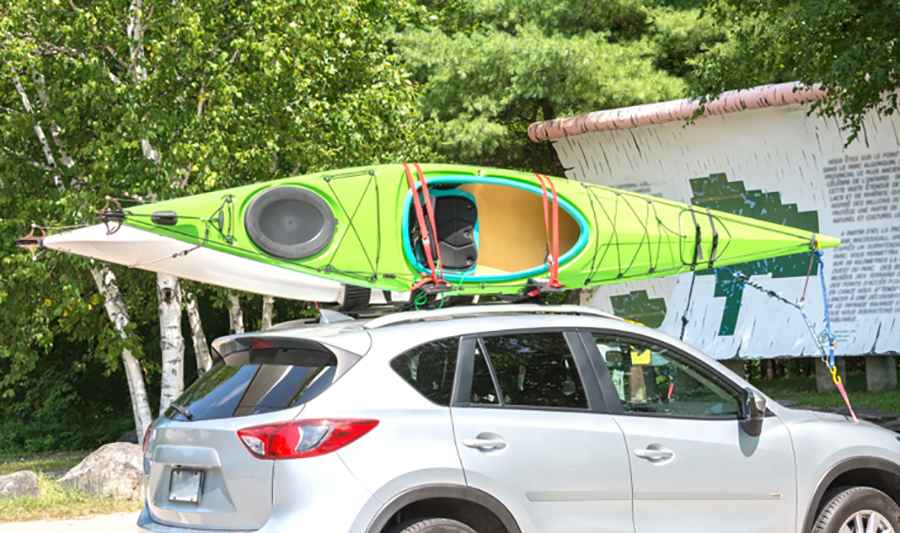
| Driving mechanics: Roof-load hazards | |
|---|---|
| Aerodynamic Risk | The sail effect from high-altitude mountain crosswinds |
| Weight Shift | Increased lateral body roll on tight hairpin turns |
| Securing Method | Non-stretch polyester straps with bow and stern tie-downs |
| Track Hazard | Shock loading on straps due to corrugated dirt tracks |
How does roof weight affect vehicle stability on hairpins?
Placing heavy equipment on a roof rack raises the vehicle center of gravity significantly. When driving through steep inclines and sharp hairpin turns, this overhead mass generates high lateral body roll, forcing the vehicle suspension to lean heavily toward the outer side of the curve. This weight transfer reduces the vertical load on the inner tires, cutting down the total grip available to steer through unpaved or wet mountain switchbacks.
What is the sail effect on high-mountain passes?
Oversized external cargo acts like a sail when exposed to high-altitude mountain winds. Sudden lateral gusts hitting a top-heavy vehicle exert hundreds of kilograms of shifting force against the roof bars. This aerodynamic lift pulls on the suspension and causes the vehicle to drift sideways across the asphalt. Drivers must reduce speed significantly when exiting tunnels or mountain cuts into open, wind-exposed ridge lines.
Why are bow and stern tie-downs mandatory on steep grades?
Standard roof rack straps only prevent lateral sliding but fail against vertical pitching. During steep alpine climbs or sudden hard braking maneuvers, wind pressure gets underneath the external load, forcing it to pitch upward or slide backward. Running secondary tie-down lines from the front and rear bumpers directly to the ends of the cargo creates a triangulation layout that locks the load in place and prevents it from shifting into the windshield line.
How do unpaved roads damage roof rack mounts?
Driving over deep ruts, potholes, or corrugated dirt tracks subjects roof mounts to continuous vibration and shock loading. These sudden upward jolts can snap cheap nylon ropes, loosen cam-buckle mechanisms, or crack the metal gutter clamps holding the crossbars. On long unpaved mountain transits, drivers must stop regularly to inspect strap tension, as moisture, dust, and continuous chassis twisting cause fabric materials to stretch and slip.
Image credit: Depositphotos