Mechanical Survival for High-Risk Routes
Preparing a vehicle for a high-risk expedition is fundamentally different from a standard road trip. When the route involves 45% gradients, river crossings, or remote mountain passes, "regular maintenance" is not enough. Mechanical failure in these areas isn't just an inconvenience; it is a critical safety risk. This guide covers the essential technical inspections required to ensure your truck can survive the world's most demanding roads.
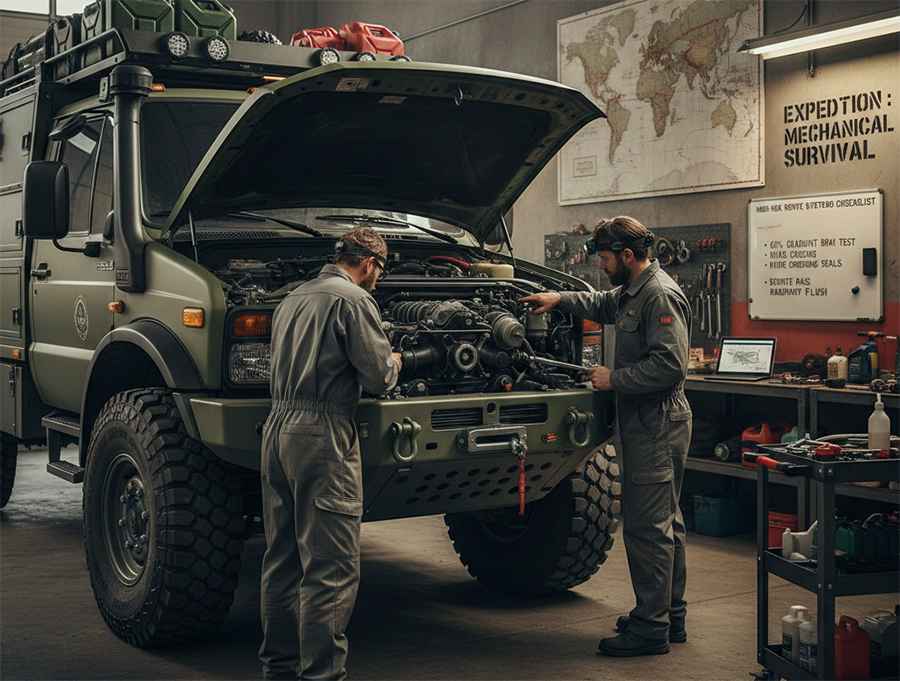
| Pre-Expedition Technical Checklist | |
|---|---|
| Critical Systems | Brake fade resistance, cooling system pressure, and suspension bushings. |
| Fluid Management | High-viscosity lubricants for extreme heat and heavy-duty coolant mix. |
| Electrical Integrity | Dual battery health and waterproofed wiring harnesses. |
1. Beyond the Oil Change: Heavy-Duty Servicing
Standard service intervals do not apply when driving in high-stress environments. Dust, vibrations, and constant gear shifting require high-quality synthetic oils and heavy-duty filters. A pre-trip inspection for an expedition must include a thorough check of the drivetrain, universal joints, and differential breathers—especially if the route involves water crossings. Investing in heavy-duty components ensures that your truck maintains peak performance under the mechanical strain of steep alpine ascents.
2. Tire Management for Unstable Terrain
On dangerous roads, tires are your only contact point with a potentially lethal surface. Inspecting for tread depth is basic; for expeditions, you must also check for sidewall integrity and heat-cycling cracks. Ensure you are running the correct load rating (E-rated or higher for heavy rigs) and that all four tires are balanced for high-vibration environments. Rotating wheels before the trip and carrying at least one full-size spare (ideally two) is mandatory for remote transit.
3. Thermal Management and Fluid Integrity
Overheating is the number one killer of engines on long, steep climbs. Check that the radiator is free of debris and that the viscous fan clutch is engaging correctly. Brake fluid is equally critical; in high-altitude descents, old fluid with high water content can boil, leading to total brake failure. Use high-boiling-point DOT 4 or 5.1 fluid and ensure the transmission cooling system is optimized for low-speed, high-torque situations.
4. Electrical Waterproofing and Lighting
Visibility is survival. Beyond checking that bulbs work, ensure your auxiliary lighting is correctly aimed for off-road use. Inspect the wiring harnesses for any signs of chafing or corrosion. In remote canyons, electrical shorts due to vibration are common; securing all cables with heat-shrink tubing and heavy-duty conduits is a necessary precaution. Ensure your battery terminals are tightened and free of lead-acid corrosion to prevent starting issues in low temperatures.
5. The Professional Recovery & Repair Kit
A standard emergency kit is insufficient for "dangerous roads." Your kit must include specialized tools: a torque wrench for wheel nuts, pliers, a multimeter for electrical troubleshooting, and specific spare fuses. Beyond flares and first aid, carry critical "field-fix" items like high-temp silicone, heavy-duty zip ties, and a comprehensive tire plug kit. If your vehicle uses electronic management, bringing an OBD-II scanner is highly recommended to diagnose sensor issues in the middle of nowhere.
Conclusion: The Discipline of Preparation
Following these professional preparation tips ensures that your vehicle is a tool for exploration rather than a liability. Taking the time to technically audit your truck before an expedition will save you from catastrophic failures in areas where recovery services do not exist. On the world's most dangerous roads, the discipline of your preparation is your best insurance policy.