Heavy Haulage: 6 Technical Facts About Trucks on the World’s Most Dangerous Roads
Trucks are the lifeblood of the global economy, especially in regions where rail and air infrastructure are non-existent. Navigating a 40-ton vehicle through high-altitude passes or monsoon-soaked mud tracks is a feat of engineering and human skill. To understand the world’s most dangerous roads, one must understand the machines built to conquer them. From the first 1.5-hp engine to modern multi-axle monsters, here are six essential facts about heavy haulage in extreme environments.
| Extreme Trucking Data | |
|---|---|
| First Truck Invented | 1896 by Gottlieb Daimler (1.5 hp). |
| Modern Payload | Up to 200+ tons in specialized mining road trains. |
| Braking Tech | Engine brakes (Jake Brakes) and retarders for 45% gradients. |
1. The Evolution of Power: From 1.5 hp to Industrial Giants
The first truck, invented in 1896 by Gottlieb Daimler, was a modest feat of engineering with a 1.5-horsepower engine and a top speed of 10 mph. Today, trucks navigating the Andes or the Pamir Highway rely on massive turbocharged diesel engines producing over 600 hp and thousands of Nm of torque. This evolution was driven by the need to transport heavy cargo—food, fuel, and construction materials—across terrain that was previously considered impassable.
2. Specialized Engineering for Extreme Gradients
On roads like the **Sitinjau Lauik**, standard braking systems are insufficient. Heavy trucks utilize **compression release engine brakes** (commonly known as "Jake Brakes") and hydraulic retarders. These systems allow a truck to maintain a controlled descent on steep inclines without overheating the friction brakes. Understanding the physics of energy dissipation is what allows these 18-wheelers to survive 45% gradients without catastrophic failure.
3. The Global Demand for Expedition Drivers
While the demand for truckers is high worldwide, there is a specialized niche for "expedition-grade" drivers. These professionals operate in regions with no cell service, extreme weather, and unpredictable road surfaces. Whether it’s hauling supplies to remote mining camps in Northern Canada or navigating the "Road of Bones" in Siberia, these drivers must be part-mechanic, part-navigator, and part-survivalist.
4. Chassis Rigidity and Suspension Articulation
Unlike highway trucks, vehicles destined for dangerous roads require specialized chassis reinforcement. Washboard roads and deep ruts create immense torsional stress. High-end trucks used in extreme environments often feature multi-axle steering and heavy-duty leaf spring or air suspension systems designed for maximum articulation, ensuring that all wheels maintain contact with the ground on uneven, high-cliff ledges.
5. Safety Protocols in Non-Regulated Zones
In many of the world's most dangerous regions, official regulations (like the FMCSA or NHTSA) are rarely enforced. Here, safety is a matter of professional code and vehicle maintenance. Drivers must perform rigorous daily inspections of air lines, tire integrity, and load securement. In the absence of guardrails and paved shoulders, a single mechanical failure—such as a blown air-brake line—can be fatal.
6. The Growth of the "Road Train" and Heavy Logistics
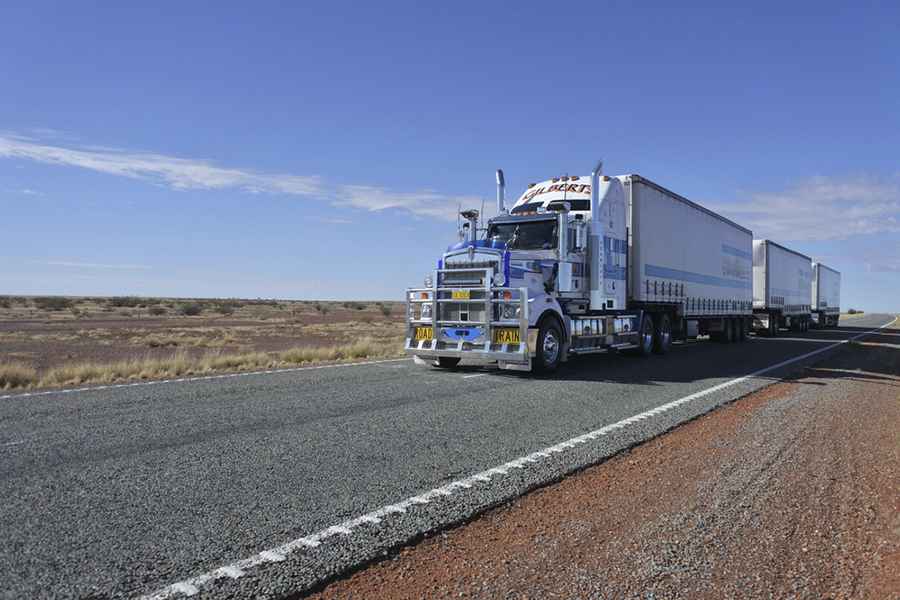
The trucking industry is evolving toward even larger configurations to increase efficiency. In the Australian Outback or the plains of Brazil, "road trains" can reach lengths of over 50 meters. Managing the swing and braking of multiple trailers on narrow or unpaved roads requires surgical precision. These vehicles represent the pinnacle of heavy logistics, moving massive quantities of resources through some of the most isolated environments on Earth.
Conclusion
Trucks are far more than just commercial vehicles; they are the frontline explorers of the world's road network. From the early Daimler models to the modern digital-heavy rigs, their history is a testament to human ingenuity. For those who hit the open road in these giants, safety, dedication, and mechanical knowledge are the only things standing between a successful delivery and a mountain tragedy. Respect the machine, and respect the road.
Image credit: Depositphotos