The Thin Line: The Most Dangerous Racing Roads in the World
Motorsports reach their ultimate expression of danger when the boundaries between a controlled circuit and a public road vanish. While modern Formula 1 tracks focus on massive runoff areas and "Halo" safety systems, legendary road courses rely on the driver’s ability to navigate environments where brick walls, telephone poles, and sheer cliffs are the only barriers. These tracks don't just test speed; they test the psychological limits of survival.
| High-Risk Racing Venues | |
|---|---|
| Isle of Man TT | Snaefell Mountain Course (60.7 km). Over 260 fatalities since 1911. |
| Nürburgring Nordschleife | The "Green Hell" (20.8 km). 73 technical corners through the Eifel forest. |
| Mount Panorama | Bathurst, Australia. Vertical drops and high-speed narrow concrete canyons. |
1. The Isle of Man TT: The Snaefell Mountain Course
Widely regarded as the most dangerous motorcycle race on the planet, the Isle of Man TT is held on closed public roads. Riders reach speeds of nearly 320 km/h (200 mph) through tight villages and open mountain passes. Since its inception, the course has claimed the lives of over 260 competitors. The danger lies in its lack of margin for error: a minor mechanical twitch or a fraction of a second in misjudgment results in an impact with stone walls or iron railings. During race week, the course remains a public road outside of session hours, creating a lethal mix of high-speed adrenaline and civilian traffic.
2. Nürburgring Nordschleife: The Green Hell
Spanning almost 21 kilometers through the Eifel forest, the Nordschleife is the most technical public road in the world. Originally a premier GP venue, it was famously dubbed the "Green Hell" by Jackie Stewart due to its unforgiving nature. Today, it is most notorious for its Touristenfahrten (Tourist Rides), where any driver with a road-legal vehicle can pay a toll to lap the track. With an estimated 3 to 12 fatalities annually, the danger comes from the combination of extreme speed, steep embankments like the "Karussell," and a constant influx of amateur drivers who underestimate the complexity of its 73 corners.
3. Mount Panorama: Australia’s Concrete Canyon
While often categorized as a purpose-built track, Mount Panorama is a public road for the majority of the year. The circuit features a massive 174-meter vertical gain and sections like "The Dipper" and "Forrest's Elbow," where concrete walls sit inches from the racing line. At speeds exceeding 300 km/h on the Conrod Straight, the risk of multi-car pileups is constant. The track’s elevation changes and narrow, winding sectors through the mountainside make it one of the most punishing environments for both brakes and driver focus.
4. The Perils of High-Speed Ovals: Daytona and Indy
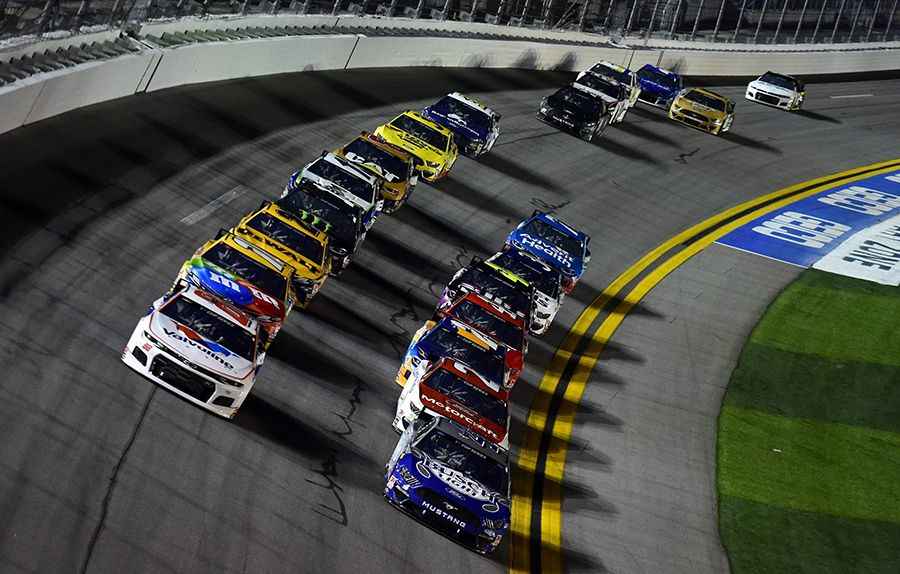
In the United States, tracks like Daytona and Indianapolis represent a different kind of road danger. While these are controlled environments, the extreme banking (up to 31 degrees) and "pack racing" dynamics create a cascading effect during accidents. At 350 km/h, a single tire failure can involve 20 or more cars in a massive "Big One." Despite modern SAFER barriers and lightweight chassis, the sheer kinetic energy involved in these high-speed collisions remains one of motorsports' most sobering reminders of risk.
Conclusion
Racing on roads—whether closed for an event or open for a toll—demands a level of respect that traditional circuits cannot replicate. These venues serve as a bridge between the precision of professional racing and the raw, unpredictable nature of the world's most dangerous roads. In these arenas, the road always has the final word, and safety is a fragile balance between engineering and absolute human concentration.
Pic: https://www.nascar.com/gallery/2021-nascar-cup-series-schedule-in-photos/#photo-2