How to Maximize Vehicle Luggage Space for a Road Trip
Packing for a road trip—whether it's a coastal scenic route or a high-altitude mountain pass—is an exercise in weight distribution and space optimization. Every kilogram of unnecessary luggage affects your vehicle’s center of gravity and braking distance. To explore the world’s most amazing roads safely, you must move from simply "packing a suitcase" to configuring your vehicle's payload for maximum efficiency.
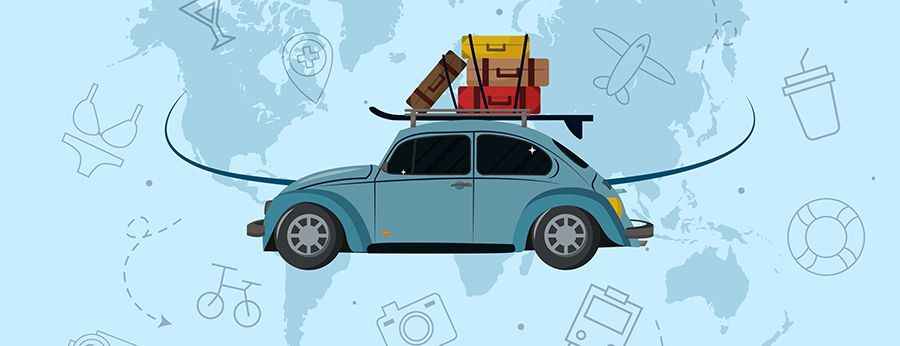
| Vehicle Payload & Packing Logistics | |
|---|---|
| Critical Priority | Weight Distribution & Center of Gravity |
| Luggage Type | Soft-sided duffles (Maximum adaptability) |
| Safety Protocol | Heavy items secured at the lowest point |
| Emergency Access | First-aid & recovery gear on top |
1. Choose Soft-Sided Luggage for Adaptability
Hard-shell suitcases are inefficient for vehicle "Tetris." Soft-sided duffle bags or compression sacks allow you to fill irregular spaces in the trunk or under-seat compartments. This flexibility is essential when you need to pack additional equipment like recovery gear, emergency kits, or spare fuel canisters for remote sections of the road.
2. The "Ruthless" Inventory: Essential Gear Only
Overloading a vehicle is a common mistake on scenic expeditions. Focus on a modular wardrobe that can be layered for varying climates. A professional packing list should prioritize technical versatility over quantity:
- Logistics over Variety: Carry a base of high-performance, quick-dry layers rather than bulky cotton alternatives.
- Multi-use Footwear: Limit yourself to two pairs—one technical for hiking/driving and one casual for rest stops.
- Sun Protection: Always include a high-quality hat and polarized sunglasses to manage glare on coastal or high-altitude routes.
3. Mastering Weight Distribution and Safety
How you pack is as important as what you pack. Heavy items should be placed low and as close to the center of the vehicle as possible to maintain stability on winding roads.
- The Center of Gravity: Placing heavy suitcases on roof racks significantly increases the risk of rollover on sharp hairpins. Keep the densest weight on the floor of the trunk.
- Cargo Security: Ensure that all loose items are secured. In the event of sudden braking on a steep descent, an unsecured bag can become a dangerous projectile inside the cabin.
4. Clever Packing: Maximizing Internal Space
Use every cubic centimeter of your luggage to minimize the footprint inside the car:
- Internal Storage: Pack socks and small electronics inside your shoes to protect them and save space.
- Rolling Method: Roll clothes tightly to reduce volume and prevent shifting during high-vibration drives.
- Heel-to-Toe: Always nest shoes together (heel to toe) to minimize their footprint in the bag.
5. Access Logistics: The Top-Down Strategy
The most important items must be the most accessible. Never bury your first-aid kit, emergency water, or tools under your main luggage. Keep a "ready bag" at the top of your cargo area containing daily essentials and toiletries so you don't have to unpack the entire vehicle for a quick overnight stop or an emergency roadside fix.
Final Advice for Long-Range Drivers
Unless you are heading into an uninhabited wilderness, remember that you can resupply along the way. Traveling light improves fuel efficiency, reduces wear on your suspension, and makes the driving experience on winding scenic roads far more enjoyable. Pack for the technical demands of the route, not for "just in case" scenarios.
Pic: Background vector created by freepik - www.freepik.com