Beneath the Adriatic: a diver’s and snorkeler’s guide to the waters around Hvar
The waters surrounding Hvar rank among the clearest in the Adriatic, with visibility frequently exceeding twenty meters on calm summer days. This clarity, combined with a varied underwater landscape of rocky reefs, seagrass meadows, and the occasional wreck, makes the island a genuinely worthwhile destination for both casual snorkelers and certified divers.
Why Hvar’s waters stand out
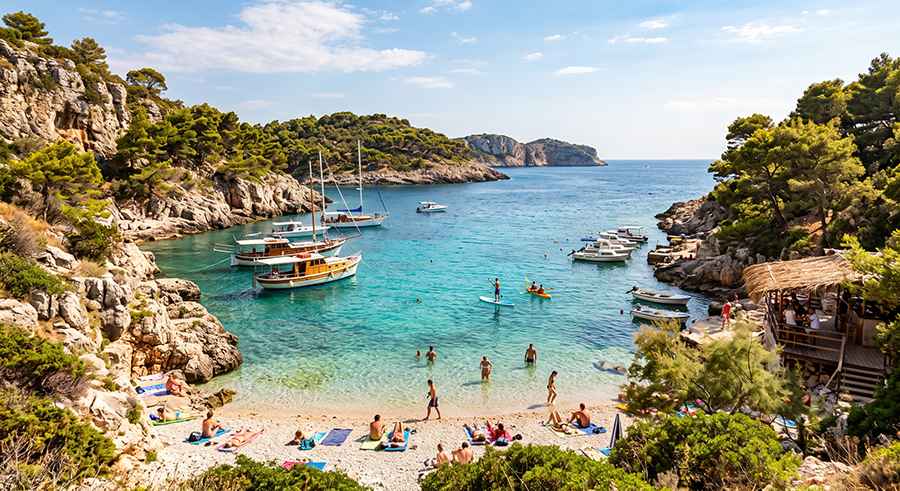
The lack of major rivers feeding into the sea around Hvar, combined with limited industrial development along the coastline, keeps sediment and pollution low compared to many other Mediterranean destinations. The result is a consistently clear, deep blue sea that makes even simple snorkeling from the shore a rewarding experience, let alone more involved diving excursions.
Popular dive sites
Several dive sites around Hvar and the neighboring Pakleni Islands are well established among the local diving community. Rocky drop-offs near the Pakleni archipelago offer encounters with groupers, moray eels, and colorful sponge formations along steep underwater walls. Further afield, wreck sites from both World Wars dot the wider Hvar Channel, appealing to more experienced divers interested in historical wrecks alongside marine life.
Diving centers and courses
Hvar Town hosts several PADI-certified diving centers offering everything from introductory try-dives for complete beginners to full certification courses spanning several days. Most centers also run regular boat dives to sites around the Pakleni Islands and further along the coast, typically including all equipment rental as part of the package. Advance booking is recommended in peak season, as boat capacity is limited and popular time slots fill quickly.
Snorkeling without a guide
For those who prefer a more independent, low-commitment approach, snorkeling directly from many of Hvar’s beaches and coves offers plenty of reward without needing to book an organized trip. Rocky shorelines, common throughout the island, tend to host more marine life close to shore than sandy beaches, making spots like Dubovica or the coves around the Pakleni Islands particularly good for casual snorkeling.
Combining diving with island exploration
One of the advantages of diving around Hvar rather than at a single dedicated dive resort is the ability to combine underwater exploration with the island’s broader appeal: historic towns, wine country, and dramatic coastal scenery all within easy reach. Divers who also want more open-ended exploration of the coastline between dive sessions often look into Hvar.com boat rental page listings to arrange their own transport between sites, giving more flexibility than fixed-schedule dive boat excursions alone.
Best time for diving and snorkeling
Water temperatures around Hvar peak in August, often reaching the mid-20s Celsius near the surface, making it comfortable for snorkeling without a wetsuit. Visibility tends to be best in the shoulder months of June and September, when algae bloom activity is lower than at the height of summer. Winter diving is possible for those equipped for colder water, though most commercial dive centers scale back operations significantly outside the main season.
What to bring
A well-fitted mask and snorkel make a significant difference in comfort, and renting gear locally is generally straightforward if you’d rather not travel with your own. Reef shoes are useful for entering the water at many of the island’s rockier coves, where sharp underwater terrain can otherwise make wading in uncomfortable. Whether you’re pursuing a full diving certification or simply snorkeling off a quiet beach for an afternoon, Hvar’s underwater world rewards exploration well beyond what’s visible from the surface.
Marine conservation awareness
As with much of the Adriatic, the waters around Hvar face pressure from increased boat traffic and tourism during peak season, and several local dive operators have become active in small-scale conservation efforts, including seagrass monitoring and organized cleanup dives around popular sites. Visitors are generally encouraged to avoid touching coral formations or handling marine life, maintain distance from any anchoring seagrass meadows when possible, and choose operators who follow responsible diving practices. Supporting dive centers actively involved in these efforts helps ensure the clarity and biodiversity that make Hvar’s waters so appealing remain intact for future visitors.
Night diving and special excursions
A handful of Hvar’s dive operators also offer night dives during the summer months, revealing a noticeably different underwater environment as nocturnal species like octopus and various crustaceans become far more active after dark. These excursions require prior diving experience and are typically limited to smaller groups given the added safety considerations of diving at night, but participants often describe them as one of the more memorable experiences the island’s dive scene has to offer, quite different from the daytime reef and wreck dives that make up most standard excursions.