Everyone Dreams of Everest—But Eastern Nepal Tells a Different Story
When people imagine trekking in Nepal, one name almost always comes first: Everest.
It has become more than a mountain. It represents adventure, endurance, and the dreams of travelers from around the world. For decades, Everest has inspired climbers, hikers, photographers, and storytellers who dream of standing beneath the world's highest peak. The Everest region offers breathtaking Himalayan scenery, rich Sherpa culture, and one of the most iconic mountain journeys on Earth.
But Nepal is much larger than a single mountain.
Beyond the famous trails and well-known viewpoints, another Himalayan giant quietly rises above the eastern horizon. It does not seek attention through popularity or crowds. It simply stands in silence—powerful, remote, and surrounded by some of the most untouched landscapes in the Himalayas.
That mountain is Kanchenjunga, the world's third-highest peak at 8,586 meters, located in one of Nepal's most remote Himalayan regions.
For many travelers, the Kanchenjunga Circuit Trek is not about choosing something less famous than Everest. It is about discovering a different kind of adventure—one shaped by solitude, wilderness, and a deeper connection with the mountains. As more hikers search for authentic experiences away from crowded routes, eastern Nepal has become a destination for those who want to explore beyond the ordinary.
Modern travelers are beginning to ask a different question. Instead of only searching for the most recognized destinations, they are looking for places where nature still feels untouched. They want peaceful trails, traditional villages, meaningful cultural interactions, and landscapes where the journey itself becomes the reward.
This remote Himalayan region offers exactly that experience.
Walking through the area means entering a world of ancient forests, dramatic valleys, glacial rivers, and high mountain landscapes where nature sets the rhythm of daily life. The trails pass through quiet settlements where local traditions remain strong, and where visitors can experience a side of Nepal that has changed very little over generations.
This is not simply an easier alternative to the popular Himalayan routes.
The journey demands patience, preparation, and respect for the mountains. Long walking days, challenging landscapes, and remote mountain conditions create a true sense of exploration. There are no crowded viewpoints or constant movement of large trekking groups. Instead, every step offers a feeling of discovery, where the silence of the mountains becomes part of the adventure.
That sense of remoteness is exactly what attracts today's adventure seekers.
Across the world, trekking preferences are changing. Many experienced hikers are moving beyond traditional bucket-list destinations and searching for meaningful journeys that combine nature, culture, and personal challenge. They want more than a photograph—they want an experience that stays with them long after returning home.
The beauty of this region lies not only in its towering peaks but also in the people who call these valleys home. Rai, Limbu, and Tibetan-influenced communities continue to preserve their traditions through farming, festivals, monasteries, and mountain lifestyles that have existed for centuries. Every village, trail, and conversation adds another layer to the Himalayan story.
The area is also an important example of responsible travel. Protected landscapes, diverse ecosystems, and conservation efforts help preserve rare wildlife and fragile environments. The Kanchenjunga Conservation Area supports unique biodiversity while allowing visitors to experience a form of travel that benefits local communities.
The Kanchenjunga Circuit Trek represents a different side of Nepal's Himalayan adventure. While Everest will always inspire dreams because of its legendary status, some travelers are searching for something quieter—a journey where mountains feel vast, villages feel authentic, and every moment feels personal.
Because sometimes the most unforgettable adventures are not found where everyone goes, but where fewer people choose to follow.
A Journey Through Nepal's Last Great Wilderness
Walking through the remote landscapes of eastern Nepal felt like entering a world that time had quietly forgotten. As I moved deeper into the Kanchenjunga region, the busy sounds of modern life slowly disappeared, replaced by the peaceful rhythm of nature. The trail led through hidden valleys where traditional mountain villages rested beneath towering peaks, and every turn revealed a new landscape waiting to be discovered.
The journey was not just about reaching a destination—it was about experiencing the wilderness itself. Crossing old suspension bridges hanging above powerful Himalayan rivers, walking through dense forests, and following narrow mountain paths created a true feeling of exploration. The sound of rushing water below, the fresh mountain air, and the endless views of untouched landscapes made every step unforgettable.
During the trek, the forests changed with the altitude. In lower areas, green forests surrounded the trails, while higher sections were covered with colorful rhododendron forests that bloom beautifully during spring. These ancient woodlands felt alive, hiding countless stories of the Himalayas and providing shelter for some of Nepal's rarest wildlife.
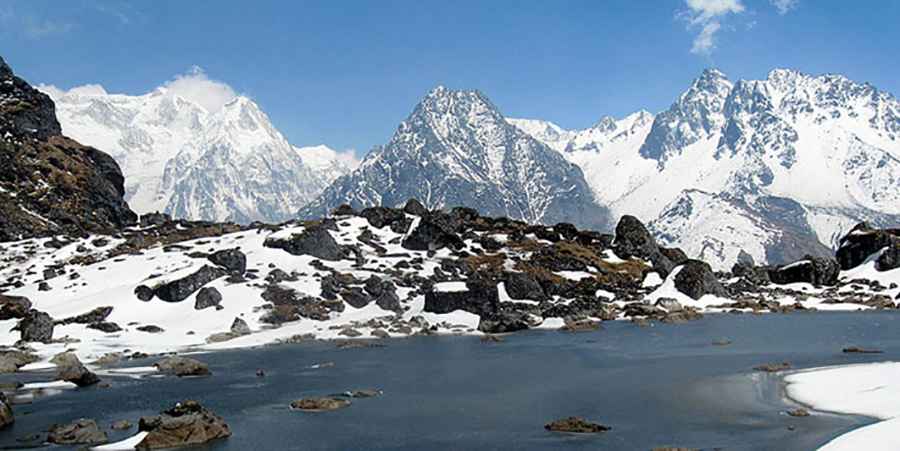
The closer we moved toward the glaciers and high mountain landscapes, the more dramatic the scenery became. Massive peaks covered in snow stood above the valleys, while icy glaciers reflected the golden light of sunrise. Standing in front of these untouched Himalayan giants created a feeling of respect and humility—a reminder of how powerful and beautiful nature can be.
One of the most special parts of the journey was knowing that this wilderness is home to incredible wildlife. The Kanchenjunga Conservation Area protects a rich ecosystem where rare animals still survive in their natural habitat. Although sightings are never guaranteed, the possibility of encountering a red panda hiding among the forests, a Himalayan black bear moving through the woodland, or the rare and mysterious snow leopard somewhere high in the mountains adds another layer of excitement to the adventure.
Along the trail, trekkers may also discover signs of other Himalayan animals such as the blue sheep, often seen on rocky mountain slopes, and the shy musk deer, which quietly moves through forest areas. These creatures are a reminder that the Kanchenjunga region is not only a trekking destination but also one of Nepal's most important natural sanctuaries.
The Kanchenjunga Circuit Trek is a journey into one of Nepal's last great wilderness areas—a place where forests, rivers, glaciers, wildlife, and mountains exist together in perfect balance. It is not only a challenge for the body but also a journey for the soul, offering a rare chance to experience the Himalayas in their most authentic and untouched form.
Villages That Still Preserve Ancient Himalayan Traditions
Walking through the villages of the Kanchenjunga region felt like discovering a side of Nepal where ancient traditions are still part of everyday life. Unlike many places where culture is preserved only for visitors, here it exists naturally in the way people live, work, and connect with the mountains. As I walked along the trails, I experienced the warmth of Rai, Limbu, and Sherpa communities who have lived in these valleys for generations, carrying stories, traditions, and a deep respect for the Himalayan landscape.
The villages themselves reflected the simplicity and strength of mountain life. Small stone houses with wooden roofs stood on the hillsides, built to protect families from the harsh mountain climate. Prayer flags moved gently with the wind above homes and monasteries, sending blessings across the valleys. In the mornings, the sound of prayers from small monasteries mixed with the sounds of daily life—the footsteps of people preparing for work, animals moving through the village paths, and children walking to school with their bags while surrounded by some of the world's highest peaks.
Life here follows the rhythm of nature. Families still practice traditional farming, growing crops on small mountain terraces and depending on the land that their ancestors cared for. Fields are carefully maintained on steep slopes, and every season brings a different responsibility—from planting and harvesting to preparing food and taking care of livestock. The connection between people and the land is visible everywhere; farming is not just a way of earning a living but a part of their identity.
The influence of Tibetan culture can be felt throughout the region, especially in the spiritual traditions, monasteries, and daily practices of mountain communities. Colorful prayer flags, Buddhist symbols, and peaceful monasteries remind visitors that the Himalayas are not only about dramatic landscapes but also about deep spiritual connections. In some areas, the sight of yak caravans carrying goods along ancient mountain routes still reflects a traditional way of life that has continued for centuries.
What stayed with me most was seeing how people have adapted to such a remote environment while maintaining their cultural roots. The villagers do not live separated from the mountains—they live with them. Their homes, their farms, their festivals, and their daily routines are all shaped by the Himalayan surroundings. Experiencing these villages during the Kanchenjunga Circuit Trek was a reminder that the true beauty of the Himalayas is not only found in the peaks and glaciers, but also in the people who have protected their traditions and lived peacefully among these mountains for generations.
More Than Mountains: The Food That Connects You With Local Life
One of the most unforgettable parts of a Himalayan journey is often not the dramatic peaks or the challenging trails—it is the simple meal shared with local people after a long day of walking. Deep in the eastern mountains of Nepal, food becomes much more than something to satisfy hunger. It becomes a bridge between travelers and the communities who have lived among these mountains for generations.
After eight hours of walking through quiet forests, crossing rivers, and passing through high alpine landscapes, arriving at a small family-run teahouse feels like a celebration. The warmth of the kitchen, the smell of freshly prepared food, and the friendly conversations with local families create moments that remain in your memory long after the journey ends. Many travelers remember these meals more than anything else because they represent comfort, connection, and the kindness of people living in some of the most remote corners of the Himalayas.
A simple plate of Dal Bhat often becomes the highlight of the evening. Rice, lentil soup, seasonal vegetables, pickles, and local ingredients may sound ordinary, but after a demanding day in the mountains, it feels like the perfect reward. It provides energy, warmth, and a sense of home. Sitting beside a wooden table while sharing this traditional meal with local hosts reveals why food has always been such an important part of Himalayan hospitality.
Beyond Dal Bhat, every dish carries a story. Gundruk, made from fermented leafy vegetables, reflects the traditional methods mountain families use to preserve food for different seasons. Dhido, prepared from millet or buckwheat, connects travelers with old farming traditions that have supported generations of Himalayan communities. These foods are not created for tourists—they are part of everyday life.
On colder evenings, a bowl of Sherpa stew or warm Tibetan bread brings incredible comfort. The simple flavors, prepared with care inside small mountain kitchens, feel especially meaningful when the wind is blowing outside and snow-covered peaks surround the village. A cup of butter tea shared around the fire adds another layer of warmth, reflecting the deep cultural influence of Himalayan Buddhist traditions.
Trying yak cheese offers a glimpse into the relationship between mountain people and their animals. For generations, yaks have provided transportation, milk, and essential support for families living at high elevations. Every piece of yak cheese represents the effort and patience required to survive in such a challenging environment.
In eastern Nepal, Tongba, a traditional fermented millet drink, is more than a local beverage. It is a symbol of friendship and hospitality. Sitting with villagers, sharing stories, and enjoying a traditional drink creates a connection that goes beyond language and cultural differences.
Even humble foods such as mountain potatoes and nettle soup reveal the creativity of Himalayan communities. Potatoes grown on steep mountain terraces and soups prepared from locally available plants show how people have learned to live in harmony with their surroundings.
The greatest memories from the mountains are often created in these small moments—sitting inside a simple teahouse, warming your hands near the fire, sharing a meal with strangers who quickly become friends, and listening to stories from people whose lives are deeply connected to the land.
Because in the Himalayas, food is not just about taste. It carries the history, traditions, and spirit of the people who call these mountains home.
Responsible Tourism Is Helping Protect Eastern Nepal
One of the most meaningful changes happening in the remote Himalayan regions of eastern Nepal is the way responsible tourism is creating opportunities for local people while helping protect the natural environment. Behind every trekking journey are the communities who make these experiences possible—local guides, porters, teahouse owners, farmers, and families who have lived in these mountains for generations.
For many local people, trekking has created a new source of income and stability. In the past, many mountain communities had limited employment opportunities, and young people often had to leave their villages in search of work elsewhere. Today, tourism has helped create jobs directly within their own communities. Local guides have built careers by sharing their knowledge of mountain trails, culture, history, and traditions, while porters have gained more reliable employment by supporting trekkers throughout challenging Himalayan journeys.
The role of porters is especially important. They are not just carrying equipment—they are an essential part of the mountain experience. Many porters come from nearby villages and use trekking income to support their families, educate their children, and improve their living conditions. Through fair employment practices and better recognition of their contribution, trekking has helped many mountain workers build a more secure future.
Community-run teahouses have also transformed local livelihoods. Small family-owned lodges provide trekkers with food, accommodation, and a place to rest, while the income generated stays within the village. These businesses allow families to continue living in their homeland while creating better opportunities for future generations. A simple meal served in a mountain teahouse often represents much more than hospitality—it represents a family's hard work and connection to tourism.
Conservation efforts have also benefited from responsible travel. Protected areas in eastern Nepal support environmental preservation while allowing local communities to participate in sustainable tourism. Income from tourism helps increase awareness about protecting forests, wildlife, and fragile mountain ecosystems. Local people who once depended heavily on natural resources are becoming important partners in conserving the landscapes they call home.
Another positive change is the growing focus on reducing environmental impact. Many trekking communities are working to minimize plastic waste, encourage proper waste management, and promote cleaner trekking practices. Small actions, such as reducing single-use plastics, carrying reusable bottles, and respecting natural surroundings, help protect the beauty of the Himalayas for future generations.
Responsible tourism is also about respecting local culture. The mountains are not only destinations—they are homes filled with traditions, beliefs, and unique ways of life. Travelers who take time to understand local customs, respect monasteries, support local businesses, and interact respectfully with communities create a more meaningful connection with the region.
The true success of tourism in eastern Nepal is not only measured by the number of visitors arriving each year. It is measured by the positive impact created for local people—the guide who can support his family, the porter who can send children to school, the teahouse owner who can improve their home, and the communities that can protect their natural heritage.
When tourism is practiced responsibly, it becomes a partnership between travelers and local communities. It helps preserve the mountains while improving the lives of the people who have protected and cared for these landscapes for generations.
Why Experienced Trekkers Keep Recommending Kanchenjunga
Many experienced trekkers remember the mountains not because of how famous they are, but because of how deeply they connect with the journey. Kanchenjunga offers a different feeling—one where adventure comes from the unknown, the quiet trails, and the sense of being far away from everyday life.
Walking through remote valleys, meeting local families, and spending days surrounded by untouched landscapes creates a level of solitude that is becoming rare in the Himalayas. The journey feels less like following a popular route and more like discovering a hidden part of Nepal.
For many travelers, the most valuable moments are not only the mountain views but the cultural connections along the way—the conversations with local people, the traditional villages, and the simple lifestyle that continues in these highlands.
That combination of adventure, remoteness, and authentic human connection is why many trekkers leave Kanchenjunga with memories that stay with them long after they return home.
About the Author
Subash KC is the founder and mountain adventure expert at Exciting Nepal Treks and Expedition, a Nepal-based trekking company dedicated to creating meaningful Himalayan journeys through responsible and sustainable tourism. With years of experience in the mountains, he has been closely connected with Nepal's trekking communities, local guides, and remote Himalayan destinations.
Passionate about protecting nature and supporting local communities, Subash works to promote sustainable travel practices that benefit both travelers and mountain regions. Through his work, he focuses on creating authentic adventure experiences while encouraging respect for Himalayan culture, environment, and local livelihoods.
For any trekking support, travel assistance, or Himalayan adventure inquiries, you can contact:
Subash KC
Exciting Nepal Treks and Expedition
📞 +977 9851069596
✉️ info@excitingnepal.com