Why Overland Travelers Use Car Covers During Multi-Day Stops
Overlanding places constant stress on vehicles. Dust, intense UV exposure, river crossings, tree sap from forest camps, and the cumulative effects of spending long periods in remote environments all take a toll over time.
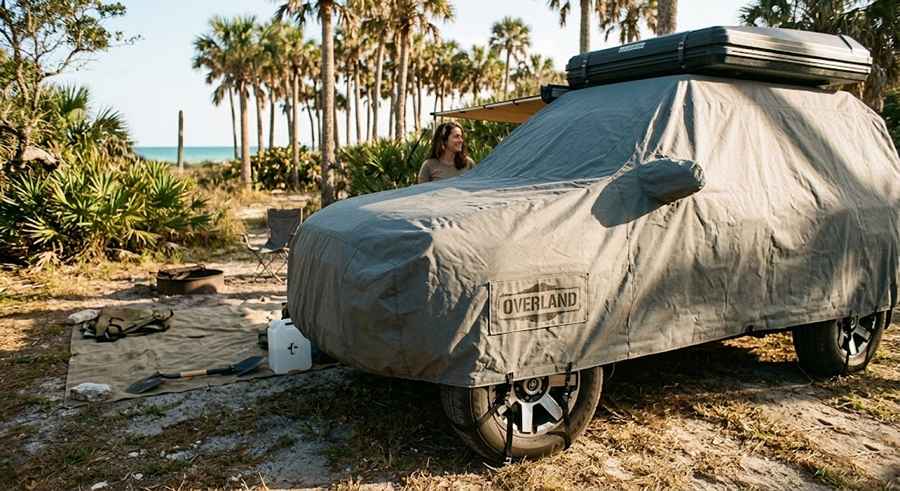
Most overland travelers invest heavily in mechanical upgrades such as skid plates, suspension systems, recovery equipment, and communication gear. However, exterior protection during extended stationary periods is often overlooked, and the results become visible through fading paint, deteriorating rubber trim, and gradual wear that could have been minimized with proper protection.
A car cover during multi-day stops is one of the lower-cost, higher-impact additions to an overland setup. High-quality outdoor car covers help shield overland vehicles from prolonged sun exposure, airborne debris, moisture, and contaminants that commonly build up during extended trips and campsite stops.
Here's why serious travelers use them and what to look for when choosing one.
The Specific Threats at Multi-Day Overland Camps
A vehicle parked at home in a driveway faces predictable outdoor conditions. A vehicle parked for multiple days in a remote overland location faces a different combination of threats, often simultaneously.
Sustained UV Exposure in Open Terrain
Sustained UV exposure is one of the most common hazards during overland travel. Camps are often set up in exposed environments such as desert flats, high-altitude plateaus, and coastal dunes where shade is limited or completely unavailable. As a result, vehicles remain under direct sunlight for long periods throughout the day.
Over the course of multi-day stops, that repeated exposure intensifies the effects of UV radiation, accelerating clear coat wear, paint oxidation, and the deterioration of rubber seals and exterior trim.
Dust and Fine Particulate Accumulation
Dust and fine particulate matter are unavoidable in most overland environments. Desert camps, dry trails, and remote backroads generate fine silica dust that settles into every exposed surface of a vehicle.
When a vehicle remains uncovered for several days, that buildup becomes more than just a cosmetic issue. During cleaning, the accumulated dust can act like an abrasive against the paint surface.
Wiping or brushing off dry dust without a proper wash often creates micro-scratches in the clear coat, and repeated exposure over multiple trips gradually contributes to visible paint wear and surface damage.
Bird and Wildlife-Related Paint Damage
Bird and wildlife activity is often much higher in remote camps than in typical urban parking environments. Roosting birds, insects, and curious wildlife can leave droppings, residues, scratches, and contact marks on vehicles overnight. When these contaminants remain on the surface for several days in warm conditions, they can damage the paint and clear coat.
Bird droppings are especially problematic because their acidic content can begin etching into the finish quickly under direct sunlight and high temperatures, making multi-day camps a genuine risk for long-term exterior damage.
Overnight Dew and Condensation Cycles
Overnight dew and condensation are common in many overland camp environments, especially in coastal regions, forests, and high-altitude locations.
As moisture repeatedly settles and evaporates from the vehicle surface each day, it can leave behind water spots and mineral residue.
Without proper protection, these constant wet-and-dry cycles also allow dirt, dust, and other contaminants to adhere more aggressively to the paint, increasing the likelihood of long-term surface wear and staining.
Why Overland Travelers Prioritize Covers on Extended Stops
The decision to carry a car cover on an overland trip is largely a practical one. The amount of weight and storage space it requires is relatively small compared to the level of protection it provides during extended campsite stops and outdoor exposure.
Here's what overland travelers consistently cite as the key reasons to use a car cover during multi-day camps:
- Paint preservation over a long expedition: Cumulative UV and particulate exposure over a month-long trip without protection causes noticeably more paint degradation than the same trip with a cover used at camp. The damage is difficult to reverse and expensive to correct professionally.
- Reduced cleaning effort: A covered vehicle at camp generally remains much cleaner throughout the trip. With less exposure to dust, debris, moisture, and other contaminants, the cleaning process after a long stretch of travel becomes quicker and requires less direct contact with the paint surface, helping reduce the risk of scratches and swirl marks.
- Protection during weather events: Desert rainstorms, forest dew, coastal salt spray, and high-altitude snow events all affect a vehicle differently than urban rain. A car cover provides consistent protection regardless of the specific weather type encountered.
- Security and discretion: In some overland regions, a covered vehicle attracts less attention than one with exposed gear and equipment. A cover helps conceal rooftop storage, recovery tools, and visible access points, which can be valuable in areas where vehicle security and overnight campsite safety are legitimate concerns.
- Interior temperature management: A covered vehicle parked in direct sun for a day stays significantly cooler inside. In hot summer or desert conditions, this can help protect electronics, food supplies, and other temperature-sensitive gear stored inside the cab from excessive heat buildup.
Trucks used for overlanding often carry recovery gear, camping equipment, rooftop storage systems, and exposed cargo that remain vulnerable to harsh outdoor conditions during long stops. Truck covers also add an extra layer of protection by shielding truck beds and stored gear from harsh weather, trail dust, moisture, and prolonged UV exposure during extended outdoor travel.
What to Look for in an Overland Car Cover
Not every car cover is suited to overland use. The specific demands of extended outdoor parking in remote environments require a cover that's built for real conditions rather than light suburban use.
- Weight and packability: A car cover that takes up too much storage space is less likely to be used consistently on overland trips. Lightweight covers that pack down into a compact, manageable bag are easier to integrate into an overland setup without sacrificing valuable cargo space for other essential gear.
- Durability: A cover used in the field gets handled frequently, often in dusty or damp conditions. Reinforced edges, quality stitching, and durable outer fabric hold up to repeated packing and unpacking better than consumer-grade covers designed for occasional use.
- UV resistance: Since UV exposure is one of the biggest threats at overland camps, the outer fabric of a car cover should provide reliable, long-term UV protection rather than relying on a temporary surface coating that wears down quickly over time.
- Secure attachment: Wind is unpredictable in remote environments. Elastic hems and tie-down straps keep the cover anchored overnight without requiring monitoring.
- Breathability with waterproofing: Condensation buildup underneath a fully sealed cover creates its own moisture problem against the paint. A cover that blocks rain and UV while remaining breathable handles the full range of conditions an overland camp produces.
Brands like Seal Skin Covers offer durable outdoor covers designed to handle extended exposure to harsh weather and off-road conditions.
A Small Investment With Real Returns
An overland rig represents a major investment, not only in the vehicle itself but also in the gear and equipment it carries. A lightweight car cover that packs down into a compact storage bag is a relatively small addition to an overland setup, yet it provides valuable exterior protection during the long periods when the vehicle is parked at camp.
Many forms of preventable exterior damage occur during multi-day stops in harsh outdoor environments. Using a car cover offers a simple and effective way to reduce exposure to UV rays, dust, moisture, and other environmental contaminants while the trip is temporarily paused.
Author Bio
Mark Adams is a content writer and automotive research specialist at Seal Skin Covers, specializing in vehicle and outdoor protection solutions. He focuses on helping readers safeguard their investments through practical care tips, storage advice, and product insights. With a strong interest in automobiles and vehicle maintenance, Mark enjoys exploring ways to extend the life and performance of cars, trucks, and recreational vehicles.