Matterhorn: Everything You Need to Know Before You Go
There are mountains that are just part of the landscape, and then there are those that seem to define it. The Matterhorn falls squarely into the second category. Its near-symmetrical, pyramidal shape has graced countless photographs, film introductions, and even a certain famous chocolate bar's packaging. For anyone with a pulse for the outdoors, seeing it for the first time—whether from the car-free streets of Zermatt or the sunny slopes of Cervinia—is a genuinely breathtaking moment. It’s a peak that feels almost too perfect, as if it were dreamed up by a deity with a soft spot for geometry.
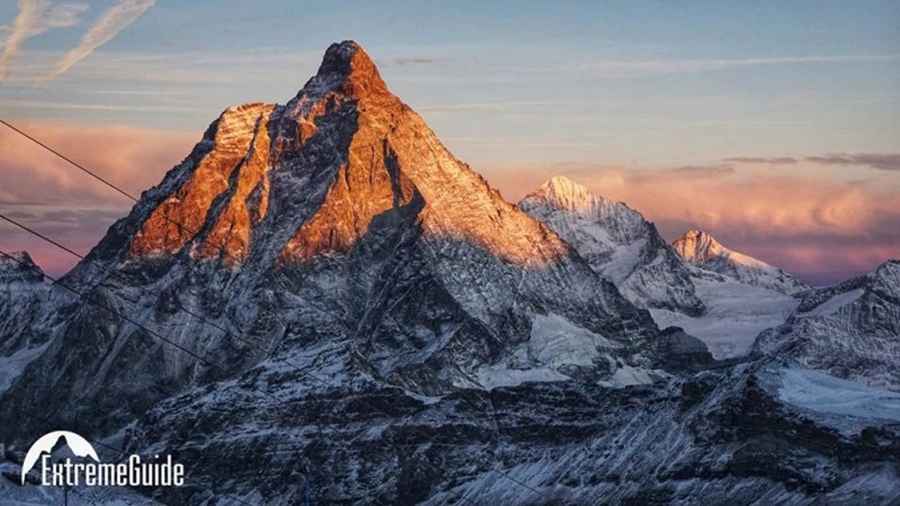
But this iconic mountain is far more than just a pretty face. It's a place where the very earth shifts beneath your feet—geologically speaking, of course—and where the history of alpinism was written in both triumph and tragedy. Planning a trip to see it, or even dare to climb it, requires more than just a point on a map. It demands a bit of respect and a whole lot of preparation. So, let's pull back the curtain on this alpine giant and get you ready for an encounter you won't soon forget.
Where Is the Matterhorn Located?
This might seem like a straightforward question, but the answer is part of what makes the mountain Matterhorn so unique. It doesn't belong to just one country. Instead, it straddles the main Alpine watershed, acting as a magnificent border post between Switzerland and Italy. The mighty peak lords over two distinct valleys and their charming base towns. To the north, in the Swiss canton of Valais, lies the famous resort of Zermatt. To the south, in Italy's Aosta Valley, you'll find the town of Breuil-Cervinia. These two towns, though separated by a few hours' walk over the Theodul Pass, are united by their shared view of this colossal horn.
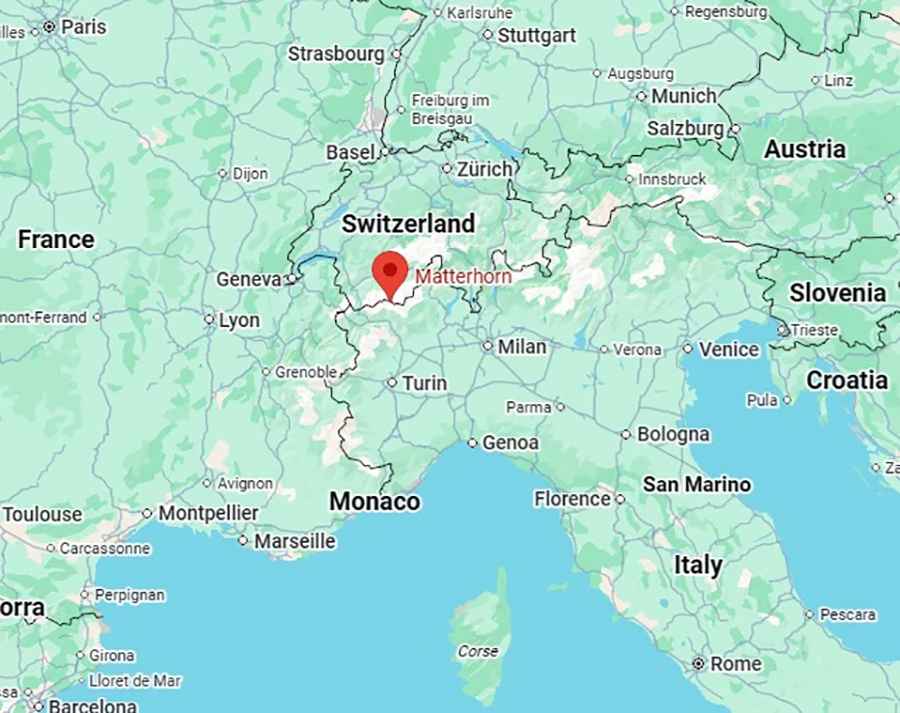
The mountain's position has shaped the culture and economy of both valleys for centuries. The Theodul Pass, sitting just east of the peak, has been a crucial trade route since the days of the Roman Empire, linking northern and southern Europe long before climbers ever dreamed of reaching the summit. From Zermatt, you're looking at the mountain's north and east faces, a view that feels rugged and imposing. From Cervinia, you're gazing at the south face, which basks in the Italian sun and feels somehow warmer and more approachable. This dual personality is part of the Matterhorn's enduring magic. It's a single entity, yet it offers two completely different experiences depending on which side of the border you're standing on.
Getting to either base camp is an adventure in itself, thanks to the forward-thinking decision to keep Zermatt car-free. Visitors park in the nearby village of Täsch and take a shuttle train into the resort, a journey that builds anticipation with every passing minute. On the Italian side, you can drive right into Cervinia, but once you're there, the massive pyramid dominating the skyline makes you forget about the internal combustion engine entirely. The coordinates place it firmly in the Pennine Alps, but in the hearts of travelers, its location is somewhere between a dream and a destination.
What Is the Height of the Matterhorn?
Standing at an impressive 4,478 metres (14,692 feet) above sea level, the Matterhorn is undeniably tall. It's a height that commands attention, piercing the sky and snagging clouds on its rocky ridges. However, one of the most surprising facts for first-time visitors is that it is far from being the highest peak in the Alps. That title belongs to Mont Blanc, which towers nearly a thousand feet higher. In fact, on the official list of Alpine four-thousanders, the Matterhorn ranks as only the 12th highest summit, with neighbours like Monte Rosa, the Dom, and the Weisshorn all exceeding its altitude. But to focus solely on its ranking is to miss the point entirely. It's not the height, but the sheer audacity of its form that makes it a legend.
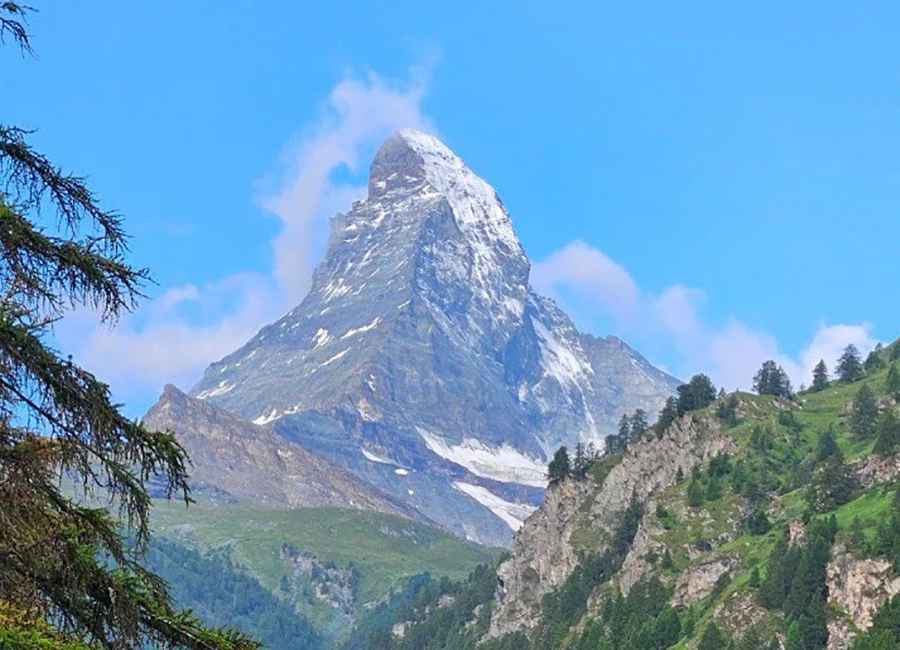
Its prominence—the measure of a mountain's independence—is a more telling statistic. With a prominence of 1,042 metres, it rises majestically from the Col Durand, a true giant in its own right. The challenge of climbing Matterhorn has little to do with altitude sickness and everything to do with the technical difficulty and exposure. It's a mountain that requires you to climb with your hands as much as your feet. Interestingly, the summit itself isn't a single point but a 100-metre-long exposed rocky crest. On one end is the Swiss summit, and on the other, the Italian summit, which is a mere four feet lower. This ridge marks the precise border, meaning you can stand on top of Switzerland and then scramble over to Italy in a matter of minutes. The exact height has been fine-tuned over the centuries, from early measurements with sextants and barometers to a highly precise GPS reading in 1999 that put it at 4,477.54 metres. That level of precision matters to geographers, but for the rest of us, it's simply the perfect altitude for an unforgettable adventure.
Interesting Facts About the Matterhorn
Beyond its geographical stats and imposing walls, the Matterhorn is a treasure trove of captivating stories and quirky details. It’s a mountain that has inspired artists, fascinated scientists, and even graced the silver screen. So, before you go, here are a few pieces of trivia to impress your travel buddies with:
- A Mountain of Many Names: While "Matterhorn" comes from the German words for "meadow" (Matte) and "peak" (Horn), the French and Italian names—Cervin and Cervino—likely derive from the Latin "Mons Silvanus" (Forest Mountain), later corrupted and influenced by the word for "deer" (cerf/cervo). The local Valdôtains even call it "Gran Bècca," meaning "Big Mountain".
- The Last Great Alpine Peak: It was one of the last major Alpine peaks to be climbed, remaining unconquered long after Mont Blanc and other giants had been summited, which only added to its mystique and the international competition to be the first to the top. The successful ascent in 1865 marked the culmination of the golden age of alpinism.
- A Trilogy of Terror: Its north face is one of the "three biggest north faces of the Alps," known as 'The Trilogy,' alongside the Eiger and the Grandes Jorasses. This formidable wall wasn't successfully climbed until 1931, showcasing the evolving skills and courage of mountaineers over the decades.
- The Cable Car That Never Was: In 1950, a plan was proposed to build a tramway from the Italian side all the way to the summit. The idea was ultimately scrapped after tens of thousands of people protested, preserving the mountain for climbers and hikers and ensuring its wild character remained intact.
- A Marketing Milestone: A striking 1908 poster of the Matterhorn by Emil Cardinaux, created for Zermatt tourism, is considered the first modern travel poster and a landmark of 20th-century graphic design. It helped cement the mountain's image in the popular imagination worldwide.
- A Climber's Playground: The mountain boasts multiple climbing routes of varying difficulty. The Hörnli Ridge, where the first ascent took place, remains the most popular way to the summit, while the Zmutt, Lion, and Italian ridges offer different challenges and perspectives for experienced alpinists.
- Home to Ancient Glaciers: The mountain is surrounded by several significant glaciers, including the Theodul Glacier, which is home to one of the highest and most spectacular ski areas in the Alps, allowing for summer skiing and snowboarding with the Matterhorn as a breathtaking backdrop.
These facts paint a picture of a place that is as culturally significant as it is geologically fascinating. From its linguistic quirks to its place in design history, every stone of the Matterhorn seems to have a story to tell. It’s a living monument that continues to challenge and inspire, ensuring that its legacy will remain intact for centuries to come. Whether you're an armchair traveller or a seasoned mountaineer, the tales of this peak add a profound depth to its visual splendour.