How Digital Nomads Fund Their Travels: Trading and Investing on the Road
There is a particular kind of morning that most people never experience. You wake up in a rented apartment in Chiang Mai, or a guesthouse on the Croatian coast, or a co-living space in Medellin. You make coffee, open your laptop, and check the Asian markets before they close. You review a position you opened two days ago in a cafe in Lisbon. You are not on holiday. You are not between jobs.
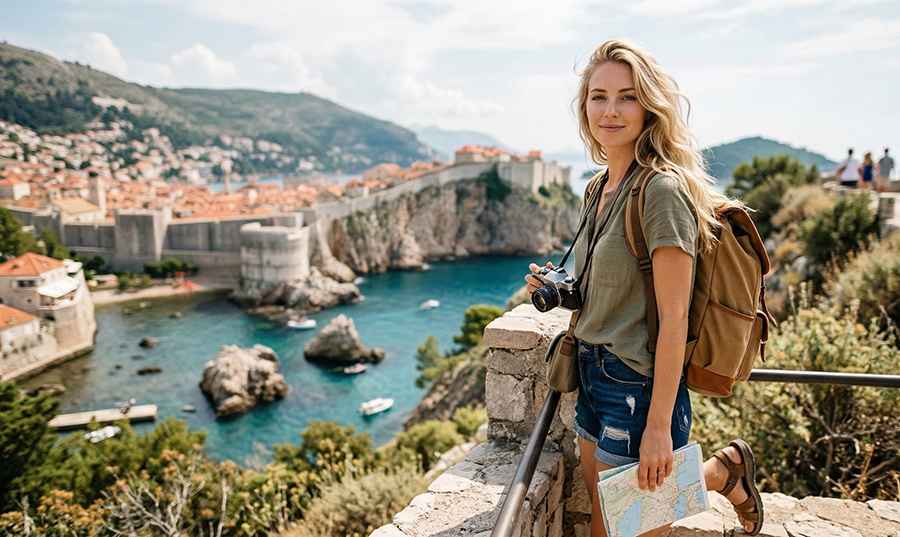
This is your life — location-independent, self-directed, and funded not by a salary wired from a head office, but by your own decisions in the financial markets. The digital nomad lifestyle has been discussed to the point of cliche, but one dimension remains underexplored: how a growing number of these travellers actually pay for it all.
The traditional digital nomad income streams are well-documented — freelance writing, web development, graphic design, virtual assistance, e-commerce. These remain dominant. But over the past five years, a meaningful subset of the nomad community has added trading and investing to their income toolkit, or in some cases, made it their primary occupation. The mechanics are straightforward. Currency markets operate around the clock five days a week. Equity markets in different time zones provide trading windows regardless of where you are on the planet. And the technology has caught up with the lifestyle. Mobile-friendly forex brokers now offer full-featured trading environments on smartphones and tablets, meaning that a reliable internet connection is genuinely the only infrastructure requirement. No office, no commute, no fixed address necessary.
The Connectivity Challenge
This is not to romanticise it. Trading from the road comes with a distinct set of challenges that no Instagram post will show you. Internet reliability is the most obvious. Executing a trade on a volatile currency pair requires stable connectivity — something that is far from guaranteed in rural Southeast Asia, mountainous South America, or even parts of Southern Europe. Experienced nomad traders learn quickly to identify backup options: personal hotspots, co-working spaces with fibre connections, hotel business centres. Some carry two SIM cards from different local providers as a hedge against network outages. It sounds excessive until you have watched a position move against you while your connection drops in a Bali rice paddy.
Managing Time Zones and Markets
Time zone management is the second practical challenge. If you trade European equities and you are based in Bangkok, you are looking at afternoon and evening sessions rather than the morning routine you might have had in London. Forex is more forgiving because of its near-continuous operation, but even forex traders often prefer specific session overlaps — London-New York, for instance — that may fall at inconvenient hours depending on your location. The solution, for most, is flexibility. You structure your travel around your trading schedule rather than the reverse. Some nomads deliberately choose destinations whose time zones align with the markets they trade. Others adjust their sleep patterns. Neither approach is perfect, but both are workable.
Tax, Residency, and Financial Infrastructure
The financial infrastructure question is more complex than it first appears. As a UK citizen trading abroad, you remain subject to UK tax obligations on your worldwide income, including trading profits. Capital gains tax, income tax on trading profits for those classified as trading (rather than investing), and reporting obligations do not disappear when you cross a border. The nomad trading community is full of myths about tax-free living — most of them dangerously wrong. Proper tax advice from a qualified accountant who understands both UK tax law and the specifics of your situation is not optional. It is essential.
Passive Investing on the Road
Beyond active trading, many digital nomads use investing as a quieter engine for funding their lifestyle. The approach here is less about capturing daily market movements and more about building a portfolio that generates passive or semi-passive income. Dividend-paying equities, exchange-traded funds, real estate investment trusts, and fixed-income instruments can all contribute to a monthly income stream that supplements freelance or trading earnings. The advantage of investing over active trading for the nomad lifestyle is obvious: it demands less screen time, fewer time-sensitive decisions, and less dependence on flawless internet. A diversified portfolio, reviewed weekly or monthly, is far more compatible with spending the afternoon exploring the backroads of Montenegro than a day-trading strategy that chains you to a screen.
Risk Management Without a Safety Net
Risk management takes on a different character when your trading capital is also your travel fund. Traditional finance advice assumes a stable income baseline — a salary — against which investment risk can be calibrated. When your income is variable and your expenses are denominated in whatever currency your current country uses, the calculations change. Currency risk becomes personal rather than abstract. A weakening pound against the Thai baht directly increases your cost of living in Bangkok. Position sizing needs to account for the fact that a significant drawdown does not just damage your portfolio — it may mean you cannot afford next month's rent. Conservative position sizing, strict stop-losses, and maintaining a cash buffer in a stable currency are not just good practice. They are survival tactics.
Community and Connection
The community aspect is worth mentioning. Digital nomad hubs — Lisbon, Tbilisi, Canggu, Mexico City — have developed informal networks of nomad traders who share information, co-work, and hold each other accountable. These are not trading signal groups or get-rich-quick circles. At their best, they are peer support networks where experienced traders mentor newer ones, where someone who has navigated the tax implications of trading from Portugal can advise someone about to do the same, and where the isolation that can accompany both solo travel and solo trading is offset by genuine human connection. Online communities on Discord and Telegram serve a similar function for those in more remote locations.
The Psychology of Trading While Travelling
The psychological dimension is the one least discussed and arguably most important. Trading requires emotional discipline — the ability to stick to a plan, accept losses without revenge trading, and resist the dopamine cycle of frequent, impulsive trades. Travel, by its nature, introduces novelty, disruption, and stimulation. The combination can be volatile. The structured routine that many successful traders rely on — same desk, same morning review, same pre-market checklist — is difficult to maintain when your environment changes every few weeks. The traders who sustain this lifestyle over years, rather than burning through their capital in months, are those who build portable routines: consistent wake times regardless of location, a fixed pre-trading ritual, defined trading hours after which the laptop closes and the exploring begins.
A Word on Survivorship Bias
There is an honest conversation to be had about survivorship bias. The nomad traders you hear about are the ones who made it work. You do not hear from the larger number who depleted their savings, returned home, and resumed conventional employment. Trading is difficult. Travelling is expensive. Doing both simultaneously, without institutional support or a guaranteed income, is a genuinely hard way to live. It works for some people — those with sufficient starting capital, realistic expectations, genuine skill in the markets, and the temperamental disposition to handle uncertainty on multiple fronts simultaneously. For everyone else, building a stable remote income first and adding trading as a supplementary activity is the more prudent path.
The digital nomad trader occupies an unusual position in the modern economy — part tourist, part financial professional, entirely self-reliant. The lifestyle offers a form of freedom that is difficult to replicate in any other configuration. But freedom, as anyone who has traded their own capital knows, comes with responsibility, risk, and the unrelenting need for discipline. The road is open. The markets are open. Whether you should be in both at the same time is a question only honest self-assessment can answer.