What are the driving conditions on the winding roads of Rwanda?
Rwanda, geographically known as the "Land of a Thousand Hills," features a dense network of paved roads that navigate constant elevation changes. Unlike the flat terrains of neighboring regions, the logistical transit through Rwanda is characterized by a total lack of straight sectors. The primary road network connects the capital, Kigali, with the Virunga Volcanoes region and the borders of Uganda and Tanzania, requiring specific driving techniques to manage the continuous switchbacks and steep gradients.
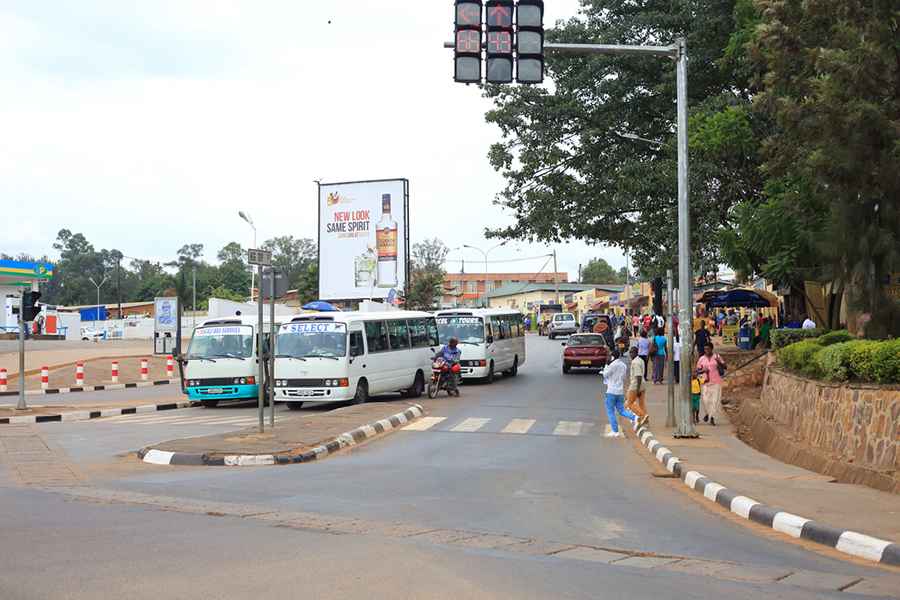
| Road facts: Rwanda Highlands Network | |
|---|---|
| Terrain | High-altitude mountainous (Volcanic) |
| Surface | Paved (Main axes) / Gravel (Secondary) |
| Key Hazards | Landslides, steep gradients, high humidity |
| Vehicle Recommended | 4x4 with reinforced braking system |
What are the technical hazards of driving in the Rwanda highlands?
The main technical challenge in Rwanda is the sustained thermal load on the vehicle's braking system. The roads wind around sloping hills with almost no rest periods for the pads and discs. It is a mandatory driving protocol to use engine braking during long descents to prevent brake fade. Additionally, the proximity to the Virunga Volcanoes means that heavy rainfall is frequent; even on paved surfaces, the combination of water and volcanic dust creates a low-friction film that significantly increases braking distances. Sudden fog in high-altitude sectors often reduces visibility to less than 10 meters, requiring functional auxiliary lighting.
What are the vehicle logistics for a Rwanda road trip?
Navigating a country where "moving straight is abnormal" requires a vehicle in optimal mechanical condition. For a self-drive transit, a 4x4 vehicle is highly recommended, not only for the occasional dirt tracks but for the superior torque needed to conquer the steep volcanic ramps. Logistically, fuel consumption is higher than average due to the constant gear changes and the lack of cruising speeds. It is essential to monitor the cooling system, as the high-torque, low-speed climbs in tropical humidity can lead to engine overheating. Maintenance checks should prioritize suspension bushings and tire sidewall integrity, as the lateral forces on these winding roads are constant.
How to manage safety and transit in the Thousand Hills?
While Rwanda maintains a high standard of road safety compared to its neighbors, the logistical reality of the "thousand hills" presents inherent risks. Many sectors lack safety barriers despite the vertical exposure. It is a technical requirement to maintain a defensive driving speed, as heavy public transport vehicles often occupy the center of the narrow paved roads on blind curves. Logistically, while the main axes are well-maintained, secondary roads can be affected by localized landslides during the rainy season. Carrying basic recovery gear and ensuring the spare tire is fully pressurized are baseline requirements for any autonomous transit outside Kigali.
Mechanical requirements for volcanic terrain transit
A vehicle transiting through Rwanda must be equipped with tires that offer high lateral grip to handle the thousands of turns across the highlands. Before starting a long-distance route, verify the brake fluid's boiling point and the condition of the brake lines. Logistically, Kigali serves as the primary hub for specialized mechanical support; as you move toward the more remote hilly sectors, parts and technical expertise become scarce. Self-sufficiency is key: carry a basic tool kit and ensure your vehicle has sufficient ground clearance to navigate potential debris on the tarmac after a storm in the volcanic regions.
Image credit: Depositphotos