Iconic Roads: What are the Most Technically Demanding Routes for Global Expeditions?
Planning a high-endurance road trip requires more than a simple itinerary; it demands a deep understanding of the diverse roads and environmental challenges across continents. From the high-altitude passes of the Himalayas to the unforgiving coastal corridors of Africa, each iconic route presents unique logistical hurdles and mechanical demands. A professional expedition must account for extreme gradients, unpredictable weather, and the structural integrity of the infrastructure. This guide analyzes the world’s most significant highways and off-road trails, providing a framework for drivers seeking to master the most challenging terrains on the planet.
| Global Roads & Terrain Complexity Matrix | |
|---|---|
| High Altitude | Karakoram (4,800m) and Leh-Manali Highway |
| Coastal Logistics | Skeleton Coast (Namibia) and Pacific Coast Highway |
| Alpine Engineering | Grossglockner (Austria) and Transfăgărășan (Romania) |
| Off-Road Endurance | Gunbarrel Highway and Limpopo River Trail |
1. Africa: Navigating Unforgiving Coastal and River Corridors
Africa offers some of the most isolated and mechanically taxing roads in the southern hemisphere. The Skeleton Coast in Namibia is a primary example of high-risk logistics, where sand dunes and coastal fogs create a volatile environment for any vehicle. In contrast, the Garden Route in South Africa provides a 300-kilometer paved corridor that demands focus due to its winding coastal topography. For 4x4 enthusiasts, the Limpopo River Trail—often referred to as the "crocodile river"—requires advanced recovery gear and strict safety protocols due to the presence of territorial wildlife and seasonal flooding.
2. Asia: Engineering Marvels at Extreme Altitudes
The roads of Asia are characterized by extreme elevation and technical complexity. The Karakoram Highway, connecting China and Pakistan, is a marvel of engineering, operating at altitudes exceeding 4,000 meters. This route requires vehicles to be tuned for low-oxygen environments and drivers to be prepared for rapid weather shifts. Similarly, the Leh-Manali highway in India is technically dangerous, crossing passes like Tanglang-La (5,325m). These routes are subject to blizzards and landslides, making tactical driving skills and mechanical redundancy mandatory for any successful transit.
3. Europe: Alpine Precision and Historic Infrastructure
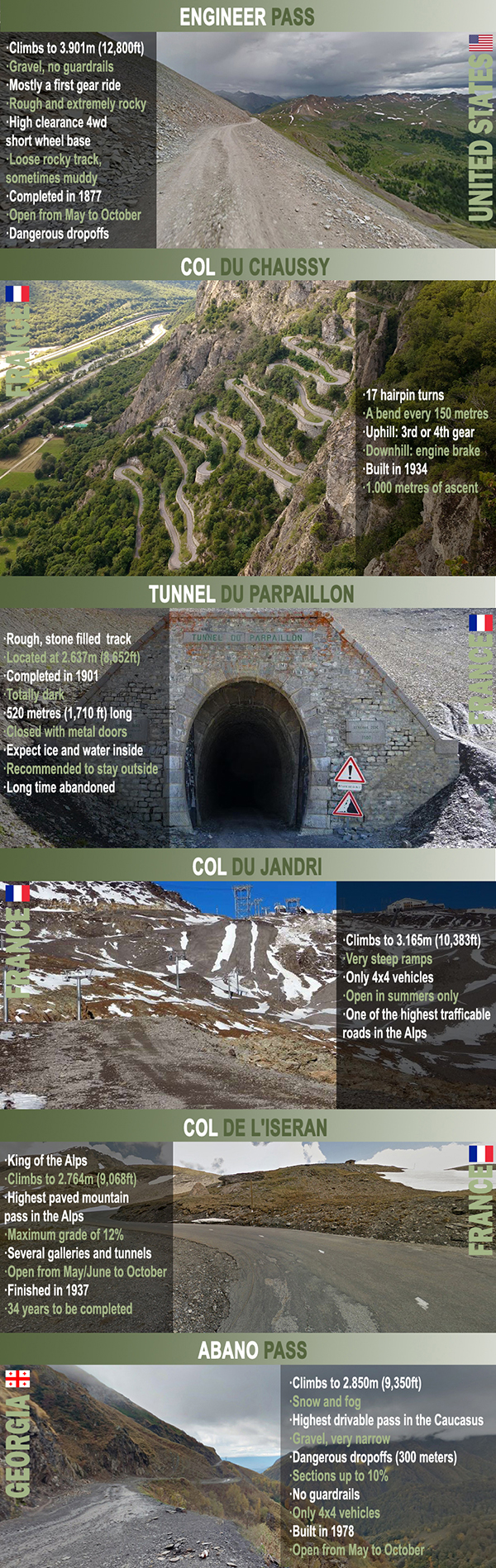
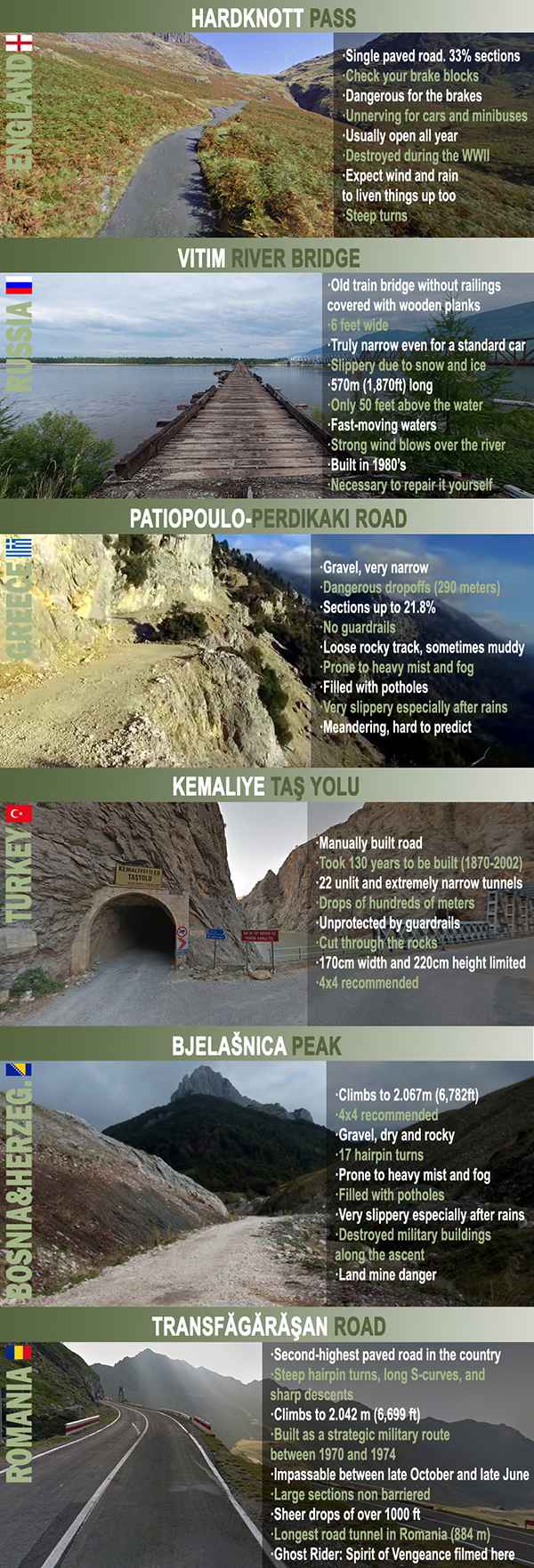
European roads are world-renowned for their integration of historic significance and high-altitude engineering. In Austria, the Grossglockner High Alpine Road crosses the High Tauern National Park, leading to Austria's highest peak through a series of technical hairpins and forested ascents. In the East, the Transfăgărășan in Romania is considered one of the most beautiful and challenging mountain routes in the world, reaching an elevation of 2,045 meters near Bâlea Lake. These roads demand peak braking performance and precise steering due to their narrow widths and steep gradients.
4. Oceania: Remote Coastal Marvels and Desert Logistics
Australia and New Zealand offer a contrast between coastal beauty and desert isolation. The Great Ocean Road (243km) in Australia is a diverse coastal route that requires alertness due to its popularity and sharp curves. For those seeking extreme isolation, the Gunbarrel Highway passes through some of the most remote desert conditions on Earth, requiring extensive fuel and water logistics. In New Zealand, the Milford Road provides a technical journey through fjords and rainforests, where high rainfall and narrow tunnels define the driving experience on these unique roads.
5. The Americas: From Jungle Gaps to Coastal Cliffs
North and South America feature some of the longest and most hazardous roads in the world. The Pan-American Highway is famously interrupted by the Darien Gap, a logistical obstacle that requires ferry transit between Panama and Colombia. In North America, the Pacific Coast Highway in California offers over 1,000 kilometers of scenic cliffside transit. Conversely, South America’s "Road of Death" in Bolivia (Yungas Road) remains a high-risk sector due to its lack of guardrails and unpredictable mudslides, while Argentina's Ruta 40 provides a 5,000km test of endurance through the Andes.
Conclusion
Every iconic road trip is a logistical mission that tests the limits of both driver and machine. By auditing the technical demands of these global roads and preparing for specific environmental variables, you ensure that your journey is as safe as it is enriching. The world’s infrastructure is a gateway to professional discovery and personal growth. Verify your equipment, research your routes, and focus on the road. Precision in planning is the foundation of every unforgettable expedition.
Image credit: Depositphotos