Roads of Identity: Highways That Defined Nations
A road is far more than a practical artery for transport; it is often a testament to human perseverance and a symbol of national character. From the hand-carved passes of the Himalayas to the endless horizons of the Patagonian steppe, certain routes have transcended their engineering to become cultural icons. These are the roads built against the odds, serving as living memorials to the sacrifice and ambition of the people who created them.
| Global Iconic Routes | |
|---|---|
| Karakoram Highway | Highest paved international road (China-Pakistan). |
| Ruta 40 | 5,194 km traversing the backbone of Argentina. |
| Great Ocean Road | The world's largest war memorial (Australia). |
| Route 66 | The "Mother Road" of American automobile culture. |
1. Karakoram Highway: The Eighth Wonder of the World
Connecting China and Pakistan through the Karakoram mountain range, the Karakoram Highway is a marvel of 20th-century engineering. Built between 1966 and 1979, the road reaches an elevation of 4,693 meters (15,397 ft) at the Khunjerab Pass. Its construction claimed the lives of over 800 workers due to landslides and extreme conditions. Today, it stands as a symbol of the "iron brotherhood" between the two nations and remains one of the most physically demanding high-altitude routes for adventure travelers.
2. Ruta 40: The Backbone of Argentina
Stretching over 5,000 kilometers from the Bolivian border to the southern tip of Patagonia, Ruta 40 is more than a highway; it is the soul of Argentina. It crosses 11 provinces, 20 national parks, and 18 major rivers. From the arid high plains of the north to the wind-swept gravel sections of the south, conquering "La Cuarenta" is a rite of passage for overlanders. It represents the vast, untamed spirit of the South American wilderness.
3. Great Ocean Road: A Memorial in Asphalt
Australia’s Great Ocean Road holds the unique distinction of being the world's largest war memorial. Built by returned soldiers between 1919 and 1932, the road was dedicated to fellow soldiers who fell during World War I. Carved by hand into the rugged cliffs of Victoria’s coastline, the 243-kilometer route was a massive logistical undertaking designed to connect isolated coastal communities while honoring a generation's sacrifice.
4. Route 66: The Mother Road
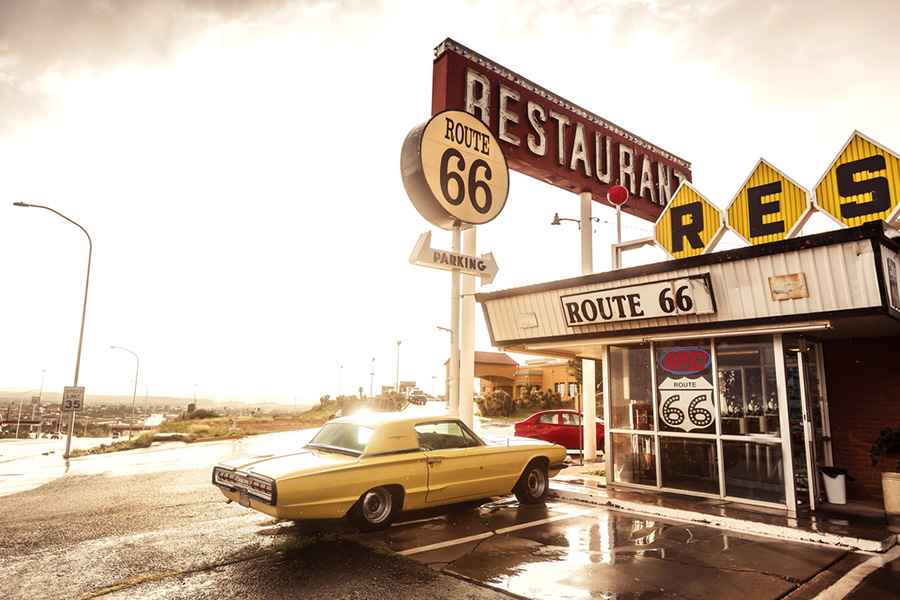
In the United States, no road carries more symbolic weight than Route 66. Established in 1926, it became the primary route for those migrating west during the Great Depression, symbolizing hope and the promise of a better life. While it was officially removed from the United States Highway System in 1985, its legacy as a symbol of freedom and the "golden age" of the American road trip remains immortalized in popular culture and the neon-lit diners that still line its historic sections.
Conclusion
These highways are not merely corridors of travel; they are repositories of pride, culture, and history. They join people across space and time through their legacy and the sheer human effort required to pave them. Whether through the thin air of the Himalayas or the coastal winds of the Southern Ocean, these roads continue to inspire those who seek to understand a nation through its most iconic tracks.
Image credit: Depositphotos