Medical Emergencies on the Road: Survival Protocols for Remote Drives
On remote road trips, medical emergencies are not just a health issue—they are a logistical crisis. When you are hundreds of kilometers away from the nearest hospital on a route like the Carretera Austral or the Karakoram Highway, knowing how to manage sudden illness or injury is a matter of survival. This guide covers the essential protocols for handling medical contingencies in the world's most isolated regions.
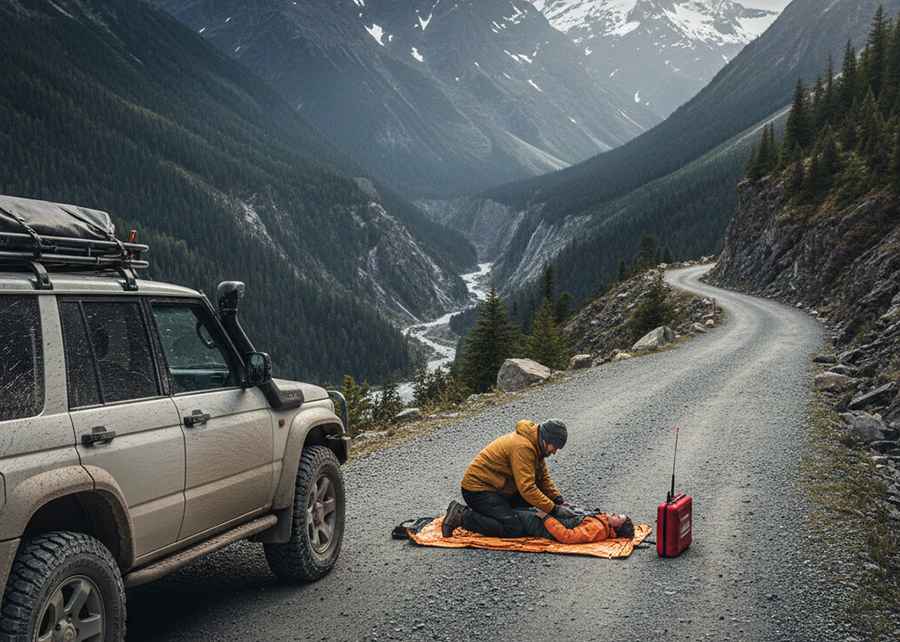
| Expedition Medical Protocol | |
|---|---|
| Risk Level | High (Isolation from trauma centers) |
| Evacuation | Air ambulance or specialized 4x4 extraction |
| Key Equipment | Satellite SOS, trauma kits & localized medication |
1. Self-Sufficiency in "Dead Zones"
Unlike a cruise ship or a commercial flight, an expedition vehicle does not have a resident doctor. Self-reliance is your first line of defense. You must carry a comprehensive medical kit capable of treating not just minor ailments, but high-altitude sickness, severe food poisoning, and traumatic injuries. Understanding the geography of your route is vital to know the distance to the nearest stabilized medical facility.
2. Managing Contagion and Foodborne Illness
In many remote regions, gastrointestinal issues and virus outbreaks (like the flu or Norovirus) are common due to localized water sources or food handling. When traveling in a group, "quarantine" is essential to prevent the entire team from becoming incapacitated. Maintain strict hygiene protocols and always carry broad-spectrum antibiotics and rehydration salts specifically for travel-related illnesses.
3. Emergency Evacuation and Stabilization
In the event of a serious incident, such as a heart attack or a major crash, your primary goal is stabilization.
- Satellite Communication: In areas with zero cellular coverage, a satellite messenger (InReach or similar) is the only way to request a medical evacuation.
- Medical Insurance: Ensure your travel insurance specifically covers high-altitude rescue and emergency airlifts from remote locations.
4. Altitude and Environmental Sickness
Routes reaching over 3,000 meters expose travelers to Acute Mountain Sickness (AMS). Unlike a standard illness, the only "cure" for severe AMS is immediate descent. Recognizing the early symptoms—persistent headache, nausea, and dizziness—is critical before the condition escalates into life-threatening edema.
Conclusion
A medical emergency in the wild is a race against time and geography. By preparing for the worst-case scenario with proper gear and localized knowledge, you ensure that a sudden illness doesn't turn your expedition into a disaster. Pack professionally, monitor your health constantly, and always respect the isolation of the road.