Overtaking Safety: Technologies and Logistics for Two-Lane Mountain Roads
Overtaking on two-lane highways and remote mountain passes remains one of the most high-risk maneuvers in expedition driving. While traditional defensive driving relies on visibility and patience, emerging vehicle-to-vehicle (V2V) technologies and smart visual systems are beginning to mitigate the dangers of "blind overtaking" behind heavy transport vehicles.
| Overtaking Safety Dynamics | |
|---|---|
| Primary Risk | Head-on collisions due to obscured line-of-sight |
| Emerging Tech | V2V Communication, Transparent Truck Systems |
| Critical Terrain | High-altitude passes (Andes, Himalayas) & rural freight routes |
1. The Evolution of "Transparent Truck" Technology
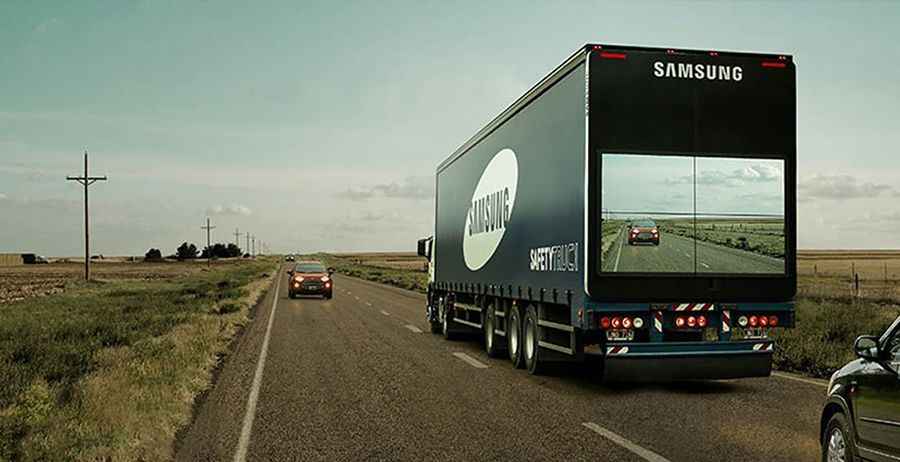
The concept of using external displays to assist trailing drivers gained global attention with the "Samsung Safety Truck" prototype. By mounting a wireless camera at the front and a high-brightness video wall at the rear, the system allowed trailing vehicles to "see through" the truck's mass. While high implementation costs and maintenance challenges in extreme environments limited its immediate rollout, this innovation laid the groundwork for modern ADAS (Advanced Driver Assistance Systems) that utilize augmented reality to highlight oncoming hazards.
2. V2V Communication and Digital Overtaking Assistance
Modern safety protocols are shifting from physical screens to digital data exchange. Vehicle-to-Vehicle (V2V) and Vehicle-to-Infrastructure (V2I) communications allow trucks to broadcast their speed, position, and front-facing sensor data directly to the dashboard of trailing vehicles. On roads like the Ruta 40 or the Karakoram Highway, where heavy freight and narrow lanes coexist, these telemetry-sharing systems provide a crucial "digital eye" beyond the immediate visual obstruction.
3. Tactical Maneuvering on Remote Two-Lane Roads
In regions where high-tech solutions are not yet available, safety depends on tactical logistics. Understanding the "Blind Zone" is essential: the further back you stay from a large vehicle, the wider your field of vision becomes. When navigating steep gradients, drivers must also account for engine lag and altitude-related power loss, ensuring that the overtaking window is significantly larger than what would be required at sea level.
4. Overcoming Environmental Constraints
Weather remains the great equalizer in road safety. Dust, heavy rain, and snow can interfere with both optical cameras and digital sensors. High-contrast screens and LIDAR-based sensing are being developed to maintain operational integrity in low-visibility sectors. For the expedition driver, the rule remains absolute: if the technological or visual confirmation of a clear lane is less than 100%, the maneuver must be aborted.
Conclusion
The transition from the early visual prototypes of a decade ago to today’s integrated sensor networks marks a new era in road safety. Whether through a "transparent" screen or a digital dashboard alert, the goal is the same: eliminating the blind spot that turns a routine transit into a fatal risk on the world's most dangerous roads.