What is terminal to terminal car shipping and how does it work?
Terminal-to-terminal car shipping is a method of vehicle transportation that takes a vehicle from a customer’s address or a centralized terminal and brings it to another centralized terminal. It’s one of the most widely used car transport methods in the U.S., typically reserved for moving large numbers of vehicles overseas.
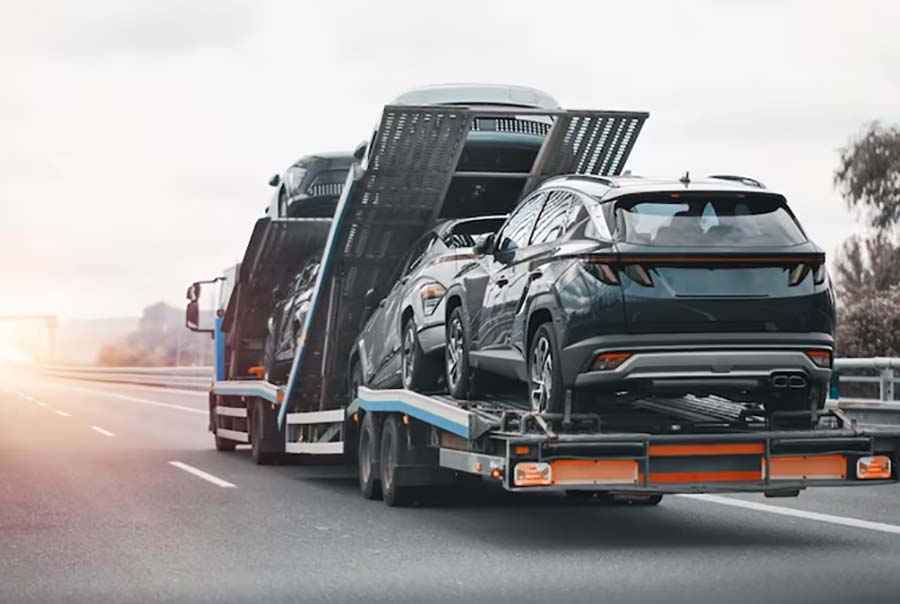
Exploring this topic, you will find a lot of nuanced opinions on the merits of terminal-to-terminal transportation. Just like anything, it has its pros and cons, and this article aims to explore both sides of terminal-to-terminal transportation, so potential car shippers can make an informed decision that best fits their needs.
Terminal-to-Terminal vs Door-to-Door in 2026
As mentioned above, terminal-to-terminal car transportation is a mostly centralized process that takes a car from one terminal to another. It has been in use for over 40 years, some might say even more, and it has a lot of potential for money savings per mile.
On the other side of the fence sits door-to-door car transportation services, which take a vehicle from a customer’s most convenient location and bring it wherever the car shipper wants it to. It is a far more personalized method of transportation that takes into account the specific needs of any singular customer.
Does Terminal Car Shipping Save You Money?
It is possible to make the argument that terminal shipping is a vastly superior method for transporting vehicles, as it saves customers money. It is, in fact, cheaper to ship from terminal to terminal, at least the cost per mile; however, that does not take into account the expense of transporting the car to the initial terminal, and then the expense of getting it from the end terminal.
Also, some services might have storage charges for storing a vehicle at a terminal. Prices and timeframes may vary from company to company, so the best way to see exact numbers is to enquire directly with the service provider.
What are the Main steps in Terminal-to-Terminal Shipping
The process of terminal-to-terminal shipping is predictable, structured and really budget-conscious. The process may vary from company to company, but in general if follows these steps:
- Finalizing the order with the service provider.
- Dropping off the car at the initial terminal.
- Inspecting the car for pre-loading damage;
- Storing the car;
- The car gets picked up and loaded onto the hauler.
- The car is transported to the final terminal.
- It is unloaded.
- Stored;
- You get a notification for the car's arrival.
- Pay any due fees for storing and unloading;
- You get the car.
Pickup Process
The pick-up process is entirely up to the customer’s ability to get the car to the initial terminal. In cases where the car is inoperable or cannot move under its own power, terminal shipping might not be the best choice.
In cases where the car is mechanically sound, the process is as follows:
- The car reaches the initial terminal.
- It is signed-in and inspected for damage.
- The car is stored in a covered or uncovered storage area.
- The carrier arrives and loads the car for transportation.
- The car is secured onto the hauler.
- The hauler leaves the pick-up terminal.
Drop off Process
The drop-off process for terminal shipping follows the same steps as the loading process, but in reverse. That being said, there might be storage fees involved after the car is dropped-off at the delivery terminal, depending on the size of the car and the company’s policies.
Average Prices for Short Terminal Routes
Therminal-to-terminal shipping is generally considered to be cheaper per mile as it reduces the overall consumption of fuel and the total distance of transportation. Door-to-door transport services, while much more convenient for the end consumer, have higher base costs since distances are greater.
So far, for the 2026 period, prices for short-distance routes (100 to 500 miles) typically fall within these price brackets:
- $200 to $500 for a standard sedan;
- $300 to $700 for an SUV or Pick-up truck.
Several factors influence the price of terminal-to-terminal transportation, such as the distance between the terminals, the vehicle size and weight, the demand for the season according to the current season, and current fuel prices. Short-distance routes that see a lot of all-year-round traffic tend to be the most affordable ones due to the high availability of carriers.
Post-Pickup Inspection Recommendations
Inspecting the car post-pick is important, but documenting the car’s condition prior to dropping it off at the pick-up terminal is just as vital for this process. It’s wise to inspect the vehicle for damage, as there are several key moments during which damage can occur on a car:
- During the initial storing process;
- During the loading process;
- During transportation;
- During the unloading process;
- During delivery, storing.
As long as the car is being handled or it is moving, there’s a chance for damage to occur, especially in confined spaces or spaces where there’s a lot of traffic.
Make sure to document the initial state of the car with detailed photos. Clean the car’s exterior thoroughly and take multiple photos from multiple angles. This makes it easier to dispute and document any new damage that might have happened as a result of the aforementioned key points.
Cost Savings of Terminal-to-Terminal in 2026 - Fuel and Mileage Savings Explained
One of the biggest expenses for any sort of freight and shipping services is not labor or salaries, but rather fuel costs. With the rise of fuel prices, so do the prices for deliveries and shipping services.
The reason terminal-to-terminal shipping from one state to another is so affordable is due to the efficiency of transportation. Transport companies optimize their routes in a way that minimizes fuel consumption to and from centralized terminals.
These terminals are often near or on major road networks, centralized interstates, and around large urban centers. This reduces:
- Idle time in traffic-laden neighborhoods;
- Detours and deviating from the route;
- Fuel consumption per mile.
Why Terminal Shipping Beats Door-to-Door Affordability
As we illustrate above, terminal shipping is all about efficiency and optimizing expenses, while door-to-door transportation is all about comfort and accommodating individual needs.
Both of these services have their uses, but in terms of affordability, at least for transport purposes, terminal-to-terminal transportation definitely beats door-to-door shipping. The reasons are as follows:
- No detours for the route to pick up cars.
- No idle time in traffic;
- Efficient routes, pre-specified by the carrier;
- Low fuel consumption per mile;
- Door-to-door transport might require at least 50-100 extra miles per trip.
These savings are passed on to the customer, providing them with a very affordable, albeit not as convenient, alternative to door-to-door transportation services.
When Terminal To Terminal Shipping is Better for you?
Terminal-to-terminal shipping is an excellent choice when customers want to transport multiple cars to a one-to-one centralized location. Due to the lower cost per mile, transporting a high-volume of vehicles at once might actually make financial sense, at least for businesses like dealerships.
This transport option is also a good choice if you are exporting a car at a port, or if you are not in a hurry. It also makes sense to use it when customers have the spare time and the means to reach the centralized terminals for drop-off and pick-up procedures.
In cases where convenience is the main consideration, door-to-door car transport services are still the go-to choice.