Best driving movies for gearheads and road lovers
If you are into the smell of burning rubber and the sound of a stressed gearbox, most movie lists will bore you. We are not looking for postcards; we are looking for movies where the road is a character that can kill you and the cars are tools pushed to their absolute limit. From hauling explosives over mountain passes to high-speed runs through the desert, these films capture what it really feels like to have your hands on the wheel when things go south.
| Road facts: Iconic Driving Movies | |
|---|---|
| Focus | Real driving, mechanics, and road hazards |
| Top Pick | The Wages of Fear (1953) |
| Key Vehicles | Dodge Challenger, Plymouth Valiant, Mack Trucks |
| Hazard Level | Extreme (Nitroglycerine to Post-apocalyptic) |
Why is The Wages of Fear the ultimate drive?
This 1953 classic is all about the mechanical reality of driving heavy trucks on crumbling mountain roads. The plot is simple: four men have to transport two trucks full of nitroglycerine over hundreds of miles of rough terrain. One wrong move, one bump too hard, or one radiator boil-over that stalls the engine, and everything goes up in smoke. It shows the grit of the road, where you have to build your own path with planks or drive through a lake of oil just to keep moving. If you want to see what it looks like to sweat over a steering wheel while the chassis groans under the weight, this is it.
How does Duel capture the heat of the Mojave road?
In Steven Spielberg’s first film, the road is a baking hot strip of asphalt where a Plymouth Valiant is hunted by a massive, rusty tanker truck. There are no fancy stunts here, just the reality of a small car trying to outrun a heavy beast on steep grades and narrow desert tracks. You can almost feel the brakes fading and the engine straining as the protagonist tries to keep the car on the road. It was filmed on the Sierra Highway in California, and it perfectly illustrates the vulnerability of being alone on a remote drive with a mechanical predator on your tail.
What makes Vanishing Point the king of desert driving?
This movie is a 15-hour dash from Denver to San Francisco in a white 1970 Dodge Challenger. It is pure driving. No subplots, just a guy, a powerful engine, and the open dirt of the American West. It highlights the physical act of high-speed driving across Colorado, Utah, and Nevada. You see the dust, the tires fighting for grip on the sand, and the sheer endurance needed to push a car that hard for that long. It’s about the relationship between the driver and the machine when the only goal is to keep the needle pinned to the right.
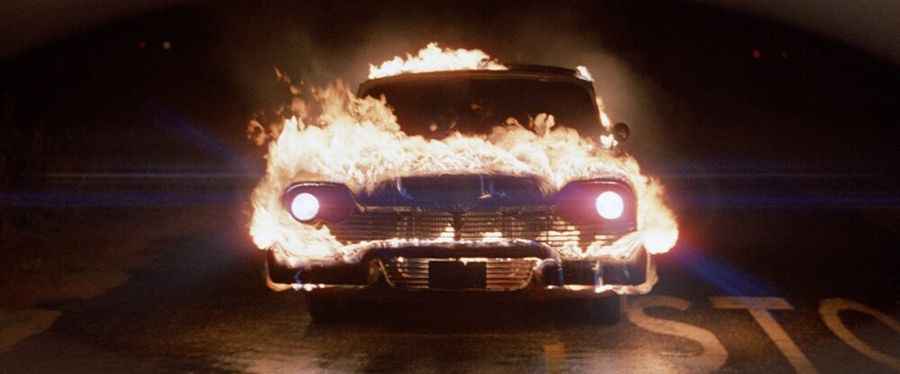
Can a car really be the main hazard in Christine?
John Carpenter’s take on the 1958 Plymouth Fury turns the vehicle itself into the danger. While most of the action happens in the city, the film treats the car like a living piece of machinery. For anyone who has spent hours under the hood of an old wreck, the way the car "heals" its own smashed fenders and broken glass is a dark mechanical fantasy. It taps into that obsession we have with our cars, where the metal and the paint become more important than anything else, even if the car wants to kill everyone around it.
How real is the driving in Mad Max: Fury Road?
While set in a wasteland, the driving in this film is as real as it gets. They didn't rely on computers; they built real franken-trucks and sent them out into the Namib Desert to smash into each other. You see the suspension taking hits, the black smoke pouring out of custom exhausts, and the physical struggle of steering massive rigs through deep sand. It’s a masterclass in how to film heavy machinery in motion, showing the raw power of V8 engines and the carnage that happens when tons of steel collide at high speed.