Tizi n’Timioukht: Driving the Narrow P7319 Asphalt Road in Morocco
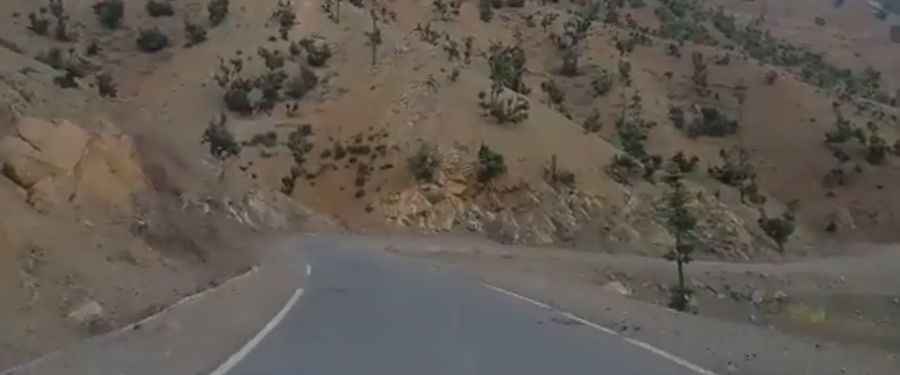
Tizi n’Timioukht is a high mountain pass at an elevation of 2,377 meters (7,798 ft) above sea level, located in the Midelt Province of Morocco. Situated within the Drâa-Tafilalet region of the High Atlas range, the road through the pass is the P7319. Although fully paved, the route is a narrow, single-lane asphalt track with broken edges, tight rock bends, and zero side protections.
| Road facts: Tizi n’Timioukht | |
|---|---|
| Location | Midelt Province, High Atlas, Morocco |
| Elevation | 2,377 m (7,798 ft) |
| Route | P7319 Road |
| Length | 21 km (13 miles) between Tamaloute and Tagoudit |
| Surface | Paved asphalt (deteriorated condition) |
How narrow is the P7319 road over Tizi n’Timioukht?
The 21-kilometer mountain route links the villages of Tamaloute and Tagoudit. While the surface is paved with tarmac, the lanes are extremely narrow, often shrinking to the width of a single vehicle. When two trucks meet in the mountain bends, one driver is forced to back up or stop right on the dirt shoulder edge. The extreme temperature shifts of the High Atlas mountains have rotted the tarmac, leaving the driving line full of deep potholes, cracked asphalt strips, and jagged drops right where the pavement ends against the mountain wall.
Why do engines and brakes struggle on the Tizi n’Timioukht pass?
At an altitude of nearly 2,400 meters, the thin mountain air starves car engines of oxygen, causing a noticeable drop in torque and power during the steep climbs. The long, continuous declines toward the valley put a heavy load on vehicle braking systems. Relying solely on the foot brake over the 21-kilometer distance will overheat the pads and cause brake fade. Drivers must lock the transmission into low gears to let engine braking manage the vehicle weight on the steep asphalt ramps.
Is the Tizi n’Timioukht road open during winter?
The high-altitude sections of the P7319 are hit by heavy winter blizzards that dump deep snow drifts across the pass, blocking vehicle access for days. Because the route runs through a remote part of the Midelt Province, government snowplows take time to clear the tarmac. The shaded mountain corners remain packed with slick black ice long after the main sections melt. Sudden winter rainstorms and mountain runoff also bring down loose stones and mud directly onto the asphalt lanes, creating slippery traps on blind corners where there are no guardrails.
Pic: Morocco Hikers Paradise