Tizi n’Tabgourt: Can you drive the 61 km high-altitude track?
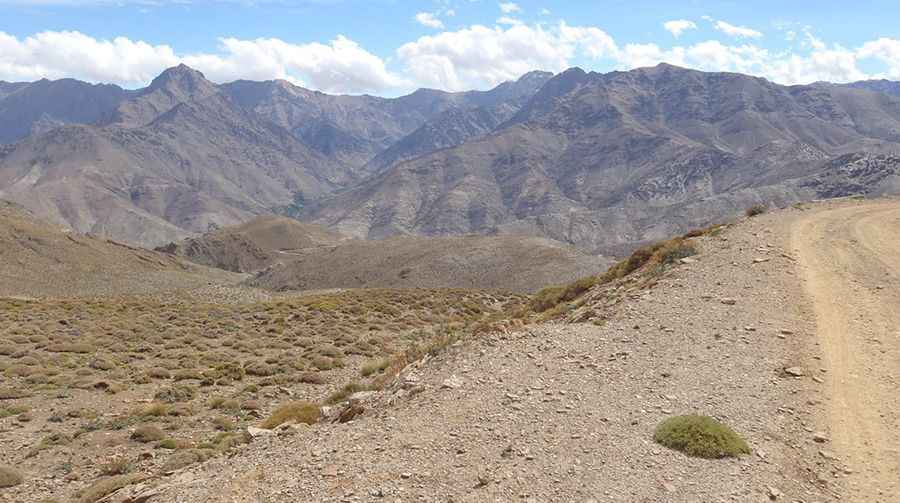
Tizi n’Tabgourt is a high mountain pass at an elevation of 2,667m (8,750ft) above sea level, located in the Western High Atlas of Morocco. The 61 km route is a raw, unpaved track that connects the Chichaoua and Taroudant provinces. At this altitude, the lack of oxygen and the primitive state of the trail force a slow, technical crawl where mechanical failure is the main risk. It is one of the highest roads of Morocco.
| Road facts: Tizi n’Tabgourt | |
|---|---|
| Location | Western High Atlas, Morocco |
| Elevation | 2,667 m (8,750 ft) |
| Length | 61 km (37 miles) |
| Surface | Unpaved / Loose stones and dirt |
Where is the Tizi n’Tabgourt road located?
Situated north of Tizi n’Targa, the track starts in Lalla Aaziza and runs 61 km toward Talmakante. This is a total isolation zone with no asphalt and no signal. The path is carved into the bedrock and desert mountain environment, where you must be 100% self-sufficient. There are no services, no fuel, and no rescue options for hours if the vehicle breaks down.
Is a 4x4 mandatory for Tizi n’Tabgourt?
Yes. You cannot drive this 61 km stretch without a high-clearance 4x4. The surface is a mix of loose scree and sharp rocks that can slice tire sidewalls in seconds. Erosion from winter rains leaves deep ruts and boulders in the middle of the track. In the narrowest sections, there is no room for error; the tires sit just centimeters away from the drop-offs into the ravines.
How does the 2,667m altitude affect the vehicle?
The climb is a relentless grind in low gears. The thin air at 2,667 meters causes a significant loss of engine power, and the cooling system will be under constant stress on the steep switchbacks. Traction is difficult on the loose stones, and wheels often spin without grip. On the 61 km descent, you must use engine braking to prevent the brakes from cooking on the long, rocky declines.
What are the primary hazards of this Western Atlas pass?
Isolation and weather are the biggest threats. Rockfalls are common after rain, and the track can be blocked by fresh boulders at any moment. Temperatures shift from heat to freezing winds rapidly. During winter, snow blocks the pass completely, making the entire 61 km route impassable. Always carry a full-sized spare tire and extra water; a simple flat on Tizi n’Tabgourt is a critical emergency due to the lack of passing traffic.
Pic: sondosdies