Tizi n'Oulaoun: Driving the high-altitude unpaved piste in Morocco
Tizi n'Oulaoun is one of the highest mountain passes of Morocco, reaching an elevation of 2,789m (9,150ft) above sea level in the Drâa-Tafilalet region. This high mountain pass is accessed via a raw, unpaved piste that crosses the heart of the Central High Atlas. It is a journey defined by its verticality and the technical instability of the terrain, where the combination of narrow tracks, extreme gradients, and unprotected drops requires a high-clearance 4x4 and advanced off-road driving skills.
| Road facts: Tizi n'Oulaoun | |
|---|---|
| Location | Drâa-Tafilalet, Morocco |
| Max Elevation | 2,789m (9,150ft) |
| Length | 16.4 km (10.2 miles) |
| Surface | Unpaved / Red Dirt / Rocky |
How challenging is the 16.4-km transit from Amezri to Tamezrite N'Ait Affane?
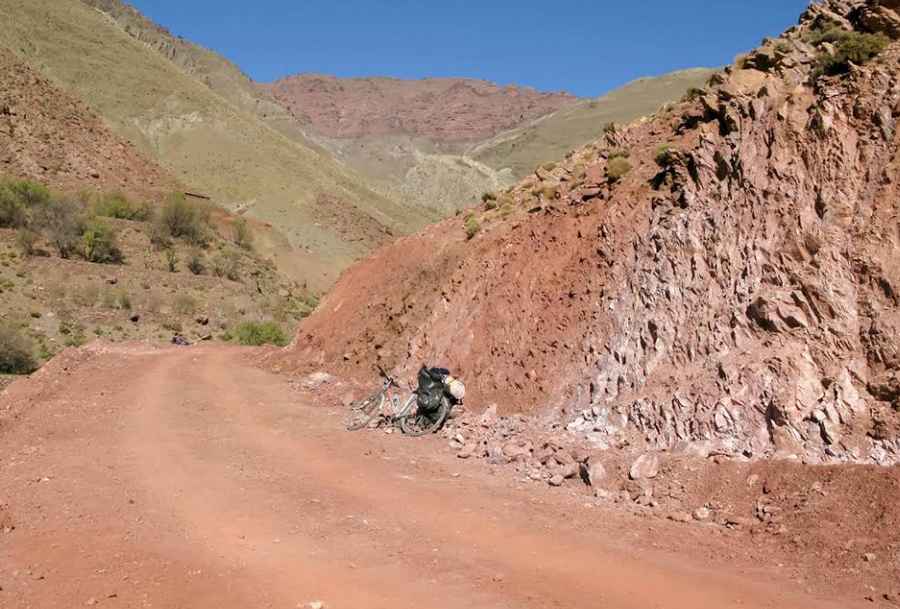
The transit through the Tizi n'Oulaoun pass covers 16.4 km, running west to east between the remote settlements of Amezri and Tamezrite N'Ait Affane. The challenge of this route is the unrelenting climb; the track consists of countless turns and tight hairpins that carry the vehicle higher into the High Atlas massif. The surface is primarily loose red dirt and crushed rock, which provides very little traction during the steeper unpaved ramps. Navigating this sector requires a disciplined pace to avoid overheating the engine and to manage the constant risk of the tires losing grip on the crumbly outer edge of the track.
Why is the High Atlas weather a permanent hazard for drivers?
At nearly 2,800 meters, Tizi n'Oulaoun is subject to extreme meteorological shifts. The pass is often blocked by heavy snowfalls during the winter months, and avalanches are a real risk in the narrower canyons. High winds are common throughout the year, often blowing dust and debris onto the driving line. However, the most immediate danger comes from the rain; even a brief storm can transform the dry red piste into a slippery mud trap. Landslides are a constant threat in this region, as the rock faces above the road are highly unstable and prone to collapsing after thermal shifts or precipitation.
What are the hazards of the steep drops and lack of guardrails?
The geography of Tizi n'Oulaoun is defined by its exposed shelf sections. In many places, the narrow track is bordered by vertical drops of hundreds of meters, with absolutely no guardrails or safety barriers to stop a vehicle from sliding off. For a driver, this means total situational awareness is mandatory. Meeting oncoming traffic—often local trucks or livestock—requires high-consequence reverse maneuvers on the most "tippy" parts of the piste. The lack of lateral protection, combined with the narrowness of the path, makes every hairpin a technical challenge where there is zero margin for steering errors.
What mechanical preparation is needed for the Moroccan backcountry?
Driving to Tizi n'Oulaoun is a journey into an isolated sector where self-sufficiency is the only operational protocol. Before starting the climb from Amezri, a full mechanical audit of your 4x4 is mandatory, focusing on tire sidewall strength and cooling system integrity. The sharp stones and deep ruts of the Atlas pistes can easily cause a puncture or damage the undercarriage. This pass is also the starting point to reach the even more remote Tizi n' Tighart n'Miouine, so ensuring you have extra fuel, water, and recovery gear is essential. Help is hours away, and the technical nature of the unpaved descent requires reliable low-range engine braking to avoid brake fade.
Pic: Alberto Pedrotti