Morocco's Most Spectacular Mountain Roads: A Drive Through the Atlas
Morocco is one of the great road-trip countries of North Africa, and nowhere is that clearer than in the High Atlas Mountains. Snow-capped in winter and baked gold in summer, the range is crossed by a handful of dramatic passes that reward careful drivers with some of the most spectacular scenery on the continent. From Marrakech, the roads climb quickly from palm groves and red-walled villages into a world of switchbacks, gorges and Berber hamlets clinging to the hillsides.
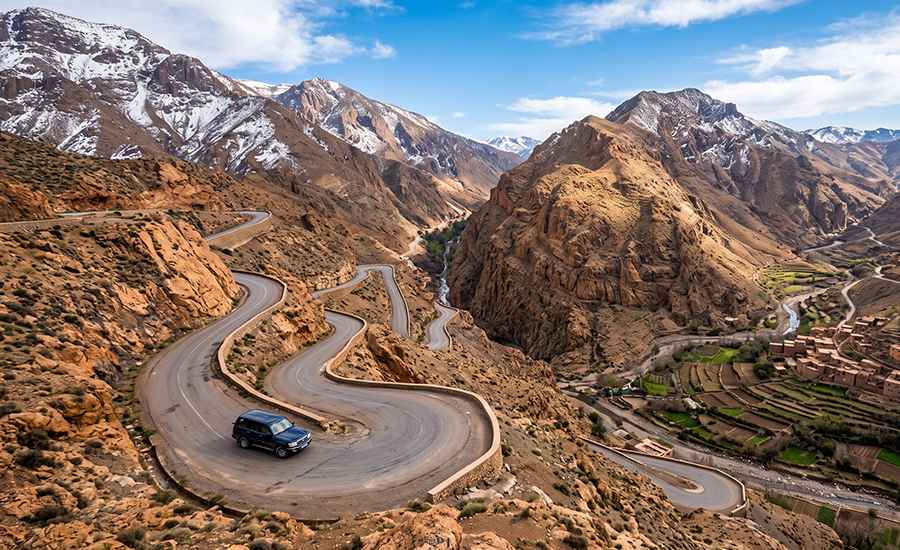
Tizi n'Tichka: the classic pass
The Tizi n'Tichka is the most famous road in Morocco. Linking Marrakech with Ouarzazate and the edge of the Sahara, it tops out at around 2,260 metres and twists through dozens of tight hairpins with sheer drops on one side. The road has been widened and improved in recent years, but it still demands respect: sudden fog, slow trucks, roadside stalls and livestock all appear without warning. Stop at the marked viewpoints, not on the bends.
Tizi n'Test: narrow and nerve-testing
If the Tichka feels tame, the Tizi n'Test will not. This older pass, connecting Marrakech with Taroudant, is one of the narrowest and most exposed sealed roads in the country. In places it is barely wide enough for two vehicles, with no barrier between the tarmac and a long fall into the valley. The views over the Souss plain are extraordinary, but this is a road for confident drivers only, ideally tackled in daylight and dry weather.
The Dades and Todra gorges
East of the Atlas, the road through the Dades Gorge coils through a series of tight, stacked switchbacks known locally as the "monkey fingers", a favourite of photographers. Nearby, the Todra Gorge road runs along the floor of a canyon whose walls rise more than 300 metres on either side. Both are more forgiving to drive than the high passes, but the scenery is every bit as dramatic.
Practical advice for the mountains
Fuel up before you climb, because petrol stations thin out at altitude. Carry water, a paper map or offline navigation, and check your brakes before a long descent. Mountain weather changes fast: a clear morning can turn to hail by afternoon, and snow closes the highest passes in winter. Drive slowly through villages, where children and animals share the road, and never overtake on a blind bend.
Let someone else take the wheel
If you would rather enjoy the views than manage the hairpins, a guided trip is the easier option. Local operators run day trips and multi-day tours from the city into the Atlas, the Agafay Desert and the gorges, with drivers who know every bend. You can explore the High Atlas with MaJourneys, which arranges transport, guides and stops along the way, and confirms everything with the local provider before you set off, with payment made on the day rather than online.
When to go
Spring and autumn are the best seasons for driving the Atlas, with stable weather and comfortable temperatures. Summer is hot on the plains but pleasant at altitude, while winter brings snow and the risk of closed passes above 2,000 metres. Whenever you go, start early: the light is softest in the morning, and the roads are quietest before the tour buses arrive.