Driving in Agadir: Technical Guide to Urban Logistics and Mountain Access
Driving in Agadir, the primary logistics hub of southern Morocco, involves navigating a modern urban grid that serves as the gateway to the Souss-Massa region. Beyond the coastal boulevards, the terrain transitions rapidly into high-altitude Atlantic Atlas routes. Logistical success depends on managing high-density urban traffic, understanding local right-of-way customs in roundabouts, and preparing vehicles for the thermal and topographical demands of the surrounding desert and mountain passes.
| Agadir Road & Logistics Facts | |
|---|---|
| Primary Arteries | N1 (Coastal North-South) and A7 (Highway to Marrakesh) |
| Terrain | Coastal plains and steep limestone ridges |
| Hazard Level | Medium (Urban congestion and mountain switchbacks) |
| Key Infrastructure | Agadir-Al Massira Airport (AGA) logistics corridor |
How to navigate the ascent to Agadir Oufella (The Kasbah)?
The technical climb to the Agadir Oufella historic fortress requires precise vehicle control on a sequence of steep, winding ramps. While the road is paved, it features narrow sectors with high gradients that put significant load on the transmission and cooling system, especially during peak summer temperatures. Logistically, this area experiences high density of tour buses and local transit, requiring defensive driving on blind corners. Modern safety protocols have restricted access to certain vehicle types during night hours to reduce accident rates on the unlit descent; it is mandatory to verify current transit restrictions before planning a late-evening ascent.
What are the logistical challenges of Agadir’s urban traffic?
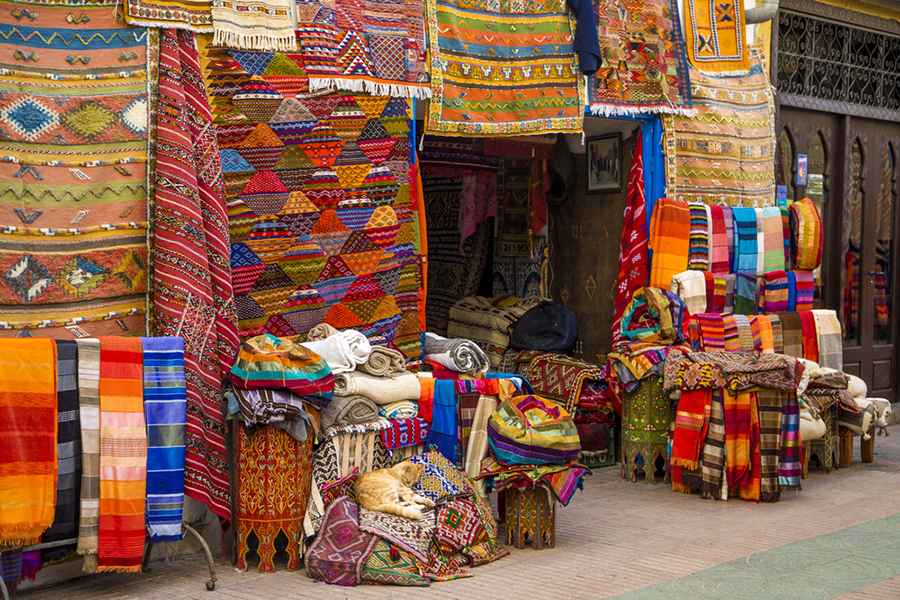
Agadir's urban center, including the areas surrounding Souk El Had, is a high-traffic zone where logistics are complicated by a mix of heavy trucks, petit taxis, and motorbikes. The city uses a large-scale roundabout system where local priority customs often deviate from standard European protocols; drivers must maintain constant lateral awareness. Parking logistics near the Souk are extremely tight, and unauthorized "guardians" manage most street sectors. For long-distance transit, the N1 highway provides the main coastal connection, but it is prone to bottlenecks at the city’s northern and southern entry points where industrial port traffic intersects with civilian transit.
Technical requirements for driving the Atlantic Atlas routes
Heading inland from Agadir towards Paradise Valley or the Atlas foothills transitions the driver into technical mountain territory. These roads are often narrow, featuring steep drop-offs with limited or no guardrail protection. Logistically, the vehicle’s braking system must be in optimal condition to manage sustained descents. Flash floods (wadis) are a seasonal hazard; during the rainy months, localized washouts can erase sections of the secondary road network in minutes. A high-clearance vehicle is not mandatory for the main paved routes, but it is highly recommended for any logistical transit involving secondary tracks or rural markets (souks).
Vehicle maintenance and fuel logistics in Southern Morocco
Fuel availability within Agadir and along the A7 motorway to Marrakesh is consistent. However, when transiting south towards Tiznit or east towards Taroudant, fuel logistics must be planned with a safety margin, as service stations become less frequent. Due to the high dust and sand content in the air, air filter maintenance is a critical technical requirement to prevent engine performance degradation. It is mandatory to carry a full-size spare tire, as sharp limestone rocks on the road shoulders can cause irreparable sidewall damage. Ensure all lighting systems are operational, as the transition from daylight to total darkness in the desert is rapid and unlit road hazards are common.
Safety protocols for international drivers in Agadir
Legal compliance in Agadir requires a valid national driving license, and an International Driving Permit (IDP) is strongly recommended to facilitate interactions with the Gendarmerie Royale at frequent highway checkpoints. Speed enforcement is strict, with mobile radar units commonly deployed on the entries to the city and along the coastal N1. Logistically, it is essential to have all vehicle documentation, including insurance (Carte Verte) and rental contracts, easily accessible. In the event of a mechanical failure, roadside assistance is available near the airport and city center, but becomes extremely limited once you enter the mountainous interior of the Souss-Massa region.
Image credit: Depositphotos