Djebel n'Ouhattar: Driving the technical 3,064m pass in the High Atlas
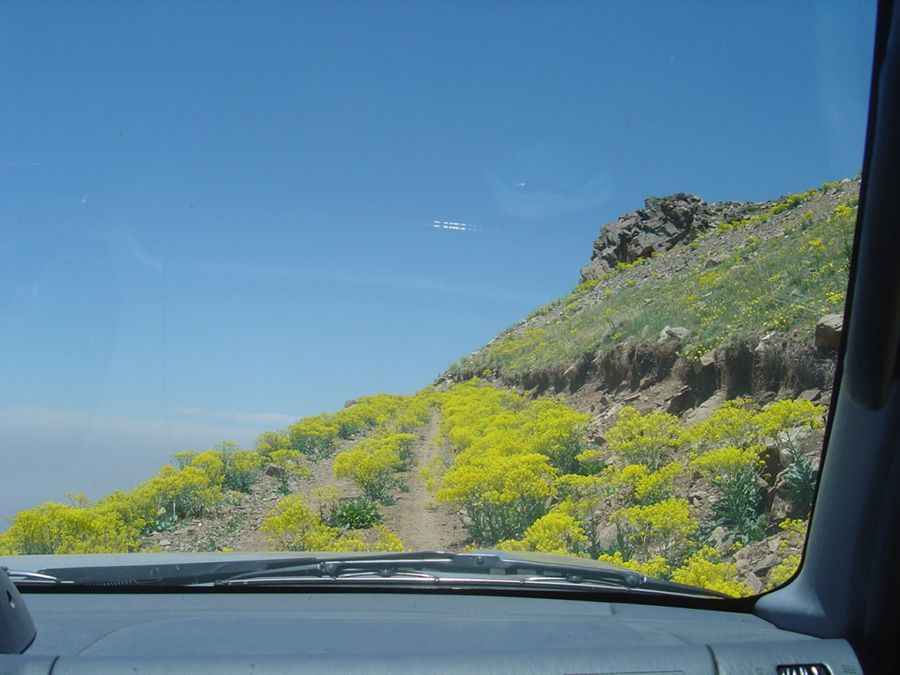
Djebel n'Ouhattar is one of the highest mountain passes of Morocco, reaching a massive elevation of 3,064m (10,052ft) above sea level. Located in the Al Haouz Province, this high-altitude transit crosses the heart of the High Atlas Mountains. The road is a raw, unpaved piste that serves as a technical link between high mountain settlements, where the combination of extreme altitude, narrow shelf sections, and steep gradients defines one of the most demanding drives in North Africa.
| Road facts: Djebel n'Ouhattar | |
|---|---|
| Location | High Atlas, Morocco |
| Max Elevation | 3,064m (10,052ft) |
| Length | 16.3 km (10.12 miles) |
| Max Gradient | 14% |
How challenging is the 16.3-km climb from Oukaïmeden to Timoummar?
The journey across Djebel n'Ouhattar begins at the Oukaïmeden ski resort, the highest in Africa, and covers 16.3 km of unrelenting unpaved terrain. The road features 26 hairpin turns that zigzag up the mountain face. Navigating these switchbacks requires precise steering and a high-clearance 4x4, as the surface is a mix of loose rock and dry dirt that offers very little traction on the steeper sections. With maximum gradients hitting 14%, the climb puts a massive load on the vehicle's torque and cooling system, especially given the lack of oxygen at 3,000 meters.
Why is the high-altitude weather a hazard for the Djebel n'Ouhattar pass?
Due to its extreme elevation, the pass is usually impassable from late October through late June or early July. Heavy snowpacks bury the track for most of the year, and even in early summer, large drifts can remain in the shaded narrow parts. The weather in the Al Haouz Province is volatile; sudden storms can turn the dry piste into a treacherous mud slide in minutes. High winds are also a factor, often blowing dust and debris onto the driving line, which reduces visibility on a road that is already dangerously narrow and lacks any form of safety barriers or guardrails.
What are the risks of the narrow shelf sections and 14% gradients?
The geography of Djebel n'Ouhattar is defined by its exposure. The track is carved into the side of the mountain, featuring sections where the road is barely wide enough for a single vehicle. Meeting oncoming traffic requires high-consequence reverse maneuvers on steep, unprotected ledges. The 14% ramps demand total focus; a failure to maintain momentum on the loose shale can lead to the wheels spinning out, while a steering error on the hairpins can result in a vertical drop. Maintaining a disciplined velocity and picking the correct line through the rockiest segments is the only way to ensure a safe transit.
What mechanical preparation is needed for a 3,064m mountain transit?
Reaching the summit of Djebel n'Ouhattar is a task that requires total mechanical self-sufficiency. Before leaving Oukaïmeden, a full audit of your vehicle's cooling system and tire sidewalls is mandatory. The thin air will cause the engine to run hotter while producing less power, and the sharp rocks of the High Atlas are notorious for shredding standard tires. Carrying recovery gear, extra fuel, and ensuring your low-range gearbox is functioning perfectly is essential, as mechanical help is non-existent once you leave the ski resort. This is a technical mountain drive where the mechanical integrity of your machine is your only guarantee of reaching Timoummar safely.
Pic: delfina luna