What are the most spectacular roads in Mexico?
Located in North America, Mexico is a country with a wide collection of stunning drives. It’s home to about 150 roads listed as the most spectacular in the world.
With very diverse geography, comprising high mountains such as the Sierra Madre Occidental and Sierra Madre Oriental, and stunning beaches providing scenic coastal drives, when traveling to Mexico don’t forget to add to your list the infamous Espinazo del Diablo, a thrilling and challenging Mexican mountain road. This road is renowned internationally for its hairpin turns. Another notable road is Carretera Federal 1, which is full of blind corners with no barriers or hard shoulders. Spanning the length of the Baja California Peninsula, it is often called the Carretera Transpeninsular or Transpeninsular Highway.
If you prefer mountain roads, try the road to Cortes Pass, a mountain pass at an elevation of 3,692m (12,112ft) above sea level. It’s one of the highest roads in Mexico. If you like unpaved roads, try the drive to Sierra Negra volcano, an extinct volcano at 4,576m (15,013ft) in the state of Puebla.
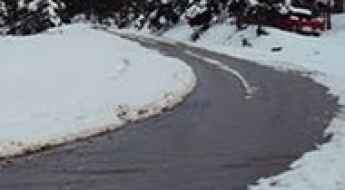
Los Altares Road
Located in the Mexican state of Durango, Los Altares is a very scenic drive between forest and rock formations.
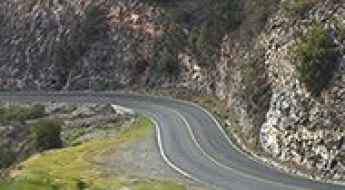
Pinal de Amoles (Road Mexico 120)
Located in central Mexico, Carretera Pinal de Amoles (Mexico 120) offers great landscapes in the transition from desert, temperate forest and tropical jungle.

El Jonuco Road
Next to the Autopista Monterrey-Saltillo is located a private access residential area called El Jonuco (road is accessible but not the residential area), located at 1.700m (5,577ft) above the sea level in the mountains of Sierra Las Cumbres.

Grutas del Rosario Road
Located in the Mexican state of Durango, this scenic road brings beautiful sceneries of Sierra del Rosario mountains, canyon walls, desert landscape and caves around.

Las Adjuntas Road
Located in Querétaro state, in Mexico, this road offers a challenging drive and great mountain and desert landscape to explore and contemplate.

El Terrero Road
This road communicates the small town of El Terrero in Colima state, in Mexico.

How to drive the paved Huentitan Canyon Route in Guadalajara?
Located just north of Guadalajara, in Mexico, the Huentitan canyon route (Mexico 54) is a very scenic canyon scenic drive.

Bustamante Road
Camino a Bustamante is an asphalted road linking the town of Bustamante and the Mexico 101 highway in Tamaulipas state, in Mexico.

Camino al Tecolote
Located in the Mexican state of Baja California Sur Camino al Tecolote, offers incredible views of turquoise waters (aqua/teal color waters) in a series of small bays and beaches in a desert full of saguaros and cactus.

How difficult is the unpaved road of Caminos del Cobre in Zacatecas?
Caminos del Cobre is a high-altitude mountain track located in the northern part of Zacatecas state, Mexico. Connecting the mining towns of Salaverna and Concepción del Oro, this rugged dirt and rocky road is one of the most remote journeys in the region. Reaching a peak of 2,820m (9,252ft) above sea level at Cerro Aranzazu, the route is a test of vehicle durability, where the desert heat and the sharp, unmaintained stones of the track can easily end a trip for those unprepared for the harsh mining landscape.

Road Los Altares (Mexico 58)
Los Altares (Mexico 58) is an asphalted road linkins Linares and Iturbide in Nuevo León state, in Mexico.

How to drive the high-mountain ZAC 155 Road to Vetagrande in Zacatecas
The ZAC 155 is a high-altitude state highway located in the central state of Zacatecas, in Mexico. The paved road runs north of the state capital to connect the urban center with the historical mining municipality of Vetagrande, traversing a rugged semi-desert mountain terrain and reaching a maximum elevation of 2,680 meters (8,792 ft) above sea level.

Tetipac Road
This is an uncategorized state route in Guerrero, in Mexico. The drive links Pilcaya and Taxco, passing by Tetipac.

San Joaquin Road
San Joaquín is a mountain town in the Queretaro state, within the heart of the Sierra Gorda mountains, in Mexico.

The most haunted roads of Mexico. Top 7
Have you ever heard that people prefer to travel during the day on certain roads? Much of this is due to the countless legends surrounding the asphalt. Myths, legends, or truths, we don't know, but they say that on these roads in Mexico, terrifying events have occurred that cause traffic accidents.

How to drive the unpaved road to Bucareli?
Bucareli is a small town located in Querétaro, in the central part of Mexico, within the Sierra Gorda Biosphere Reserve. This town hosts one of the oldest churches in the country in ruins.

A narrow cliff road to San Pedro de Analco
San Pedro de Analco is a small mountain town (less than three hundred inhabitants) located in Mexico’s western state of Jalisco.

How to drive the mountain road from Honey to Xicotepec in Puebla?
The road from Honey to Xicotepec (running through Pahuatlán and Tlacuilotepec) is a steep, mountain route in the Sierra Norte region of Puebla, Mexico. Dropping dramatically from high-altitude pine forests down into deep tropical river canyons, the narrow paved road passes near massive drop-offs, indigenous villages, and the 380-meter-tall Tlacuilotepec waterfall.

Driving the Scenic Route of Puerto San Luis Through Sierra Madre Occidental
Puerto San Luis is a high mountain pass at an elevation of 1,967m (6,453ft) above sea level, located in Mexico. It is a mountain road in the middle of a desert.

How to drive the paved La Lagunita Road
La Lagunita Road is a steep mountain ascent climbing from 1,900 meters to 2,770 meters (9,087 ft) above sea level in the state of Hidalgo, Mexico. Located in the municipality of Ixmiquilpan, the paved 6-kilometer route ascends the arid mountain range above the Mezquital Valley.

How to drive the paved El Chico Road
El Chico Road (Carretera a Mineral del Chico) is a paved mountain road reaching an elevation of over 2,700 meters above sea level in the state of Hidalgo, Mexico. Located directly north of the capital city of Pachuca, the route connects the urban valley with the mountain town of Mineral del Chico and El Chico National Park.

Paso Florentino: Driving the steepest and most dangerous street in Mexico City
Paso Florentino is widely considered the most dangerous downhill stretch in Mexico City (CDMX) and perhaps one of the most treacherous urban roads in the world. Located in the La Mexicana neighborhood within the Álvaro Obregón borough, this residential street has gained international notoriety due to its extreme incline and the sequence of spectacular accidents that occur every time it rains.

Mineral del Monte Road
There are two access roads to Mineral del Monte from Pachuca city: a new 4 lanes road and a far scenic old road which offers spectacular views of Pachuca city from above.

How to get to San José del Pacífico by car, the paradise of hallucinogenic mushrooms?
San José del Pacífico is a small village in the municipality of San Mateo de Río Hondo, in the state of Oaxaca, Mexico, at an elevation of 2500m (8,202ft) above sea level.

How to Get to Cabo Pulmo by Car on the Baja California Peninsula?
Cabo Pulmo is a small village and national marine park located at the southern tip of Mexico's Baja California Peninsula.

How to Get to Mission San Francisco Javier by Car?
Misión San Francisco Javier de Viggé-Biaundó is a Spanish mission located on Mexico’s Baja California Peninsula.

How to drive the defiant road to Puerto de Maravillas in the Sierra Madre Oriental?
Puerto de Maravillas is a high mountain pass at an elevation of 2.727m (8,946ft) above sea level, located in the Mexican state of Coahuila.