Discover Passage du Gois, the Tide-Covered Road to Noirmoutier Island
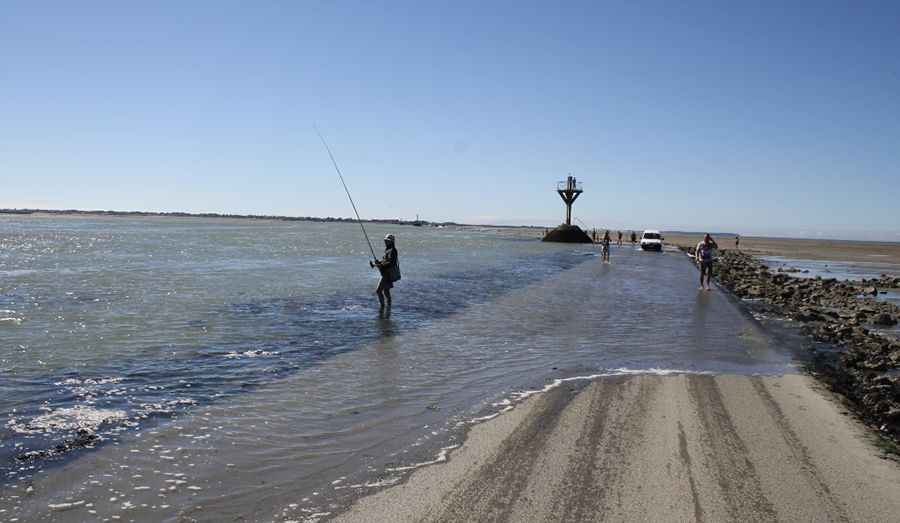
Passage du Gois is a natural passage flooded twice a day by the high tide leading to the island of Noirmoutier in France. Pack an inflatable boat for driving this 5km road because just say, for some crazy reason, you mix up the tide times, then – like vehicles in the past – you might disappear beneath the salty brine.
Where is the French Road that Disappears Underwater?
Passage du Gois (also known as Gôa) is located on France’s Atlantic coast, in the Vendée department, in the administrative region of Pays de la Loire.
How Long is Passage du Gois?
Passage du Gois is a stretch of the D948 road. It links the island of Noirmoutier and the mainland at Beauvoir-sur-Mer. It’s 5.3km (3.29 mi) long. It’s one of the routes that connect the island to the mainland.
Why is Passage du Gois Famous?
It’s one of the periodically flooded roads around the world. The road floods twice daily with incoming tides, and as the tides go out, slippery seaweed is left all over it. At high tide, this road lies under 1.30 meters to 4 meters of water. This road has been featured in the Tour de France race.
What Road in France Can Only Be Driven Twice a Day?
The treacherous causeway is only accessible with low tide and then only 1 ½ hours before the lowest tide and 1 ½ hour afterward. To drive this road, ask about the tide times. In all cases, follow the advice given on the panels installed at both ends of the passage, which will tell you if the road is passable or not. So you better be dead-on accurate when you look up tide times. As if that isn’t bad enough, you have to dodge slippery seaweed after the floods subside. It is prohibited by law but tolerated, however, to dwell on the foreshore. It is also strictly forbidden to park on the pavement. For the rest of the day, it is not possible to cross the Passage du Gois because it is flooded; however, you can still visit Noirmoutier via the bridge from Fromentine.
When Was the Passage du Gois Built?
This uneven stone-paved causeway was first used during the XVI century as the Baie de Bourgneuf gradually silted up.
Is Passage du Gois Worth It?
This is a remarkable road trip. The causeway is an extraordinary location in France and a national monument. Today, the causeway attracts thousands of visitors a year to watch the twice-daily uncovering of the road as it miraculously appears from the sea during the ebbing tide.
How to Drive the Passage du Gois?
Trucks and buses can drive only in one direction, from the mainland to the island. Covered by the sea twice a day, this paved road is littered with seaweed in places and can be particularly slippery. And a thick fog can rise quickly in this part of the Vendée zone. When this paved sandbar that’s flooded twice a day at high tide isn’t submerged, this narrow causeway—flanked by fishing boats and littered with errant clumps of seaweed—is a slippery stretch indeed and especially treacherous on two wheels. To avoid skidding on this slippery road, drive more slowly, to avoid having to brake suddenly when needed. In general, operate the vehicle controls slowly. In case of dense fog, turn on your headlights and your fog lights front and rear (if available).
Pic: Christophe Terrier